 Ai Everything
 LEAP26
 AI
AI Saudi Arabia
 UAE
UAE Egypt
EgyptI am Ahmed Wadi. I built trust first, which led to profitability in fintech

7 min
The old financial habit that modern banking never replaced
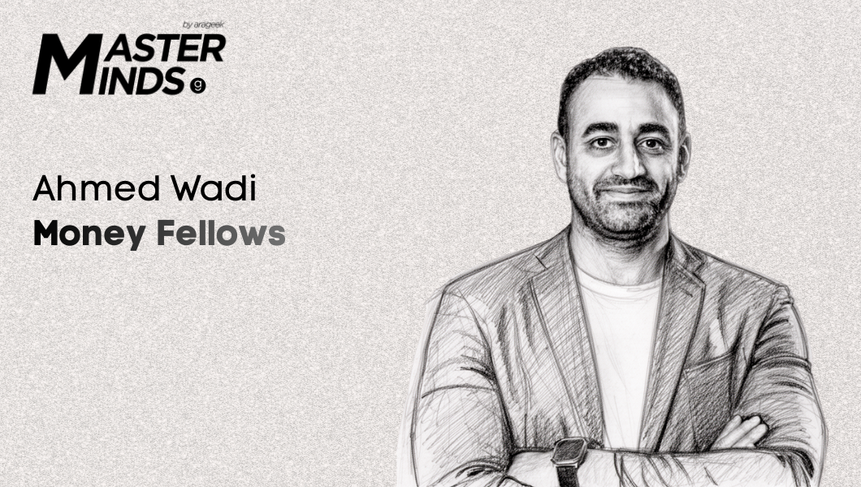
Money Fellows is often described as innovation, but Ahmed Wadi’s starting point is almost the opposite. When asked what he is really building, he reaches for a centuries-old behaviour that millions already trust: the Gameya, a rotating savings and credit association that sits inside everyday Egyptian life.
The premise is simple. People do not always need complex products, they need reliable commitment devices. The problem with traditional Gameyat was never cultural fit, it was friction: they depended on personal circles, ran on rigid cycles, and carried risks that were managed through social pressure rather than formal safeguards. Wadi’s wager was that fintech could remove the friction without breaking the trust.
Germany taught him the discipline that Egypt would demand
When asked how his European experience shaped the company, Wadi is clear about the lesson he imported from Germany: a product only wins if it solves a real user problem.
His studies and work there, alongside founding a startup, compressed years of learning into one mindset. Do not fall in love with the idea. Fall in love with the problem. That discipline shaped how Money Fellows was built from day one, with user needs at the centre rather than technology looking for a reason to exist.
The moment the idea became inevitable
Pressed on how the idea was born, Wadi traces it back to a personal frustration in Germany. He was looking for financing options and ran into a barrier familiar to many people across emerging markets: access was gated by credit history.
That experience triggered a memory rather than a new invention. In Egypt, the Gameya already functioned as personal financing and disciplined saving, but it was limited by the shape of the offline world. Wadi realised that if the model could be made more convenient, more transparent, and materially safer, it could scale far beyond the friend group. He describes the opportunity as vast, with a global market potential measured in the hundreds of billions, even trillions. The company, in his framing, became a bridge between tradition and technology, not a replacement for either.
Impact was the goal, the timeline was the unknown
When asked whether he expected this level of reach, Wadi does not pretend it happened by surprise. The ambition was always scale, in Egypt and beyond. What was uncertain was how long it would take, and how many iterations would be required to make the model work under real-world constraints.
That difference matters. A clear vision does not make execution easy. It just makes the next hard decision legible.
A savings tool, not a religion
On the question of whether Money Fellows could replace bank deposits or small investment funds, Wadi refuses the all-or-nothing framing. He argues for diversity in saving: the app offers a flexible, safe monthly saving method, but it should not crowd out other tools. The best outcome, he suggests, is a balance between saving and investing to manage risk.
It is a pragmatic position that matches the product’s philosophy. Money Fellows is not trying to become the only financial behaviour. It is trying to make one essential behaviour reliable.
How the digital Gameya works, without the social risk
Asked to explain how it works inside the app, Wadi keeps it straightforward. Users choose a circle that suits them, each with defined payment and payout schedules. Everything is managed through the app, and transactions are conducted electronically.
But the real shift is in how trust is enforced. He says circles are 100% guaranteed and the model operates under the Central Bank of Egypt’s supervision through its Regulatory Sandbox. Banque Misr handles financial operations. If someone fails to pay, penalties and legal procedures apply.
This is the company’s core proposition: keep the cultural trust, add institutional guardrails.
Making saving feel like progress, not punishment
When asked how the app builds a saving habit in a consumer-driven culture, Wadi’s answer is behavioural rather than moral. The product ties saving to specific, achievable goals: school fees, a business, travel. The aim is to turn saving into a consistent habit, with a sense of achievement at the end of each completed cycle.
It is a subtle point, but an important one. People do not stop saving because they dislike the idea. They stop because the habit is hard to sustain without structure, feedback, and a reason that feels personal.
Standing out in a crowded fintech market
Pressed on competition in Egypt’s increasingly busy fintech scene, Wadi positions Money Fellows away from consumer financing apps. He says their users are planners and savers, not just buyers.
That positioning also shapes product decisions. The company launched a prepaid card to deepen the digital experience and give users more control. It is not presented as a flashy add-on, but as another way to make the platform useful in daily life, and to keep users inside a coherent financial journey.
The numbers that matter, and the milestone that changes the story
When asked about achievements, Wadi cites scale in terms that signal both adoption and usage: over $1.5 billion processed in transactions, more than 8 million downloads, around 350,000 monthly active users, and over 1 million users who have reached financial goals through the platform.
But the milestone he treats as most consequential is not a headline metric. It is profitability. When asked about the biggest challenge, he names trust and behaviour change, made harder by a market that once lacked clear fintech regulations. The way through, he says, was steady growth and deep work with the Central Bank to develop a regulatory framework for the model, until Money Fellows could operate legally under direct supervision.
Profitability, in this context, is not just financial performance. It is proof that the model can sustain itself while serving people who are typically excluded from formal credit.
Investors backed the model, but they were really backing execution
On the question of attracting investors, Wadi says the concept helped, digitising a trusted social finance model created immediate global interest. But he emphasises why it translated into capital: the team executed in the region where others had struggled, and investors saw an untapped market, a sustainable business model, and an operator’s ability to navigate constraints.
He also points to fundraising momentum, citing $60 million secured so far and preparations for a larger round to support expansion, with an internal target of reaching 1 million active users by next year.
Why Morocco, and why a bank partnership is the key
When asked why the next market is Morocco, Wadi describes it as open, with demand and less competition. The more revealing detail is the go-to-market method: partnering with Attijariwafa Bank, the country’s largest bank, to access its customer base and scale faster.
He frames Morocco as a gateway to Africa, a place to prove the model in another context before moving wider. It is a founder’s expansion logic that prioritises distribution and credibility over bravado.
Building a financially conscious digital community
When asked what he means by a “financially conscious digital community”, Wadi’s definition is grounded: empower users with simple, transparent tools that help them manage money wisely. Technology is not the end, it is the means.
He points to the prepaid card as a starting line rather than a finish, and says more products are coming, particularly for the unbanked, with financial inclusion as the long-term direction.
The advice that fits his own story
Finally, when asked what he tells aspiring entrepreneurs, Wadi delivers the principle that threads through his entire journey: start with a real problem. Launch a simple prototype, listen hard, and improve relentlessly.
Perfection, he argues, is not the prerequisite. Learning is. And for a founder who scaled an old social contract into a regulated digital product, that is not motivational talk. It is the playbook that worked.