 LEAP26
 AI
AI Saudi Arabia
 UAE
UAE Egypt
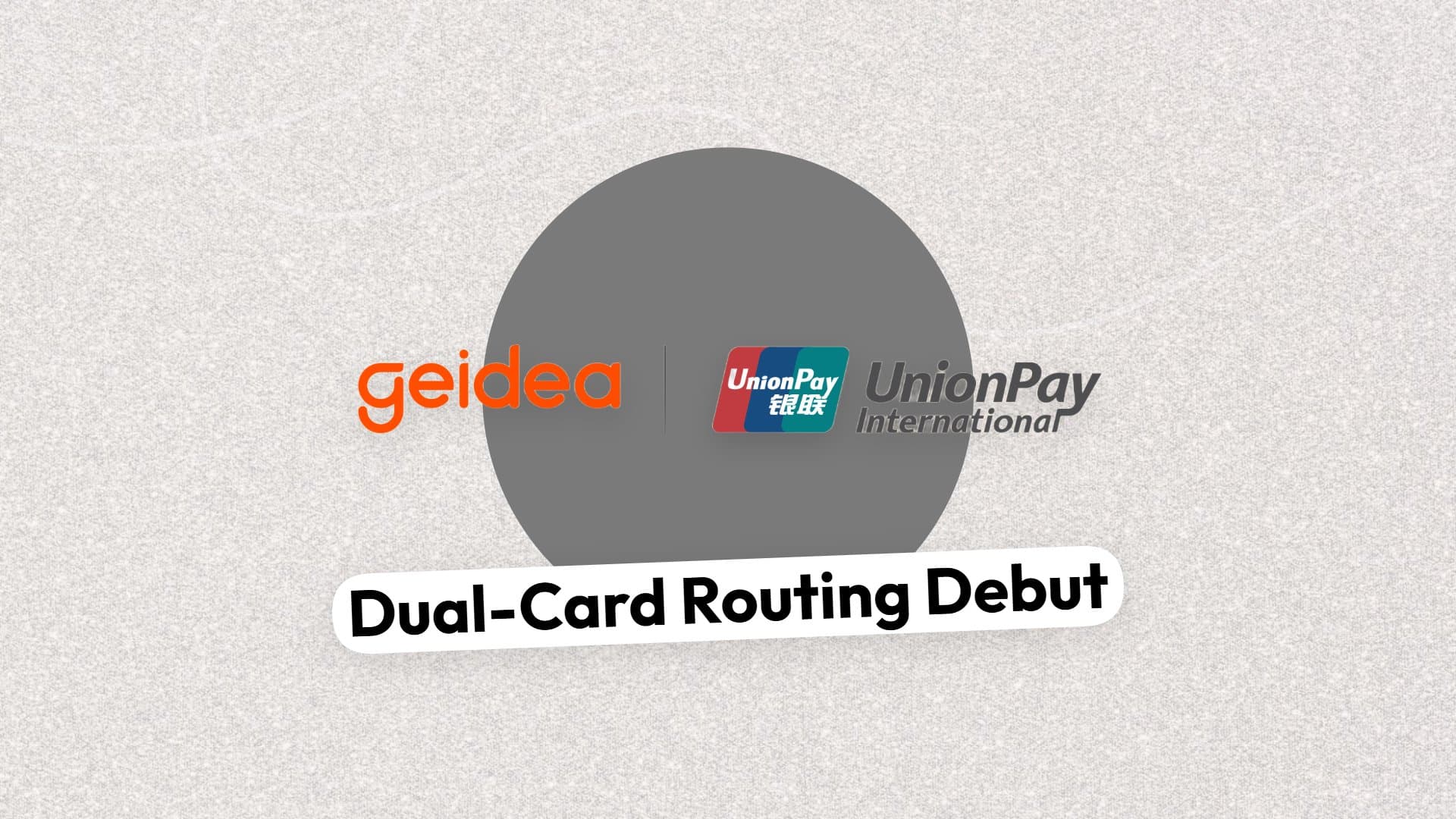
EgyptGeidea and UnionPay Debut Dual-Card Routing to Boost MEA Transactions

4 min
Geidea launches MEA’s first ‘dual-card routing’ with UnionPay International.
System directs payments through the ‘most appropriate channel’ for smoother checkouts.
Move targets Chinese tourists, boosting acceptance and reducing declined transactions.
Merchants gain higher conversion and possible currency efficiency benefits.
Executives say it makes ‘global commerce feel local’ across MENA markets.
Geidea has rolled out what it describes as the Middle East and Africa’s first dual-card routing capability in partnership with UnionPay International, a move aimed at making payments smoother for UnionPay cardholders while giving merchants a better shot at successful transactions.
In simple terms, dual-card routing allows transactions on cards that carry more than one network to be intelligently directed through the most appropriate channel. Instead of a payment failing or being processed through a less efficient route, the system selects the network that aligns with cardholder preference and issuer policies, where applicable. It sounds technical, and well… it is, but at the checkout it should just feel seamless.
The timing is hardly accidental. Chinese outbound tourism continues to influence spending patterns across global markets, including the Gulf and wider Middle East. By integrating more deeply with UnionPay International, Geidea is positioning its merchant network to cater to Chinese tourists and expatriates who prefer to use their familiar payment method abroad. Anyone who has travelled knows how reassuring it is when your card works instantly in a foreign country; if it doesn’t, it’s a bit of a faff.
For merchants across retail, hospitality and tourism, improved acceptance rates are more than a technical upgrade. They translate into fewer declined transactions and potentially higher conversion from a high-spending customer segment. And believe it or not, small changes at the point of sale can have a big impact on revenue, especially in destinations that rely heavily on international visitors.
Pankaj Kundra, CEO of Geidea, said the goal is to ensure payments “operate seamlessly in the background, regardless of where you are in the world.” He added that by introducing dual-card routing, the company is removing friction for UnionPay cardholders while enabling merchants to better connect with what he called one of the world’s most valuable customer groups. He noted that being among the first to bring this capability to market is about making “global commerce feel local”.
From UnionPay International’s side, Luping Zhang, General Manager for the Middle East, described the launch as a milestone for advancing payment acceptance in the region. He said enabling dual-card routing improves reliability for cardholders and helps merchants capture greater value from cross-border customers.
Beyond higher transaction success rates, the arrangement may also provide currency efficiency benefits, depending on routing and issuer policies. That detail matters more than it first appears; currency conversion costs can quickly eat into margins for both customers and businesses, and I reckon any edge here will be welcomed by merchants keeping a close eye on costs.
Geidea itself has been steadily expanding its footprint. Founded in 2008 by Saudi entrepreneur Abdullah AlOthman and headquartered in Riyadh, the firm now serves more than 650,000 merchants globally. It operates in the UAE and Egypt in addition to Saudi Arabia, offering digital banking technology, smart payment terminals and business management tools. The company employs over 2,300 people across Saudi Arabia, the UAE, Egypt and India, and has received Great Place to Work certification in those markets.
UnionPay International, meanwhile, partners with over 2,600 institutions worldwide. Its cards are accepted in 183 countries and regions, with issuance across 85 markets. Outside mainland China, UnionPay is accepted at more than 80 million merchants and 1.8 million ATMs, serving what is considered the world’s largest cardholder base.
For the broader fintech scene in MENA, developments like this are worth watching. At Arageek, we often hear from founders who say payments infrastructure can either unlock growth or hold it back. When the plumbing works properly, startups can focus on product and customers rather than troubleshooting failed transactions. It may not be glamorous, but it’s definately foundational.
On the flip side, the real test will be adoption. Technology launches are one thing; sustained merchant uptake and consumer trust are another. Still, as cross-border travel rebounds and regional economies compete to attract global visitors, solutions that make spending easier are likely to be in demand. And in payments, being spot on with reliability can make all the difference.
🚀 Got exciting news to share?
If you're a startup founder, VC, or PR agency with big updates—funding rounds, product launches 📢, or company milestones 🎉 — AraGeek English wants to hear from you!


✉️ Send Us Your Story 👇