 Ai Everything
 LEAP26
 AI
AI Saudi Arabia
 UAE
UAE Egypt
EgyptI am Majd Alaily. I unlearned big tech to survive startups

6 min
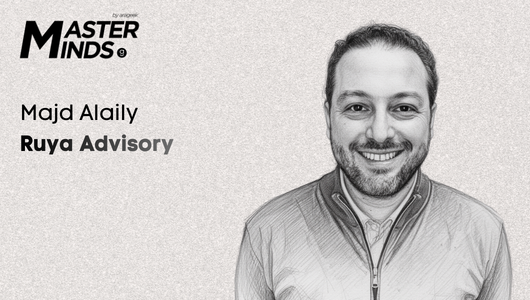
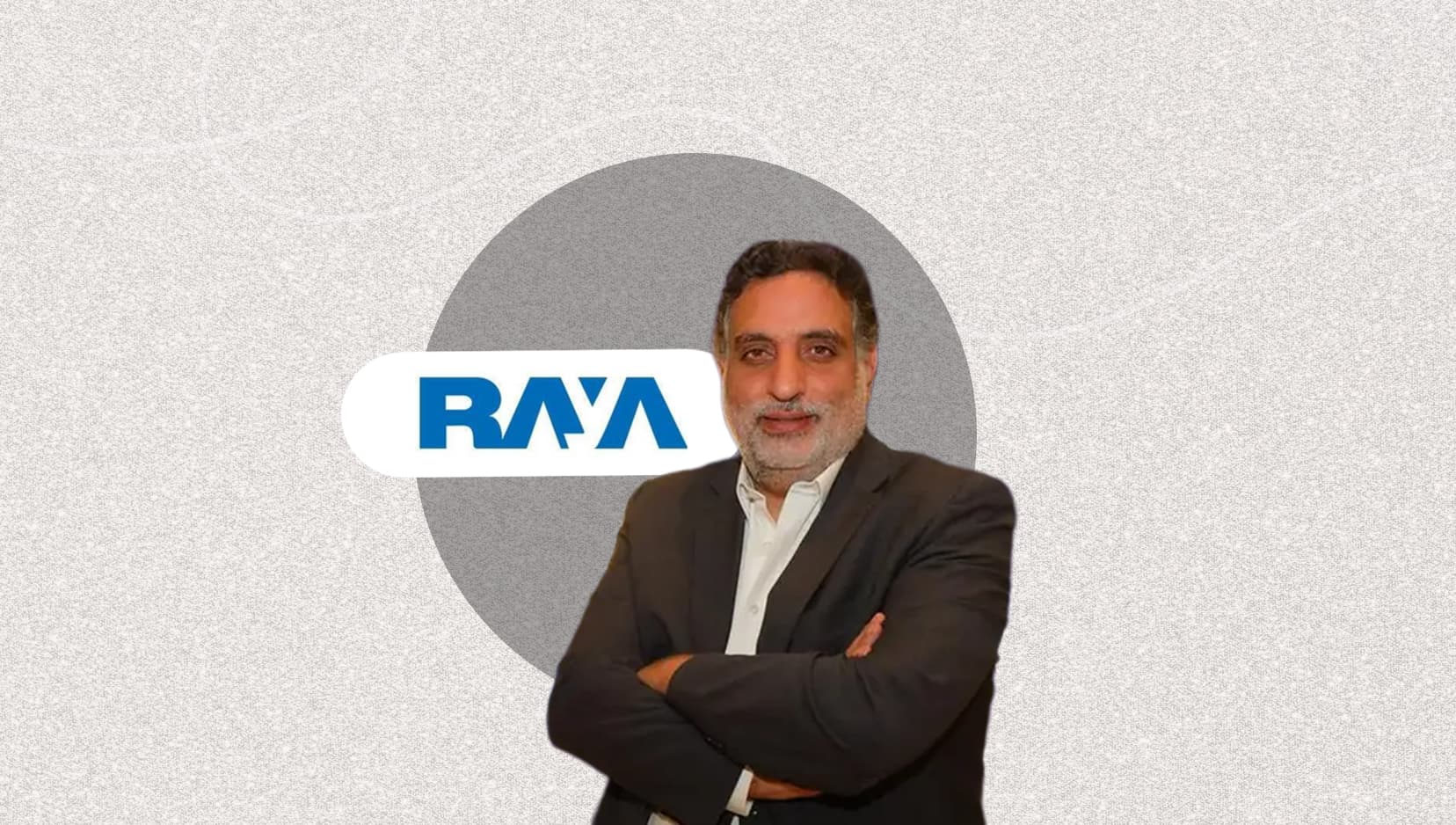
Majd Alaily does not romanticise innovation. For him, it was never a personality trait or a flash of brilliance. It was a method. Discovering design thinking early in his career reframed everything. Innovation, he realised, was not mystical. It was structured. Learnable. Repeatable. That realisation became the spine of a career that moved from consulting to big tech to startups, and eventually to founding Ruya Advisory.
What stands out is not a fixation on ideas, but on process. Again and again, Alaily returns to discipline, validation, and perspective. He is less interested in inspiration than in systems.
When innovation stopped feeling abstract
When asked about the moment innovation became central to his identity, Alaily points to discovering design thinking. It was an early inflection point. He understood that meaningful solutions could be engineered through structured problem-solving.
The appeal was accessibility. Anyone prepared to do the work could apply it. He carried that mindset into big tech, and later into startups. Looking back, he considers adopting that framework one of the most consequential decisions of his career.
Why leave security behind
On the question of leaving Google after nearly a decade, his answer is unsentimental. It was not dissatisfaction. Google offered strong leadership, culture, and scope. But it was also a vast machine.
Within that machine, he was one contributor among thousands. The desire to build something from the ground up, something directly aligned with his values and ambitions, began to outweigh the comfort of corporate stability. The decision was difficult, but clear. His energy, he felt, belonged in creation rather than contribution.
The day he turned off paid growth
When the conversation turns to scaling Studio Alfanqosh to 970,000 monthly active users, Alaily does not begin with tactics. He begins with restraint.
The first major decision was to switch off paid acquisition. Coming from Google, paid growth was second nature. Yet he realised it could mask product weakness. When they turned it off, traffic collapsed. It was, in his words, terrifying. But it forced a pivot towards sustainable, organic growth.
The second shift was designing for shareability. He did not know the term growth loop at the time, but that is what they built. The product had to be valuable enough that users wanted to share it because it enhanced their experience or reputation.
The third was opening the platform to user-generated content. This multiplied content volume and diversity, drove SEO, and extended reach in ways internal teams alone could not. Each decision reduced dependency and increased leverage.
What founders misunderstand about fundraising
Pressed on common fundraising mistakes, Alaily is direct. Founders often assume investors are waiting for them. They believe product quality alone will carry the round.
In reality, investors operate within their own strategies and return expectations. Fundraising is not a celebration of innovation. It is an argument for returns. The narrative must be framed from the investor’s perspective, supported by traction and execution. A compelling story matters, but only if it answers the investor’s underlying question: how does this generate meaningful outcomes?
Agility without stubbornness
When asked about patterns across the 100-plus go-to-market workshops he has led, he highlights a tension. The startups that succeed combine perseverance with adaptability.
They do not quit when experiments fail. But they also do not cling to ideas that are clearly not working. Especially in today’s environment, speed of iteration is decisive. Test. Learn. Adjust. Repeat. The ability to absorb feedback without ego is often the dividing line.
Unlearning scale
On how managing portfolios of up to $100M ARR at Google shaped his thinking, Alaily describes an unlearning process. In big tech, growth planning operates on quarterly and multi-year horizons. Systems are already in motion.
Startups live in shorter cycles. Early-stage companies cannot afford long planning loops. Vision matters, but so does tomorrow morning. Only once momentum is real can founders afford to think in multi-year arcs. Adjusting to that compressed time horizon was one of his biggest transitions.
The audience decides
When the conversation shifts to evaluating ideas, Alaily rejects the premise that his judgement is decisive. Founders often ask what he thinks. He insists it does not matter.
The only opinion that counts is the audience’s. Not compliments, but commitment. Will they pay? Sign up? Wait? Change behaviour? Signal beats praise. That is the metric.
Design thinking as risk management
Asked to reflect on how design sprints translate into business outcomes, he sees near-perfect overlap with startup building. Understand the customer deeply. Identify a real problem. Prototype quickly. Test. Iterate.
For him, design thinking is not a workshop exercise. It is a risk-reduction framework. It disciplines speed and prevents over-investment in unvalidated assumptions.
The myth of product–market fit formulas
On the question of product–market fit in MENA, Alaily resists neat answers. There is no universal formula. Continuous validation is the closest thing to one.
Stay close to users. Observe behaviour. Let feedback shape the roadmap. Over time, resonance emerges. Those who claim certainty are oversimplifying.
The best training ground for founders
When asked which environment best prepares future founders, he does not hesitate. Entrepreneurship itself. Or at least an early-stage startup.
Founders must stretch across disciplines at once, analytical, creative, pragmatic, visionary. In resource-constrained environments, prioritisation becomes ruthless. The odds are rarely favourable. That pressure is precisely what accelerates learning.
The decision that reshaped everything
Asked to name a defining failure, Alaily reframes the premise. The most consequential moment was leaving medical school in his fourth year.
He had been on track to become a doctor. Walking away required stepping back from safety and familiarity. It forced him to make a hard call early in life and to develop a healthier appetite for risk. In hindsight, that decision underpins every subsequent one.
Higher expectations, stronger leverage
When the conversation turns to the future of the Middle Eastern startup ecosystem, his view is grounded in founder experience rather than investor commentary.
Fundraising is becoming more demanding. Clearer traction and proof of execution are expected earlier. At the same time, AI and automation are increasing founder leverage. Teams can move faster with fewer resources. The interplay between higher investor scrutiny and greater technological leverage will shape the region’s next chapter.
The survival skills that matter
Asked to distil survival skills for first-time founders, he names three.
Adaptability and openness to feedback. Generalist competence across functions. And the ability to iterate quickly. Speed of learning compounds. Attachment to ideas kills.
If he started again
On the question of starting from zero today, Alaily would reverse the typical order. He would not begin with a product. He would begin with an audience.

Build trust through content, community, and a clear point of view. Establish distribution first. Then build products or services around real, observed needs. In crowded markets, distribution is often harder than development. Owning a direct relationship with an audience creates leverage that product alone cannot.
Across the conversation, one theme holds. Innovation is not inspiration. It is disciplined experimentation, guided by signal, and anchored in the willingness to make hard decisions.