 Ai Everything
 LEAP26
 AI
AI Saudi Arabia
 UAE
UAE Egypt
EgyptOman bets $38M on semiconductors to build local chip talent

3 min
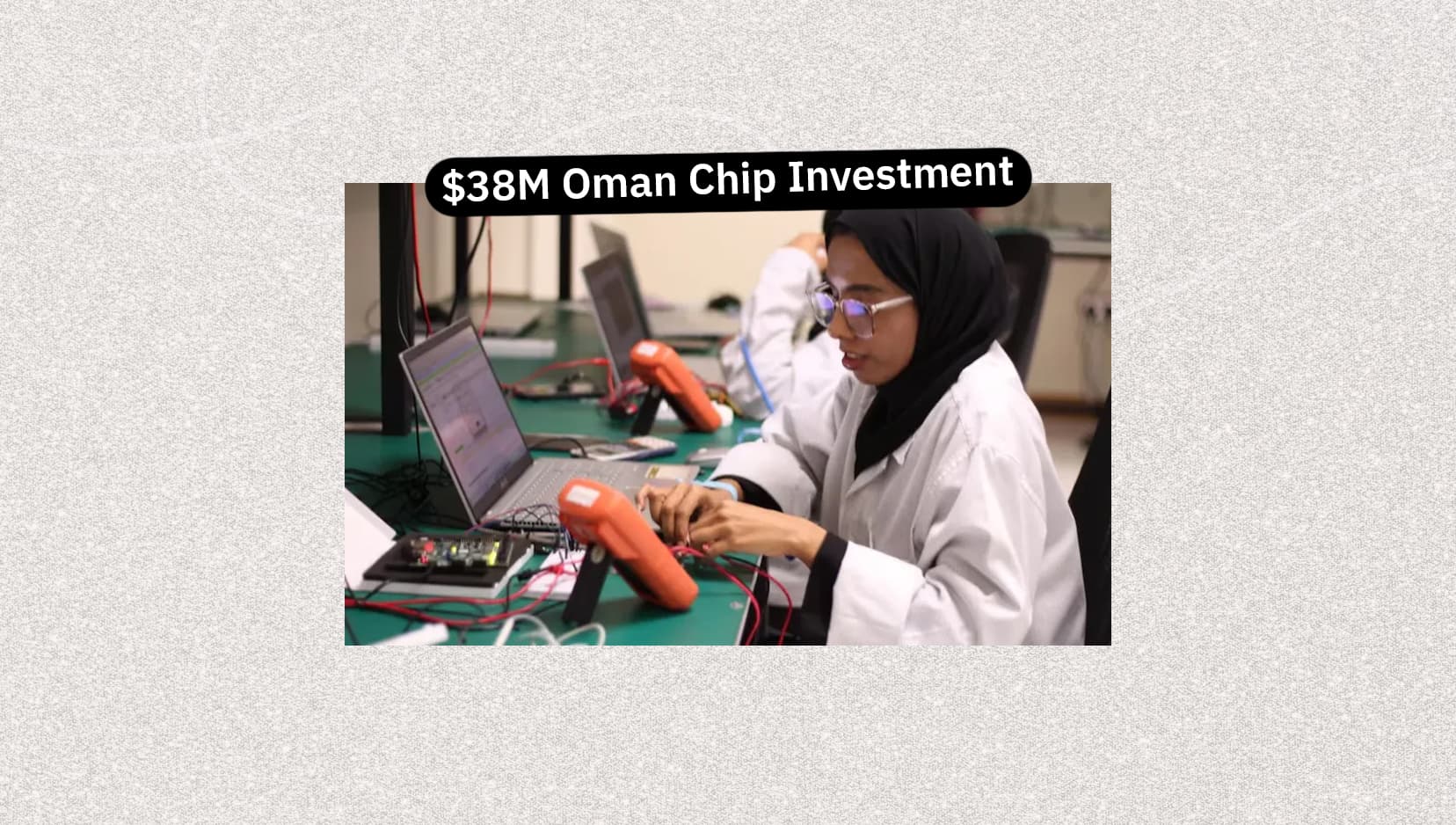
Oman’s sovereign wealth fund is investing $38m to deepen its semiconductor footprint.
Through ITHCA, it aims to attract global firms and build local operations.
$13m backs a chip design centre, training 92 engineering graduates.
Further funds support 3D sensing and “5G network solutions” in Oman.
The long-term goal is pairing foreign expertise with home-grown talent.
Oman’s sovereign wealth fund is quietly but steadily deepening its footprint in the semiconductor space, earmarking around $38 million through its technology arm, ITHCA Group, to back specialised global firms and anchor advanced know-how inside the Sultanate.
The move feels timely. Semiconductors are no longer just tiny chips hidden in devices; they are the backbone of everything from smartphones to smart cities. For a country looking to diversify beyond oil, this sector is, quite simply, spot on.
Through ITHCA, the fund is working to attract three international companies to set up centres and offices in Oman by the end of 2025. The idea is not only to write cheques, but to bring real operations on the ground, labs, engineers, training, the whole ecosystem.
One of the headline investments is $13 million into GSME, a company focused on semiconductor design. The funding is being used to establish a chip design technical centre in Oman, with a focus on power management and radio frequency chips. And it’s not just bricks and mortar. The initiative has already trained 92 graduates in electronic engineering and chip design, with most of them moving into specialised roles. For a market still building its deep-tech bench, that’s no small feat.
I’ve always believed that talent development is where the real magic happens. You can import technology, yes, but growing your own engineers, that’s the long game. Across the MENA region, we’ve seen how a bit of targeted support can turn fresh graduates into serious innovators. It’s not always glamorous work, and sometimes it feels like a bit of a faff to set up these programmes, but the payoff can be huge.
In another step, around $5 million has gone into Lumotive, a firm specialising in programmable optics and 3D sensing technologies. The investment backs the launch of a local branch in Oman, while introducing advanced capabilities in artificial intelligence applications and optical control systems to the domestic market. Importantly, the plan also includes hiring local talent, helping to seed expertise in a highly technical niche.
Meanwhile, the largest slice, $20 million, has been invested in Movandi, a company working on wireless communications and 5G network solutions. The funding has supported the creation of a local arm in Oman and the expansion of an engineering design team. This is aimed at strengthening the country’s advanced telecommunications infrastructure, a sector that underpins everything from industry to consumer tech.




That said, building a semiconductor ecosystem is never an overnight job. It demands patience, serious capital, and a steady pipeline of skilled people. On the flip side, when it works, it can transform economies. I reckon Oman’s approach, pairing foreign expertise with local capability-building, is a sensible one, even if the results will take time to fully materialise.
For readers who follow Arageek, stories like this are a reminder that deep tech is no longer confined to Silicon Valley or East Asia. The MENA region is carving its own space, sometimes quietly, sometimes boldly. And believe it or not, these calculated, behind-the-scenes investments might definitly shape the next chapter of the region’s tech landscape.