 Ai Everything
 LEAP26
 AI
AI Saudi Arabia
 UAE
UAE Egypt
Egyptre.life Taps TCS for Global Expansion of Digital Circular Economy Platforms

4 min
re.
life, backed by BEEAH, has partnered with TCS to expand sustainability tech internationally.
TCS will roll out re.
life platforms to simplify trade, logistics and recyclable materials markets.
Leaders stressed “digital certainty” as key to scaling circular economies beyond pilot projects.
The tie-up follows re.
life’s expansion with fleet and AI-driven operational platforms.
India is a priority market, building on platforms already proven across the UAE.
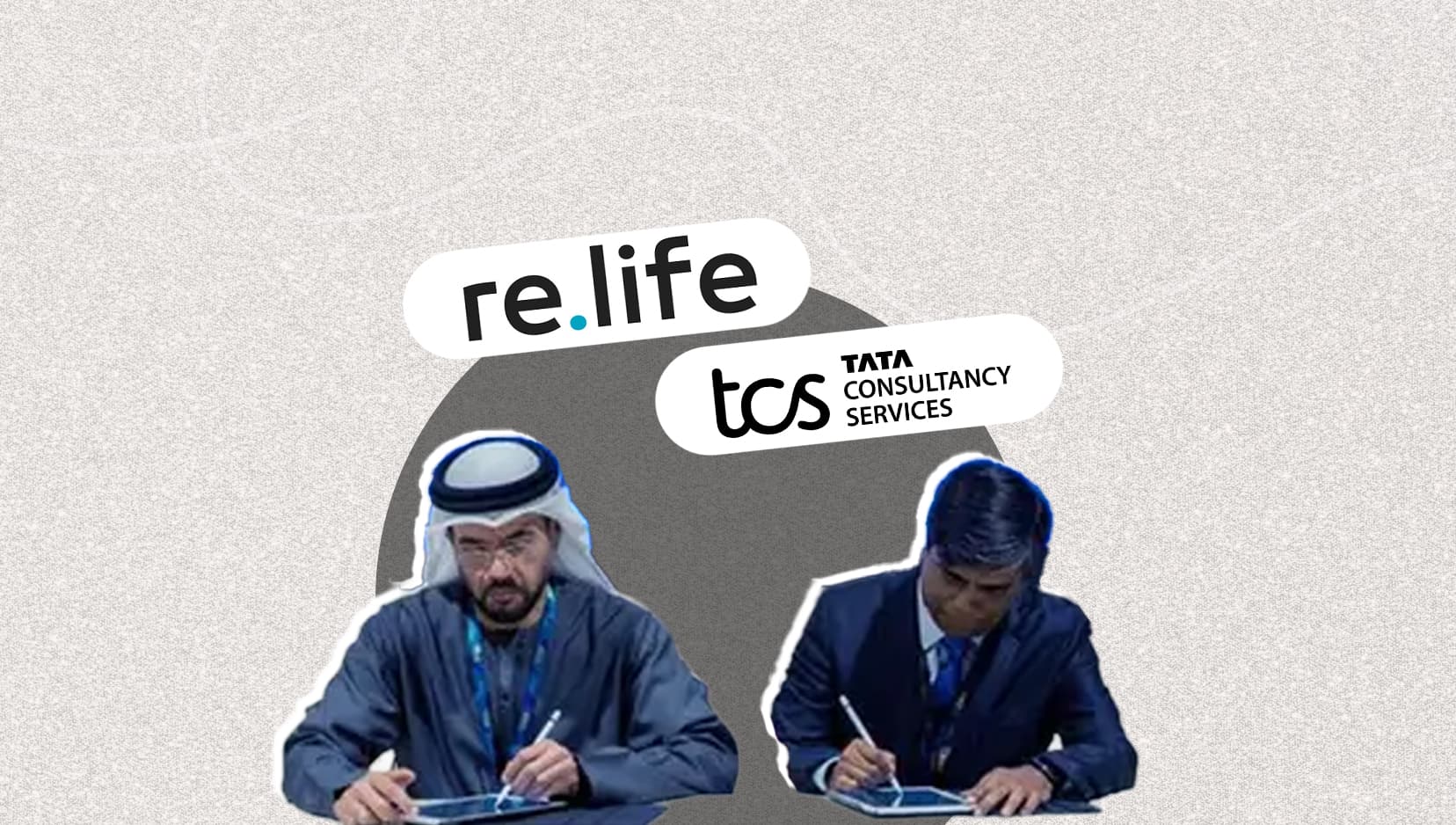
re.life, the digital ecosystem backed by Sharjah-based BEEAH, has struck a strategic partnership with Tata Consultancy Services, better known as TCS, in a move that underlines how fast sustainability-driven tech is travelling across borders. The agreement was signed on the sidelines of the Sharjah Entrepreneurship Festival, which, if you’ve ever spent time around founders in the region, tends to be where a lot of quiet but meaningful deals get done.
Under the partnership, TCS will help promote and roll out re.life’s suite of digital platforms in new international markets. The focus is on simplifying trade and logistics, improving how recyclable materials are bought and sold, and supporting broader circular economy efforts. In plain English, this is about making messy, analogue processes more transparent and a whole lot more efficient. From where I sit, that’s spot on, because anyone who has tried to modernise logistics in the region knows it can be a bit of a faff.
The signing brought together Fahad Shehail, general manager of re.life and CEO for environment at BEEAH, and Sumanta Roy, who leads TCS across the Middle East and Africa. Shehail said the collaboration reflects a belief that growth at scale only really happens when the right partners come together, adding that TCS’s global reach could help re.life meet organisations’ sustainability and net-zero goals while improving business performance. Roy, meanwhile, pointed to creating a smoother ecosystem for buyers and sellers of recyclable commodities, arguing that digital certainty is essential if circular economies are to move from theory to practice.
That said, what makes this tie-up more interesting than your average tech partnership is the timing. re.life has been steadily expanding its ecosystem, most recently with re.life fleet, a platform aimed at giving waste and fleet operators far better visibility into their day-to-day operations. It covers everything from dispatch and workforce management to material recovery and end-product tracking, using tools like telematics, AI-powered vision, IoT and cloud analytics. I’ve seen startups struggle to pull all these elements together, so having them in one configurable platform could be a real game-changer, well… at least in theory.
India is also firmly on the radar. With rapid urbanisation and a growing appetite for digital-first sustainability solutions, the country is being lined up as a key market for re.life’s expansion, supported by TCS’s long-established presence there. On the flip side, re.life brings to the table platforms that are already live and tested, including re.life market, a B2B marketplace for trading recyclable materials that has reportedly facilitated transactions worth millions in the UAE. It was even used by the UAE Ministry of Climate Change and Environment to launch Tahweel, the country’s first national digital marketplace for recyclables.
Then there’s re.life collect, an on-demand app connecting users with moving and transport services for bulky items, which has recently branched out into rentals for trucks and heavy machinery. Believe it or not, that last detail might matter more than it sounds, especially for SMEs trying to operate lean while staying sustainable.
Around Arageek circles, there’s often talk about whether sustainability platforms are built for impact or just for good PR. I reckon this partnership leans more towards the former, largely because both sides seem clear about the commercial realities. I’m not a fan of flashy announcements that go nowhere, but this one feels grounded, even if it will take time to see how it plays out in new markets. If nothing else, it shows that MENA-born digital ecosystems are definately aiming much further than the region now, and that’s something worth watching.
🚀 Got exciting news to share?
If you're a startup founder, VC, or PR agency with big updates—funding rounds, product launches 📢, or company milestones 🎉 — AraGeek English wants to hear from you!


✉️ Send Us Your Story 👇