 LEAP26
 AI
AI Saudi Arabia
 UAE
UAE Egypt
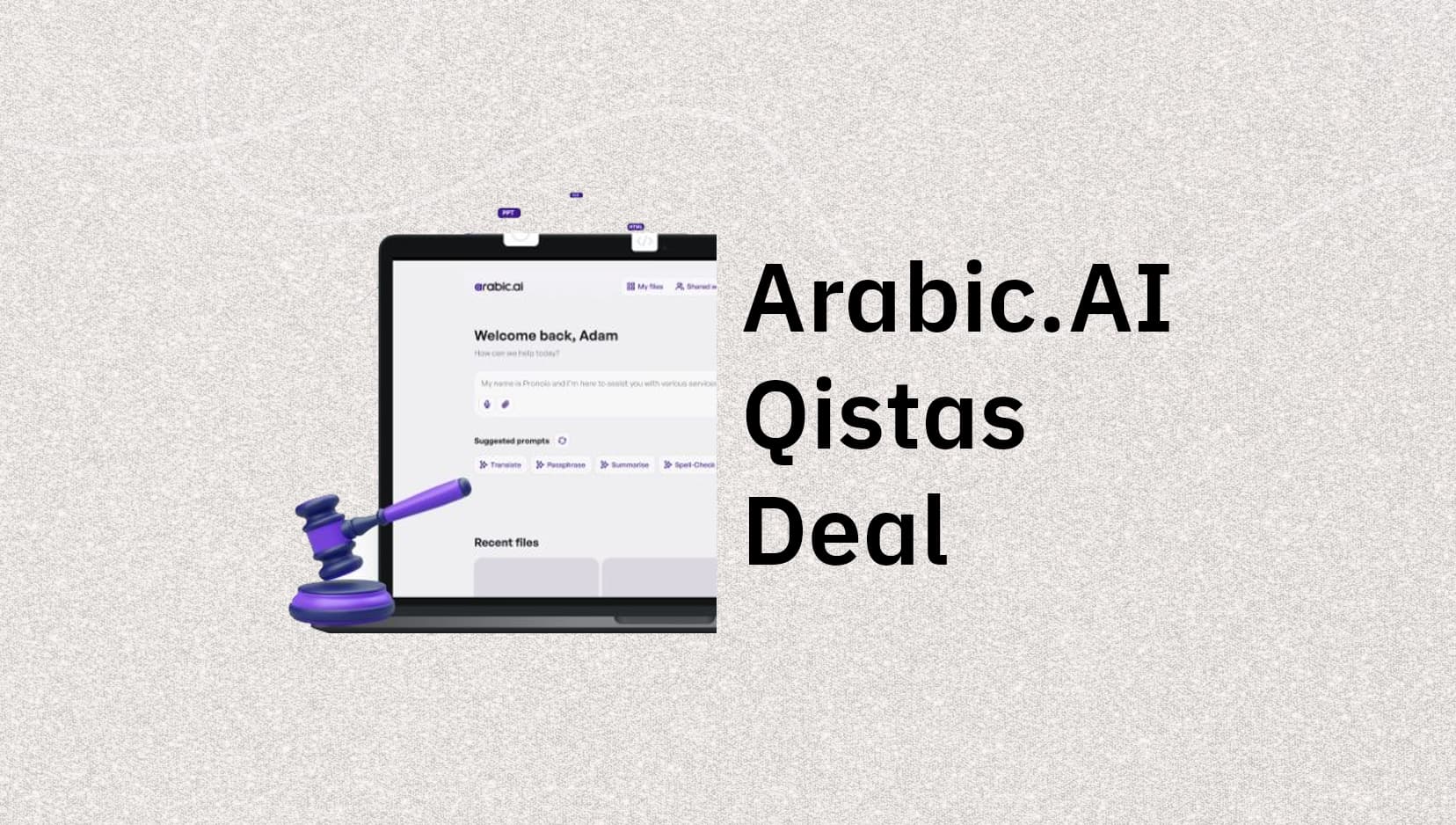
EgyptArabic.AI and Qistas Team Up to Revolutionise Arabic Legal Tech with AI

4 min
Arab institutions want AI, but most tools “don’t quite get” local context.
Arabic.
AI and Qistas will build secure, sovereign AI for Arabic legal systems.
Their models support research, litigation and policy, with deep jurisdictional awareness.
On-premise deployment answers rising concerns over data sovereignty and compliance.
If delivered well, the impact could be “solid” — built on precision and trust.
There’s a quiet but important shift happening in the Arab legal world. More institutions want to use artificial intelligence, yet many of the tools on offer simply don’t fit. Most are built for English-language case law and cloud-based systems that don’t always sit comfortably with local regulations. For lawyers dealing with sensitive information, that can be, well… a bit of a faff.
This week, Arabic.AI and Qistas announced a strategic partnership that aims to close that gap. The two companies are joining forces to deliver secure, sovereign AI solutions designed specifically for the Arabic legal sector. In simple terms, they want to build AI that understands Arabic deeply, respects local jurisdictions, and can operate safely within institutions rather than relying on overseas cloud servers.
At the centre of the collaboration are Arabic.AI’s Arabic-first large language models, LLM-X and LLM-S, along with its on-premise enterprise AI infrastructure. These systems are being combined with Qistas’s legal technology tools, which are tailored for Arabic legal systems and professional practice. Together, the companies plan to serve law firms, corporate legal departments, large corporations, and government entities across the region.
The focus isn’t abstract. The solutions are intended to support legal research, litigation, transactions, and even policy and legislative studies. That level of domain awareness matters. Legal professionals don’t just need fluent language models; they need systems that grasp the nuances of jurisdiction, precedent, and formal Arabic drafting. Without that, the technology quickly falls short.
Arabic.AI’s models have also been independently assessed in international benchmarks and are reported to rank among the top-performing systems for Arabic language understanding. That’s no small detail. Regulated sectors, especially law, demand both linguistic precision and data sovereignty. A misinterpreted clause or a misplaced comma can change everything.
“Reliable legal AI requires both language intelligence and legal expertise,” Nour Al Hassan, CEO and Founder of Arabic.AI, said in a statement. She noted that combining Arabic-first AI infrastructure with Qistas’s legal specialisation should help institutions handle legal information more efficiently and with greater confidence.
Nissreen Haram, CEO of Qistas, echoed that view, saying the partnership aims to deliver responsive AI solutions that legal professionals across the Arab world will genuinely adopt. She added that the goal is to provide trusted legal knowledge alongside secure, sovereign AI designed for real legal workflows.
The agreement was formalised during a signing ceremony in Amman, Jordan, a symbolic nod, perhaps, to the region’s growing ambition to shape its own tech infrastructure rather than importing it wholesale. I’ve seen, through conversations in the startup ecosystem we cover at Arageek, how often founders in regulated sectors complain that global tools don’t quite “get” the local context. This move feels like a step towards changing that.
On the flip side, partnerships are one thing; execution is another. Legal tech can be notoriously complex, and adoption tends to be slow. Lawyers are trained to question everything, rightly so. Still, I reckon that if any sector needs AI built from the ground up for Arabic, it’s this one. Precision isn’t optional; it’s the whole game.
And believe it or not, the idea of sovereign AI is no longer just a buzzword. Across the MENA region, institutions are becoming more cautious about where data sits and who controls the underlying systems. Deploying AI on-premise, within institutional environments, could be a decisive factor for uptake.
For startups in the region, this partnership is also a reminder that building for local realities isn’t a constraint; it’s often the secret sauce. The Arab legal market has its own complexities, its own jurisprudence, its own linguistic layers. Solutions that reflect that complexity are far more likely to stick.
If Arabic.AI and Qistas manage to deliver what they promise, the impact could be significant. Not flashy, perhaps. But solid. And in the legal world, that’s exactly what counts, precision, trust and systems that definately understand the language you’re working in.
🚀 Got exciting news to share?
If you're a startup founder, VC, or PR agency with big updates—funding rounds, product launches 📢, or company milestones 🎉 — AraGeek English wants to hear from you!




✉️ Send Us Your Story 👇