 Ai Everything
 LEAP26
 AI
AI Saudi Arabia
 UAE
UAE Egypt
EgyptCNTXT AI Elevates Arabic Voice AI with Munsit’s Launch in UAE

4 min
CNTXT AI expands Munsit as a unified Arabic voice AI platform.
It blends speech recognition and generation across more than 25 dialects.
Over 250 entities use it, processing 86 million words so far.
Flexible deployment supports data sovereignty for governments and banks.
Arabic is shifting from AI afterthought to strategic priority.
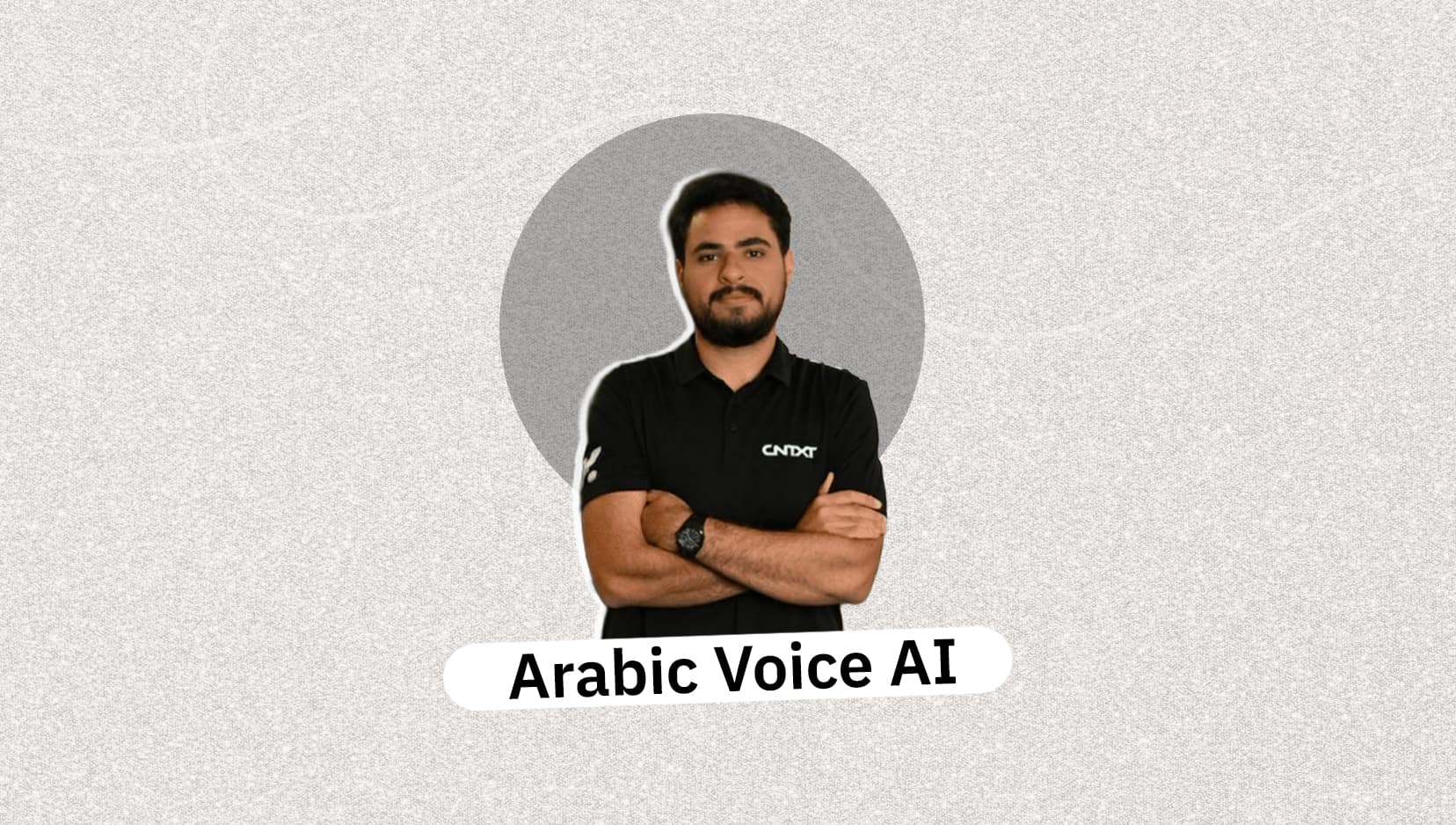
As the UAE doubles down on artificial intelligence, one area is quietly becoming a serious battleground: voice. Not just any voice, but Arabic voice, in all its dialects, nuances and everyday expressions. Abu Dhabi-based CNTXT AI is betting big on this space with the expansion of Munsit, now positioned as a unified Arabic voice AI platform that blends speech recognition with voice generation in one system.
At a time when governments, banks and digital platforms are handling enormous volumes of spoken interactions, the tools to properly understand Arabic haven’t always kept pace. That’s starting to change. CNTXT AI says Munsit was built specifically to close this gap, evolving from a speech-to-text tool into a full voice engine capable of both understanding and generating natural Arabic speech.
“We are done being spectators in the AI race. Arabic has been an afterthought in global AI for too long,” said Mohammad Abu Sheikh, Founder and CEO of CNTXT AI. He described Munsit as the “world’s most accurate Arabic voice AI”, built in the region and designed to serve it. “When you build for the language from day one, you don’t just compete, you lead,” he added.
That’s a bold claim. On the flip side, it reflects a wider push across the UAE to develop homegrown AI systems instead of relying solely on global model providers. I’ve seen first-hand how founders in the region often struggle with tools that handle English beautifully but stumble the moment a Gulf dialect is introduced. It can be, frankly, a bit of a faff.
The latest version of Munsit combines CNTXT AI’s own speech recognition technology with a text-to-speech model called Faseeh. Together, they cover more than 25 Arabic dialects. In practical terms, this creates what the company describes as a closed-loop system: audio is captured, transcribed, analysed and then converted back into spoken Arabic within the same workflow. No jumping between multiple tools. No patchwork integrations.
And believe it or not, the numbers suggest early traction. The platform has processed over 86 million Arabic words and more than one million minutes of audio so far. More than 250 government and enterprise entities are said to be using it, while its mobile app crossed 150,000 users within just two months of launch. Those figures, if sustained, point to serious market appetite.
The platform can be accessed through an API, web workspace or mobile app, and can run on cloud, private infrastructure or fully on-premise systems. For government bodies and financial institutions worried about data sovereignty, which, in this region, is definately not a small issue, that flexibility matters.
Use cases are expanding. Call centres can analyse every customer interaction rather than sampling a few calls. Banks can apply voice analytics for compliance and quality control at scale. Government departments are able to transcribe meetings or citizen conversations in the dialect they were spoken, while keeping sensitive data inside their own systems.
For developers, the appeal is straightforward. Instead of building Arabic voice models from scratch, a costly and time-consuming task, they can plug Munsit directly into their applications. That could trim months off development cycles. I reckon that’s where the real competitive edge may lie.
That said, the broader context is just as important. The UAE has made AI a strategic priority, pouring investment into infrastructure, talent and regulation. While global tech giants still dominate the foundational AI layer, regional players like CNTXT AI are carving out specialised territory, focusing on language, compliance and local operational realities. It feels spot on for a market where dialect can change every few hundred kilometres.
CNTXT AI positions Munsit as part of this growing ecosystem of sovereign AI solutions. The company also offers data preparation, labelling and AI testing tools, aiming to support organisations from raw data all the way to production-ready systems.
We often speak at Arageek about empowering startups to build technology that truly reflects the region’s needs. Arabic voice AI may sound niche to some, but in a market where digital banking, ecommerce and online public services are surging, it is quickly becoming core infrastructure. And well… once you start listening closely, you realise voice is not just another interface. It’s where culture, technology and identity meet.
Whether Munsit can maintain its claimed edge in accuracy remains to be seen. But one thing is clear: Arabic is no longer content to sit on the sidelines of the AI race.
🚀 Got exciting news to share?
If you're a startup founder, VC, or PR agency with big updates—funding rounds, product launches 📢, or company milestones 🎉 — AraGeek English wants to hear from you!

✉️ Send Us Your Story 👇