 Ai Everything
 LEAP26
 AI
AI Saudi Arabia
 UAE
UAE Egypt
EgyptI am Fadi AlAwami. I learnt growth can hide losses, so restructure early.

9 min
When growth looks healthy, but the business is not
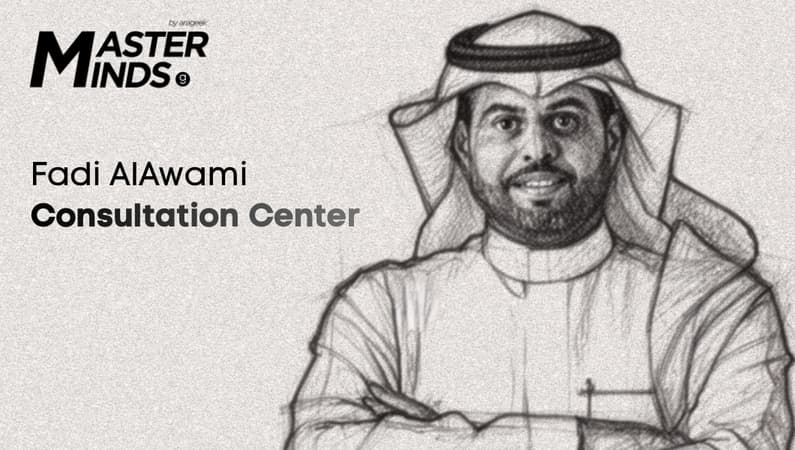
Ambition is cheap in startup ecosystems. The expensive part is proving you can turn that ambition into a company that survives its own growth. When asked what separates the founders who scale from the ones who stall, Saudi financial strategist and startup adviser Fadi AlAwami does not reach for slogans. He goes straight to the numbers founders tend to avoid, not because they do not matter, but because they are inconvenient.
AlAwami sits at a particular intersection: traditional banking, hands-on SME advisory, and the regulatory realities of building fintech in Saudi Arabia. He leads Consultation Center and has spent more than 15 years advising entrepreneurs, restructuring businesses, and helping fintech companies understand what it actually means to operate in a market shaped by licensing, compliance, and local execution. The through-line is consistent, structure is not the enemy of growth, it is the only way growth becomes sustainable.
How banking trains you to spot what founders miss
When the conversation turns to how his career began, AlAwami traces it back to banking and a degree in Financial Management, moving through multiple banks and departments before landing as a Relationship Manager in Islamic finance, working with corporate clients under SAR 100 million in revenue. That role did something useful: it gave him repeated exposure to business owners, their patterns, and the quiet reasons some companies became resilient while others remained fragile.
Over time, those relationships pulled him closer to entrepreneurship. Former clients began returning, not as borrowers, but as operators asking for help with banking facilities, financial restructuring, and decision-making. Consulting did not arrive as a lifestyle choice, it arrived as demand. As regional interest in fintech grew, the work expanded naturally into advising ventures, including regional and global players, that needed financial clarity and local direction to take Saudi Arabia seriously.
The two recurring failures, fundraising early and cash flow always
Pressed on what he sees most often in startups and SMEs, AlAwami splits the problem into two realities. Early-stage startups typically struggle to secure investment, and not only because markets are tough. In his view, many founders in the region enter the arena without enough practical operating experience, which makes investors doubt managerial maturity and the ability to absorb setbacks without panic.
For more established small businesses, the recurring threat is less glamorous and more lethal: cash flow. Access to financing and government support may be more flexible than it used to be, but poor cash management still breaks otherwise viable companies. The point is simple, funding availability does not protect you from basic financial discipline.
When restructuring stops being optional
On the question of when restructuring becomes a necessity, AlAwami offers a test that feels almost too direct: if a company is growing sales but continues to post losses, something is structurally wrong. Revenue is not the proof founders think it is. In that scenario, he argues, leadership has to stop looking for motivational fixes and start reviewing costs, operating assumptions, and financial indicators, then rebuild the plan around what the numbers actually show.
The underlying idea is uncomfortable but useful: growth can hide waste for longer than founders expect. Restructuring is the moment you admit that the story you tell about the business is not matching the business itself.
Turning accounting into decisions, not compliance
Asked to reflect on why so many companies treat numbers as an obligation rather than a tool, AlAwami draws a sharp line between accounting and financial management. Accounting, he says, is about accuracy of entries, budgets, and the mandatory reports regulators require. It keeps you compliant. It does not automatically make you intelligent.
The strategic value comes from translating financial statements into indicators that management can act on, spending efficiency, growth quality, reliance on debt versus ownership, and performance signals that reveal strengths and weaknesses early. His insistence here is practical: founders do not need more spreadsheets, they need better interpretation, because interpretation is what turns finance into strategy.
The licensing mistake that destroys momentum before it begins
Entering Saudi Arabia can look like a straightforward expansion plan from the outside. When asked about the most common mistakes fintech companies make before applying to SAMA or the Capital Market Authority, AlAwami points to a familiar overconfidence: moving money too early. Companies invest heavily before they have even secured initial regulatory approval, often based on incomplete market understanding or outdated studies that do not match current realities.
His warning is specific: Saudi Arabia demands hands-on local experience. Desk research is not a substitute for operating knowledge, and assuming it is can lead to expensive corrections later, when the company is already committed.
Local support and global ambition can both be true
When the conversation turns to whether Saudi Arabia is more open to local fintechs or regional and global players, AlAwami refuses the false choice. He argues government entities strongly back local projects through support programmes, while also pursuing clear objectives to attract high-quality international companies that add value and bring expertise. In other words, the market is not choosing between local and global, it is choosing usefulness.
The practical implication for founders is subtle: being foreign is not the problem, and being local is not sufficient. Contribution matters.
The sandbox is freedom, regulation is endurance
Asked about the difference between establishing a fintech company and operating under tight regulation, AlAwami describes two distinct worlds. Early stages, especially inside regulatory sandboxes, offer flexibility because full regulations may not yet be developed. Once you have initial approval, you can test products without meeting every licensing requirement, such as major capital thresholds or heavyweight management structures.
But the transition into a strict regulatory environment changes the entire operating equation. Compliance is no longer a checklist, it becomes a long-term cost centre and capability. Understanding regulations, meeting extensive requirements, and aligning the business to ongoing supervision takes time, effort, and capital. The founders who underestimate that shift often find themselves building the wrong company for the environment they are actually in.
In Saudi Arabia, relationships are not optional infrastructure
Given his membership in business councils, AlAwami is asked about local networking and its impact. He describes relationships as a way to build professional bridges faster and with less friction, but also as a source of market intelligence. Active engagement in councils gives early visibility into developments and emerging opportunities, which can create indirect competitive advantage.
It is a grounded view of networking, not as social performance, but as practical infrastructure.
The ecosystem has grown fast, the programmes have not always kept up
When asked to assess Saudi Arabia’s startup and SME ecosystem over the past five years, AlAwami points to scale, tens of thousands of new companies and billions in startup investment, driven by initiatives designed to encourage entrepreneurship. Momentum, in his view, is undeniable.
But when the conversation turns to his experience working with the World Bank and Monsha’at, he identifies a recurring gap: support programmes are often broad rather than sector-specific. When regulations shift in a particular industry, the programmes do not always adapt quickly. The support exists, but relevance can lag behind policy change, which is precisely when founders need targeted help most.
Advising while building forces honesty
Asked to reflect on how he balances being an adviser with being an entrepreneur, AlAwami frames it as a discipline shaped by consequence. Building ventures himself has strengthened his decision-making because it forces him to live with outcomes, not just recommend options. That experience, he says, sharpens the integrity of his consulting, because advice carries weight when you understand what it costs to execute.
It is a subtle but important distinction: the entrepreneur learns by paying, and the adviser should never pretend that cost does not exist.
Startups and family businesses do not fight the same financial battle
On the question of whether family businesses face different financial challenges from startups, AlAwami draws a clear contrast. Many family businesses in the region operate at empire scale, diversified activities, investment arms, strong bank relationships, and the ability to hire experienced consultants and build robust management. Their problems are real, but they are rarely resource-starved.
Startups, by comparison, are constrained by limited financial resources, which makes even solvable issues harder to survive. The difference is not intelligence or effort, it is runway.
Why Arabic economic content still feels thin
Asked about the state of Arabic entrepreneurship and fintech coverage, AlAwami argues the sector is improving, but credible Arabic content remains limited. Too much is opinion distributed through social platforms or blogs, not licensed media. The result is an ecosystem dependent on translations and foreign reporting, which can miss local nuance.
His call is simple, Arab experts should publish in Arabic more often, not to build personal brands, but to strengthen the reliability of information available to entrepreneurs making high-stakes decisions.
The three financial skills founders cannot outsource
When asked what founders must personally master, even with accounting support, AlAwami focuses on three essentials. First, cash flow management, because it aligns expenses with revenue reality and supports investment readiness. Second, ROI, because it forces discipline about what actually returns value. Third, cost accounting, because it informs pricing and surfaces waste that erodes profitability.
The message underneath is clear: delegation is not abdication. A founder who cannot read their own business financially is choosing blindness.
What to do first in a liquidity crisis
When the conversation turns to a startup facing a liquidity crisis, AlAwami gives a practical sequence rather than generic reassurance. First, bring in a financial consultant to analyse performance and diagnose the real drivers. Second, cut expenses without damaging operational quality, a distinction founders often miss in panic. Third, secure support through financing or investment that enables growth, not just a temporary patch for holes.
It is a three-step approach built around reality: understand, stabilise, then fund intelligently.
The discipline behind rapid growth





Finally, asked for his most important advice to entrepreneurs chasing rapid growth without damaging financial foundations, AlAwami returns to spending efficiency. Growth, he argues, often requires investment, but that investment must be matched by returns that cover the added cost. Otherwise, a persistent gap opens between spending and true growth.
He is especially wary of startups that use funding rounds to cover structural deficits. If the gap is not resolved, future fundraising becomes harder, because investors eventually recognise the pattern. His advice is blunt, avoid excessive burn, even during rapid growth, because when external funding tightens, weak foundations turn into failure quickly.