 LEAP26
 AI
AI Saudi Arabia
 UAE
UAE Egypt
EgyptHP Unveils AI-Driven Innovations to Simplify the Future of Work

5 min
At Imagine 2026, HP said AI must make work “less faff, more flow”.
Only 20% feel work is healthy; tech friction still drains productivity.
HP IQ and NearSense promise connected devices and smoother hybrid collaboration.
New AI PCs, secure printers and Z workstations target performance and quantum‑ready protection.
HP claims productivity gains, but lasting impact depends on cutting real‑world complexity.
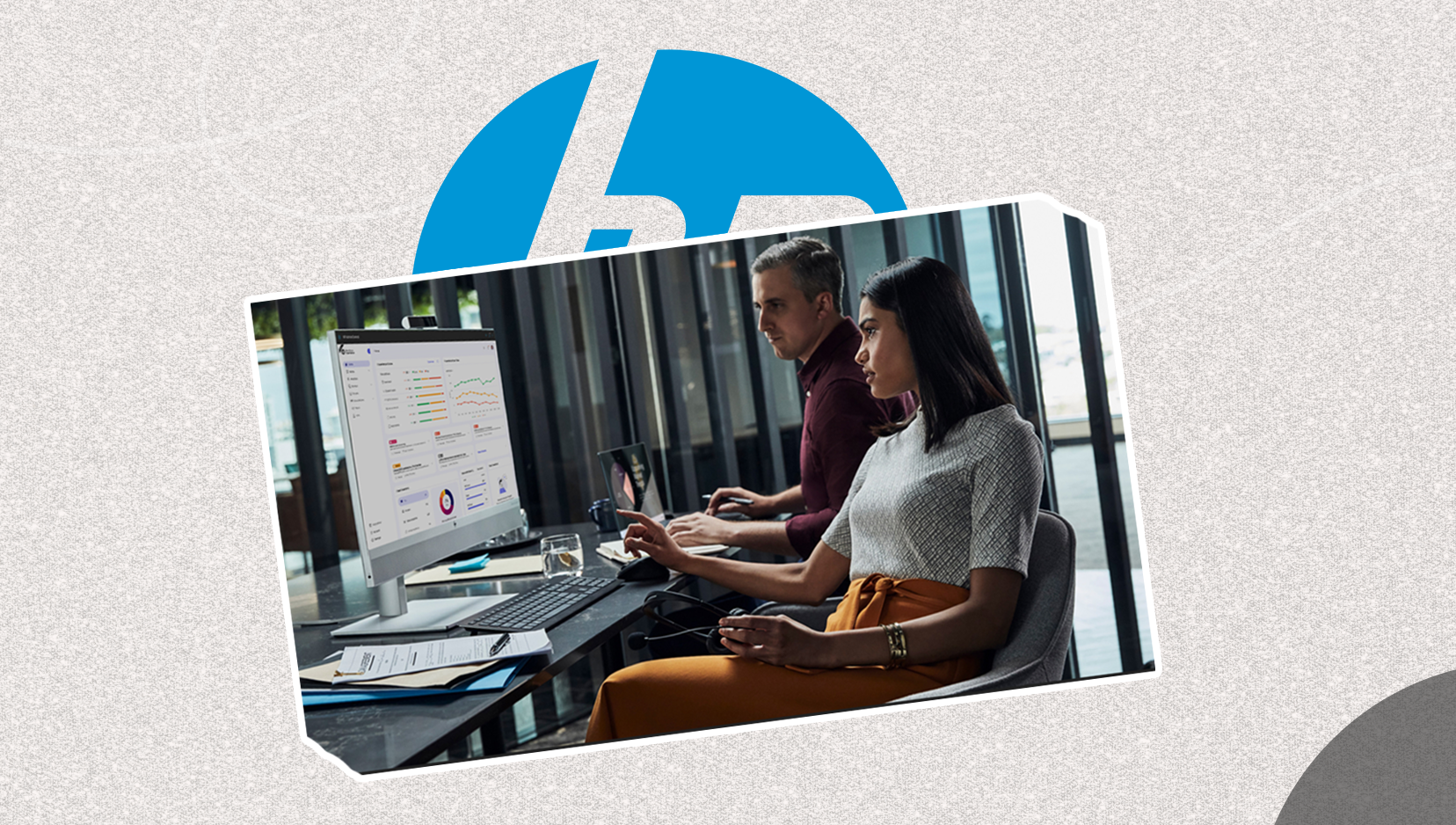
HP used its annual Imagine event this week to lay out a clear message: the future of work will be powered by AI, but only if it actually makes life simpler. From new AI PCs to quantum‑resistant printers, the company unveiled a sweeping line-up of devices and software aimed at businesses navigating hybrid and increasingly digital environments.
Speaking at HP Imagine 2026, Bruce Broussard, Interim Chief Executive Officer at HP Inc., said the company is focused on using AI to create “more connected experiences” that help organisations move faster and help people do their best work, wherever work happens. In other words, less faff, more flow.
That ambition comes at a time when work still feels messy for many employees. HP’s 2025 Work Relationship Index found that only 20% of workers describe their relationship with work as healthy, while 22% report monthly tech issues that disrupt their focus. I’ve lost count of the founders across the MENA region who told me their biggest productivity drain isn’t strategy or funding, but tools that don’t speak to each other… it’s the small frictions that drain energy.
HP argues that the right technology can shift that balance. According to its data, employees equipped with suitable tools are twice as likely to feel positive about their work, with a 33-point jump in overall experience scores. Internally, HP says a 4.5‑month trial of AI PCs across more than 4,000 employees delivered a 16% productivity boost. Those are bold numbers, and while every company’s mileage may vary, I reckon many IT leaders will at least be curious.
At the centre of the announcements is HP IQ, a new platform designed to bring on-device AI and proximity-based connectivity into one managed ecosystem. It will debut on the next generation of HP EliteBook X G2 AI PCs. The idea is simple enough: embed intelligence directly on the device, allow machines to recognise and connect to nearby HP hardware, and manage it all through tools like the HP Workforce Experience Platform or Microsoft Intune.
Part of this is HP NearSense, a spatial intelligence feature that allows devices to discover and collaborate with each other in real time. Think of moving work between your laptop and a nearby video system or sharing context across devices without endless log-ins. Over time, HP plans to extend NearSense to its wider ecosystem, including Poly video conferencing systems, printers, desktops and peripherals. If it works spot on, it could ease some of the daily friction hybrid workers face when jumping between spaces.
On the hardware side, HP introduced the EliteBook 6 G2q Next Gen AI PC, aimed at office collaborators and mobile professionals. The device combines AI computing power, long battery life and a slim design, and comes alongside a broader refresh of HP’s commercial portfolio with both AMD and Intel options. Rather than pushing a one-size-fits-all model, HP is clearly leaning into flexibility, which, frankly, feels like a sensible move.
Security also took centre stage. HP announced new hardware-enforced protections and quantum-resistant safeguards across its portfolio, designed to close known industry gaps and prepare for future threats. This includes updates to its LaserJet Pro 4000/4100 Series and LaserJet Enterprise 5000/6000 Series printers. These models combine AI-powered document processing with security features intended to protect BIOS and firmware integrity using quantum-resistant cryptography. For companies juggling paper and digital workflows, especially in regulated industries, that layer of protection could be more than just a tick-box exercise.
Power users weren’t forgotten. HP revealed a new generation of Z Workstations and refreshed its mobile workstation range with the ZBook X G2i, ZBook 8 G2i and ZBook 8 G2a. These thin-and-light machines are built for complex AI workloads, offering AMD and Intel configurations, scalable memory and improved portability without sacrificing battery life. As AI models grow heavier and data more sensitive, infrastructure upgrades are becoming less of a luxury and more of a neccessity.
Beyond work, HP also signalled it is continuing to blend productivity with play, highlighting updates within its gaming ecosystem under the HyperX brand. The message here is clear: the line between work and downtime is blurring, and devices must adapt to both.
For startup founders across MENA, especially those building AI-driven products, these developments are worth watching. Access to smarter, more secure infrastructure can be a competitive edge, particularly when scaling across borders. And believe it or not, sometimes the unglamorous stuff — firmware integrity, device manageability, battery performance — is what keeps a fast-growing team on track.
HP operates in more than 180 countries and continues to position itself as a long-term player in shaping the so-called future of work. Whether all these AI promises will deliver lasting impact remains to be seen. I’m not a fan of hype for hype’s sake. That said, if the company can genuinely reduce everyday complexity rather than add another layer of it, many businesses will be chuffed to bits.
🚀 Got exciting news to share?
If you're a startup founder, VC, or PR agency with big updates—funding rounds, product launches 📢, or company milestones 🎉 — AraGeek English wants to hear from you!


✉️ Send Us Your Story 👇