 LEAP26
 AI
AI Saudi Arabia
 UAE
UAE Egypt
EgyptI am Khaled Elahmad. I treated reputation seriously before platforms caught up

7 min
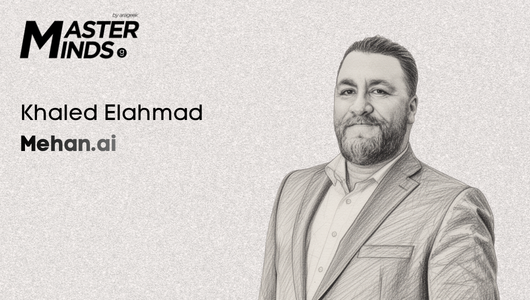
Reputation has become one of the few professional assets that compounds quietly and punishes neglect ruthlessly. Khaled Elahmad has been working on this problem long before it became fashionable, and long before AI complicated it further. What emerges through the conversation is not a content creator chasing reach, but an operator obsessed with coherence, how a person shows up when they are searched, discussed, or evaluated without being present.
How he introduces himself now
When asked how he presents himself today, Elahmad is notably restrained. He calls himself a personal brand-building consultant, but quickly reframes the label. His work is not about polishing an image, but clarifying it. The aim is alignment between who someone is, what they stand for, and why they should be trusted.
That focus has roots going back to the earliest days of blogging in the 1990s. He moved through microblogging, Facebook, and eventually LinkedIn, but the insight stayed constant. Platforms change, reputation does not. Online presence is simply the extension of how you already operate in the real world.
COVID became a forcing function. Prompted by a comment about LinkedIn’s organic reach, he began publishing seriously in 2020, learning what he calls the platform’s language. What started as experimentation hardened into a repeatable framework. Later came a sharper question. If executives made up only a fraction of his audience, how could the rest be served at scale? That question eventually became Mehan.ai.
Why reputation won over conventional career paths
Pressed on why he leaned into personal branding rather than a more traditional trajectory, Elahmad points to timing and pattern recognition. He was talking about reputation before it had a name. Across marketing, digital media, and social platforms in both public and private sectors, the same issue kept surfacing. How are you perceived when you are not in the room?
LinkedIn emerged as the logical arena. It is professional, relatively civil, rich in decision makers, and structurally designed around opportunity. But only if approached deliberately. Used casually, it becomes noise. Treated strategically, it becomes leverage.
Reputation in the age of AI
On the question of how AI has changed professional reputation, Elahmad sees a paradox. Creation has become easier, but trust has become harder. As synthetic content floods the system, people become more sensitive to anything that feels artificial.
His principle is blunt. Use AI as a tool, never as a substitute. It can assist, but it cannot replace judgement, lived experience, or ethical stance. What draws attention now is precisely what cannot be generated convincingly.
From Google results to machine answers
When the conversation turns to search behaviour, the implications are sobering. Visibility is no longer about ranking on Google alone. People now ask systems to summarise and evaluate individuals.
For leaders, this means building presence where machines learn from. Trusted profiles, credible interviews, thoughtful answers on public platforms, and consistent LinkedIn content all contribute to a coherent picture. The goal is not to game algorithms, but to document impact so that any summary of you actually makes sense.
Why LinkedIn is no longer a digital CV
Asked what makes a LinkedIn profile strategic today, Elahmad reframes the question. Opportunities no longer wait for applications. They increasingly arrive through sourcing.
A profile becomes a front door, a signal of leadership maturity, and a trust-building mechanism before any conversation happens. He reduces it to three pillars. Be discoverable. Publish to build trust. Engage to build relationships. Most people ignore the third, even though it differentiates fastest.
The mistakes he sees repeatedly
Drawing on work with more than 35,000 professionals and hundreds of organisations, Elahmad points to a persistent misunderstanding. Personal branding is not self celebration. It is sense making.
Executives often list tasks instead of outcomes, accumulate titles without a narrative, leave profiles outdated, or outsource content until their voice disappears. At company level, there is still fear of empowering employees digitally, rather than trusting them as ambassadors.
Why Mehan.ai exists
When asked how Mehan.ai came about, Elahmad describes a market gap rather than a technical idea. Most professionals need help with presence, but lack time, writing confidence, or support. In the Arab world, language and context add another layer.
Mehan.ai was designed to help people improve profiles, create consistent content, and develop CVs without flattening them into generic text. The emphasis is on preservation of humanity, not replacement.
Using AI without losing yourself
On the question of authenticity, Elahmad is precise. The difference lies in instruction. Asking AI to generate content blindly produces sameness. Guiding it with audience, sources, tone, and then adding personal judgement produces leverage.
AI is strong at structure and synthesis. It is weak at intuition and ethics. His rule is simple. Let it build the draft. You provide the soul.
What the tools actually change
Asked about impact, Elahmad points to clarity and confidence. When profiles are organised, discoverable, and built around a clear story, visibility follows. Responses improve. Interviews accelerate.
Making parts of the tools free was deliberate. Access to opportunity should not depend on money or connections. Partnerships with institutions, including Jordan’s Ministry of Digital Economy and Entrepreneurship, have focused on readiness rather than hype.
Youth unemployment and realistic outcomes
When pressed on whether AI can address unemployment, Elahmad is careful. It does not create jobs. It closes a different gap. The gap of articulation, visibility, and professional expression.
Measured at scale, tens of thousands have improved their ability to introduce themselves and engage decision makers. That alone opens doors that were previously invisible.
What cross cultural work teaches you
Reflecting on experience across Kuwait, the United States, and Jordan, Elahmad emphasises context. Influence is cultural. Authority, trust, and language do not translate cleanly.
Effective digital presence requires knowing what travels globally and what must be localised, while staying authentic in both.
Government versus private sector lessons
Asked to compare government work with startups, Elahmad describes it as an education in responsibility. Government teaches how reputation operates at institutional scale, how crises are handled, and how words carry consequences.
Working during the early days of social media also brought exposure to global platform leaders, shaping his understanding of influence far beyond content mechanics.
The future of employee advocacy
On employee brand ambassadors, Elahmad is conditional. The model works only when it is organic. Ambassadors are not appointed. They emerge from healthy culture.
When authentic, the result is credible, human, and more powerful than advertising. When forced, it collapses immediately.
Recognition and restraint
Asked about being ranked highly in the region, Elahmad treats it lightly. Lists are decorative. His real measures are impact, dignity, tangible change, and ethical consistency.
The risk, he suggests, is becoming loud without substance.
Superficial versus strategic brands
When the conversation turns to longevity, Elahmad draws a clear line. Superficial brands chase trends and numbers, then burn out. Strategic brands grow slowly, compound trust, and outlast cycles.
One builds an image. The other builds a reputation.
Advice to leaders who are invisible online
Pressed for practical advice, Elahmad is concise. Do not let others write your story.
You do not need daily posting. You need alignment. Update your profile around impact. Share one thoughtful insight a week. Engage with others. Be consistent rather than intermittently loud.
Five years from now

Looking ahead, Elahmad expects search to deliver judgement, not links. Systems will ask who you are, what you have said, where you have appeared, and whether you are credible.
Those without trusted references, consistent presence, and evidence of thinking will simply not appear in decisions. Reputation, he argues, must be built like infrastructure, not campaigns.