 LEAP26
 AI
AI Saudi Arabia
 UAE
UAE Egypt
EgyptI am Mohamed El-Feky. I built Sympl by fixing what banks ignored.

7 min
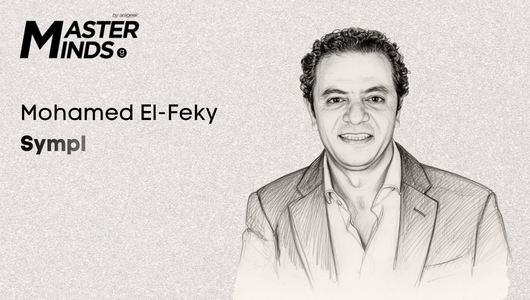
Mohamed El-Feky on Accumulating Experience Before Taking Risk
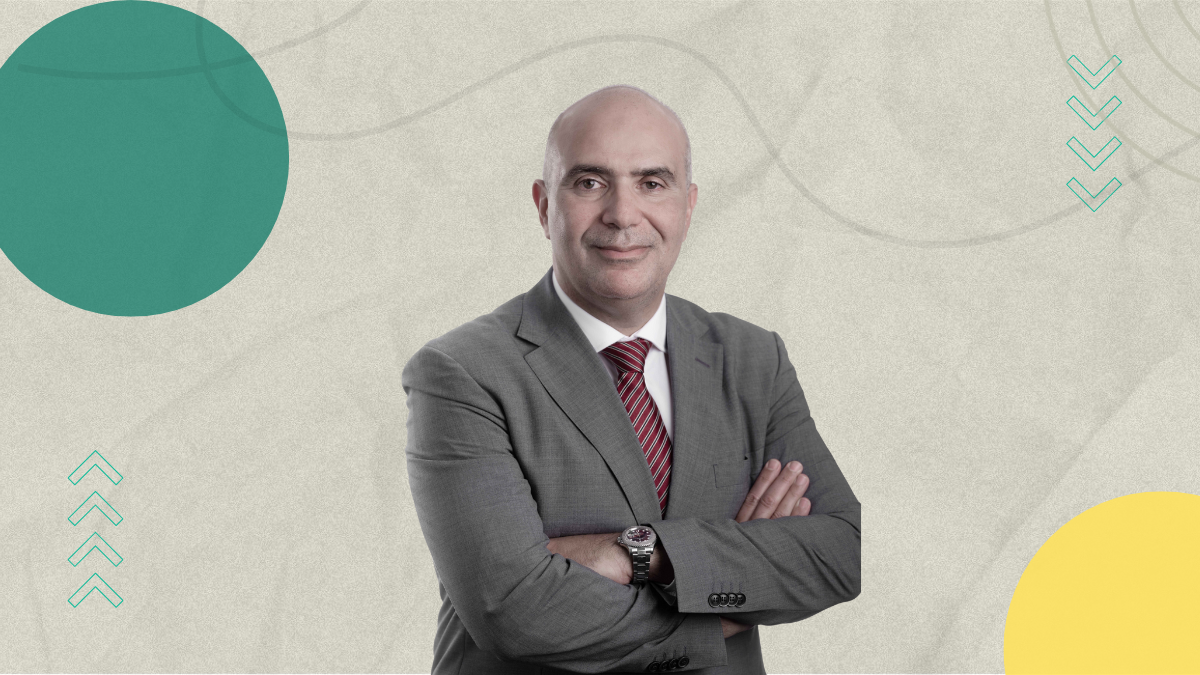
Mohamed El-Feky’s career does not follow a straight line. It compounds. Engineering, sales, banking, consumer finance, and finally fintech all stack on top of each other, not as credentials but as operating lessons. What ties them together is a repeated refusal to accept the obvious path when it does not fit his judgement.
Why he left engineering behind early
When asked about his starting point, El-Feky is clear that engineering was never the destination. He studied it at Cairo University, but his attention was already elsewhere, pulled towards management, sales, and how businesses actually move. While still a student, he trained in sales, marketing, and management, testing himself outside the classroom.
His first attempt at entrepreneurship came immediately after graduation. He founded Auto Clinic, a website offering car maintenance deals. The idea worked in theory, but execution failed. He could not market it effectively. Instead of treating that as a dead end, he turned it into an entry point. One of the automotive companies he had been promoting offered him a job, and in 2002 he joined them, not as a founder but as an operator learning from inside.
The long detour through qualifications and credibility
On the question of why he returned to formal education, El-Feky points to a structural barrier rather than personal ambition. As he sought better roles, he found that many companies would not take him seriously without recognised academic credentials. An MBA seemed obvious, but his engineering background worked against him. He was rejected because he lacked formal foundations in management and economics.
Rather than forcing the door, he took a step sideways. He earned a diploma in marketing, proved himself, and only then was accepted into an MBA programme. That sequence mattered. During his MBA, he became the person others relied on. Senior executives from multinational companies, short on time, leaned on him to carry projects. They trusted his execution. That trust translated into job offers.
One of those offers took him to OrasInvest, supporting Orascom’s telecom subsidiaries across several countries. He stayed four years. When an overseas posting to Algeria came up, he declined. Pressed on that decision, he frames it as judgement rather than sacrifice. Family circumstances made travel the wrong call at that moment, and he was unwilling to optimise his CV at the expense of reality.
Banking as a training ground, not a destination
When the conversation turns to banking, El-Feky describes it as a deliberate learning phase. From 2007 to 2013, he worked at Bank Audi in Egypt, moving across sales, product development, customer databases, and retail lending. He then joined Mashreq Bank in Egypt and the UAE until 2016, before returning again to Bank Audi Egypt.
What he gained was not seniority but pattern recognition. He saw how products were built, sold, priced, and constrained. He also saw where banks struggled to serve real customer needs. At Bank Audi, he proposed a product that inverted the traditional lending model. Instead of lending cash, the bank would purchase the product on behalf of the customer. The idea was rejected.
He does not present that rejection as failure. Asked to reflect on it, he treats it as an early signal. The gap he was identifying existed, but the institution was not built to fill it.
From product ideas to building the company himself
That insight followed him to EFG Hermes Group, which he joined in 2017 as Head of Product Development. He later became CEO of valU, one of the group’s consumer finance companies, and left in 2021. By then, the pieces were in place.
When asked why he founded Sympl, El-Feky explains that his initial ambition was open banking infrastructure for consumer finance companies. The opportunity looked large, especially as more firms obtained consumer finance licences. Regulation, however, lagged behind. Open banking had no clear framework.
Rather than wait, he pivoted. Market demand was already visible among bank cardholders who wanted short-term instalments for essential, low-priced, frequently purchased goods. That demand became the foundation for Sympl, launched in October 2021 with partners Yasmin Mohamed Hanna and Karim Tawfik.
What Sympl actually does differently
On the mechanics of the business, El-Feky is precise. Sympl allows customers with bank cards to pay in short-term instalments using the same card, without interest and without complex procedures. Merchants benefit from higher sales. Customers spread payments over three, four, or five instalments, weekly, bi-weekly, or monthly.
Revenue comes from two sides. Merchants pay a discount percentage. Customers pay a fixed service fee at checkout, depending on the instalment plan. There is no interest.
By the end of 2025, Sympl had processed EGP 1.5 billion in transaction volume, working with more than 4,000 electronic points of sale across malls and e-commerce platforms. The merchant network covers daily needs, clothing, personal care, medical and educational services, fitness memberships, and training courses. Notably, it excludes electronics like phones and computers, a deliberate boundary rather than an oversight.
Why he believes the model fits the market
Pressed on competitive advantage, El-Feky points first to pricing. Sympl serves purchases under EGP 10,000, a segment often ignored by traditional consumer finance. He also challenges the assumption that monthly repayment works for everyone. Freelancers and irregular earners live on different cash cycles, so Sympl offers flexibility in repayment frequency.
Interest-free payment is not a marketing hook for him. Asked about it, he frames it culturally. Deferred payment without interest aligns more closely with Egyptian and Arab norms. Many competitors only offer interest-free plans temporarily. Sympl builds it into the model.
The hardest parts of building the company
When asked about challenges, El-Feky does not start with regulation or competition. He starts with people. Building a team that genuinely shared his long-term vision took time, but he considers that problem largely solved.
The second challenge, still unresolved, is education. Many customers and merchants struggle to distinguish between consumer finance and buy-now-pay-later models. Explaining that difference, and why it matters, remains ongoing work.
Funding was the most acute pressure point. Despite that, Sympl closed a USD 6 million round just six weeks after launch in December 2021. Beco Capital led the round, joined by A15 and Global Ventures. He attributes investor interest to three factors: a team investors could trust, a business model that was new to Egypt, and a market large enough to justify the risk.
Choosing growth over visibility
On the subject of Shark Tank Egypt, El-Feky is matter-of-fact. In 2023, he asked for EGP 15 million for 2 percent of the company. The counteroffer was the same amount for 30 percent. He refused. Asked why, he says it would have been unfair to existing investors and damaging to the cap table.
That experience sharpened his timing instincts. Given inflation and economic pressure in Egypt, he decided that raising equity was not the right move. Instead, he plans to secure banking facilities to support growth.
Sympl reached profitability at the end of 2024, which he notes is typical for retail-focused companies after three to four years. For now, expansion remains domestic, with international growth dependent on capital availability.

What he tells founders who want to follow
Asked to reflect on advice, El-Feky avoids slogans. He emphasises industry expertise first, not enthusiasm. Relationships matter because partnerships compound. Access to capital matters, whether through investors or banks. Underneath all of it is judgement, knowing when to push, when to wait, and when to walk away.