 LEAP26
 AI
AI Saudi Arabia
 UAE
UAE Egypt
EgyptI am Mohammed Qahtani. I learned winning was just the start

6 min
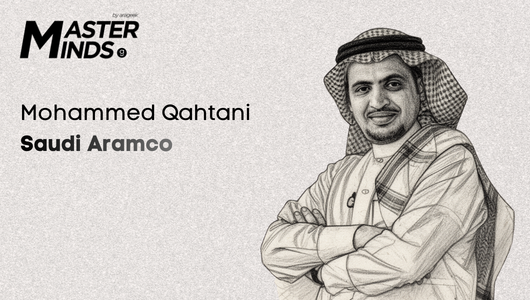
Mohammed Qahtani on Turning a Stutter into a Global Stage
Mohammed Qahtani does not present himself as a natural-born speaker. In fact, he began at the opposite end of the spectrum. As a child, he struggled with severe stuttering and avoided conversations whenever he could. Today, he stands as the 2015 World Champion of Public Speaking and has delivered more than 500 talks across 35 countries.
The transformation was not driven by ambition for fame. It began as something far more personal.
How a speech competition became a personal mission
Asked about the start of his journey, Qahtani traces it back to 2010, when he joined Toastmasters. The goal was simple: reduce his stutter. A school friend had once suggested that standing in front of a crowd might help. Each time he tried, he noticed the stutter easing.
Public speaking became therapy.
He entered competitions and, by his own account, kept losing year after year. The title was not in his imagination. But in 2015, persistence paid off. He won the World Championship of Public Speaking, becoming the only person from the Middle East to achieve the title.
The irony is not lost on him. The stage he once feared became the very tool that reshaped his life.
What winning really felt like
When the conversation turns to the moment of victory, Qahtani’s reaction is not triumphal. It is disbelief.
He still watches the winning speech and asks himself what was so special about it. He does not see anything extraordinary. For him, the experience reinforced a larger lesson: we underestimate our own accomplishments.
He often repeats a line that captures his philosophy. No matter how flawed you think you are, someone out there is looking up to you. Even if you know you are not perfect, you owe that person something to aspire to.
Growth after the spotlight
On the question of what happened after the championship, Qahtani is clear that the real growth came later. Invitations to speak increased. Expectations rose.
At that point, he says, there were two options. Quit while ahead or rise to the occasion.
He chose the latter. Professional speaking and coaching followed, not because he set out to build a personal brand, but because the demand required him to elevate his craft. The standard had changed, and so did he.
Preparing for 35 different countries
Asked how he prepares for audiences across cultures and continents, Qahtani’s answer is methodical.
He always begins with questions. How many people will attend? What is their background? What is the demographic? A speech cannot be universal in delivery, even if the message is. Cultural context shapes how stories land and how humour translates.
Winning the title opened global doors. Sustaining relevance required adaptation.
How Aramco shaped his ceiling
When asked how his role as a system analyst at Saudi Aramco has influenced him, Qahtani speaks with evident gratitude.
He describes Aramco as an organisation that invests heavily in employee development. The support he received, including the understanding of managers when he travels to speak, removed what he calls a “ceiling of dreams”.
For him, leadership is not just about personal success. It is about institutions that push people beyond what they thought possible.
Communication beyond the stage
On the surface, certifications in negotiation, team building and leadership might seem separate from public speaking. Qahtani disagrees.
Asked how these skills connect, he reframes speaking as daily negotiation. At work and at home, people constantly persuade, align and motivate others. The ability to get a message across clearly is not reserved for a stage. It is central to leadership and relationships.
Speaking well, in his view, is less about performance and more about influence.
Coaching across cultural barriers
Pressed on the biggest challenge in coaching high-level clients, he identifies cultural context.
Advice that works in one country may fail in another. Understanding the event, the environment and the audience requires deeper conversations with clients. Coaching becomes less about delivery techniques and more about situational awareness.
The challenge, he says, forces him to listen more carefully.
Reframing stage fright
When the topic shifts to stage fright, Qahtani offers a perspective shaped by experience.
Most fear, he argues, comes from believing the audience is superior, especially when speaking to senior leaders. His counterpoint is simple: you possess something no one else does. Your perspective, your experience, your voice.
Confidence does not come from superiority. It comes from recognising your unique value.
The speech he barely remembers
Asked to share a memorable moment from his international events, Qahtani recounts a message he received on LinkedIn.
A man claimed that one of Qahtani’s speeches had saved his life. When Qahtani tracked down the video, it was from a small club event in Belgium. The recording was not polished. He did not even remember delivering it.
Yet for that individual, the message mattered.
The lesson he draws is consistent with his earlier point. Someone is always listening. The size of the audience does not determine the impact of the message.
What makes a leader effective
On leadership, Qahtani returns to a familiar principle.
Asked what defines an effective leader or speaker, he says the audience must come first. Many people step onto a stage with personal agendas: promotion, fame, financial gain. When the focus shifts from self to service, communication changes.
Speaking from the heart is not a cliché for him. It is a discipline.
Motivation and the idea of a superpower
When asked how he sustains motivation despite a demanding schedule, Qahtani speaks of what he calls his superpower: people enjoy listening to him.
He does not position himself as an idol. But when someone approaches him and says a speech improved their life, that feedback becomes fuel.
Impact, not applause, keeps him moving.
Adapting to a virtual world
On the future of public speaking, particularly in a post-pandemic world, Qahtani admits the shift to virtual platforms was difficult.
He prefers live audiences. Speaking to a camera lacks the energy exchange he thrives on. Yet adaptation was necessary. The principle, he says, remains unchanged. Speak from the heart. Mean what you say. Even through a screen, authenticity travels.
Technology alters format. It does not replace sincerity.
The habit that sustains him
Finally, asked about personal routines, Qahtani highlights writing.

He writes constantly. He looks for inspiration everywhere, even while standing in line for coffee. With many of his speeches already online, he feels pressure to bring something new each time. That requires continuous learning and growth.
For someone who once avoided speaking altogether, the commitment to never stop finding new words is telling.