 LEAP26
 AI
AI Saudi Arabia
 UAE
UAE Egypt
EgyptI am Sally ElAkkad. I scaled Arabic content by thinking in systems

7 min
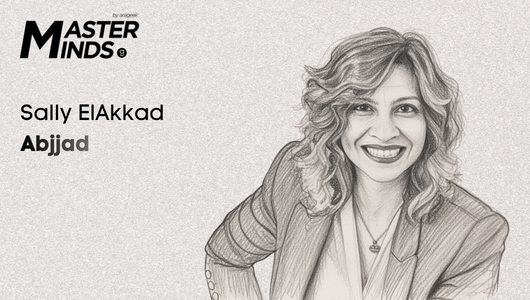
Sally ElAkkad on building with discipline, scaling culture, and why learning is non-negotiable
Sally ElAkkad is clear about how she frames her work. She does not lead with a title or a résumé, but with intent. What matters, she insists, is what gets built and whether it lasts. That lens runs through her career, her leadership philosophy, and her approach to Abjjad today.
How she introduces herself now
When asked how she defines herself professionally, ElAkkad strips it back to fundamentals. She describes herself as a builder, someone focused on creating teams, systems, and businesses designed to scale with discipline. Titles, in her view, are secondary to outcomes.
Her career reflects that orientation. It did not follow a neat progression, but moved across roles, industries, and organisations, including large multinationals, whenever she saw room to grow. Each shift brought pressure and discomfort, followed by sharper judgement. Working across commercial, marketing, e-commerce, and training roles gave her a grounded understanding of customers, governance, and decision-making, and just as importantly, clarity on the kind of leader she wanted to become, and what she wanted to avoid.
What connects the journey is a consistent belief in growth paired with focus. She talks about an open mindset that asks “why not?” but only when there is a real opportunity to stretch, learn, and build something stronger.
The milestones that shaped her thinking
On the question of career milestones, ElAkkad points first to her early commercial roles. Being close to customers and revenue created a deep sense of accountability and anchored her decisions in results rather than theory.
Later, leading digital and e-commerce initiatives changed how she thinks about systems. Technology, data, and process were no longer abstract enablers but practical tools for efficiency and scale. Alongside this, she made a deliberate commitment to learning and knowledge sharing, investing in education, training, and mentoring because, as she sees it, knowledge only scales when it is shared intentionally.
Stepping into the CEO role brought all these layers together. People, product, governance, capital, and long-term direction became a single equation rather than separate responsibilities.
How her leadership style evolved
Pressed on how her leadership changed over time, ElAkkad is direct. She moved from personal oversight to building governance systems. Direction, she argues, must come with control.
For her, governance is not micromanagement. It is clarity paired with auditable frameworks that create visibility, accountability, and alignment. Without direction, teams drift. Without control, scale breaks. Mature leadership is about holding both, so teams can move quickly and responsibly without constant intervention.
Early lessons that still guide strategy
Asked to reflect on formative experiences, ElAkkad returns to her time in commercial departments. Daily exposure to customers and revenue trained her to see strategy as a set of trade-offs rather than a slide deck.
That grounding made her acutely aware of opportunity cost. What do you give up, what do you gain, and do you have the timing, talent, and execution capacity to follow through? Growth, in her view, only works when ambition is balanced with discipline, and that principle continues to shape her strategic decisions.
Why e-commerce mattered most
When the conversation turns to the functions that influenced her most, ElAkkad singles out e-commerce. It forces everything to connect. Marketing, product, data, operations, and revenue collide in real time, and the impact of decisions is immediately visible.
She also credits her habit of intentionally changing roles every few years. That exposure expanded her business acumen and taught her how functions interact and sometimes clash. The result is a strong belief in clear segregation of duties paired with real cross-functional synergy. Over time, she says, this trained her to think in multipliers rather than silos.
What has changed in consumer behaviour
On shifts in consumer behaviour over the past decade, ElAkkad points to noise. Consumers are overwhelmed by options and promises, making attention harder to earn and trust harder to sustain.
What matters now is the ability to deliver a real, reliable promise through a unified experience. Consumers do not separate marketing, product, service, and technology. They experience them as one. Expectations also travel across industries. The best experience someone has anywhere becomes the benchmark everywhere, especially as technology raises the value bar for every pound spent.
Why knowledge sharing matters to her
Asked about her commitment to training and mentoring, ElAkkad traces it back to necessity. Much of her early learning came through observation and self-direction rather than formal mentoring. Learning became her responsibility.
That experience taught her the value of absorbing others’ thinking to accelerate growth. It pushed her to invest continuously in herself, from certifications to an MBA and now a DBA. Over time, this evolved into a belief that mentors learn as much as mentees do, and that learning cultures are essential for sustainable growth.
Continuous learning as a leadership requirement
On the importance of learning today, ElAkkad is unequivocal. It is non-negotiable. Learning determines whether leaders and organisations remain relevant.
She is careful to note that learning is not only about acquiring new information. It is also about questioning what you already know and whether it still holds. Outdated assumptions, she argues, are often more dangerous than ignorance. What matters is maintaining an open mind and continually testing your thinking.
What drew her to Abjjad
When asked why she joined Abjjad, ElAkkad points to its position at the intersection of content, technology, and culture. That combination creates multiple layers of impact.
Abjjad is not just a digital platform. It has economic impact as a scalable knowledge business, cultural impact by preserving and amplifying Arabic literature, and technological impact by modernising access to Arabic content. She emphasises that it operates as an ecosystem, expanding discovery and engagement rather than simply distributing books. For Arabic speakers globally, particularly in the diaspora, that cultural connection carries deep meaning.
Defining Abjjad’s role today
On Abjjad’s role in the market, ElAkkad describes a platform focused on expanding global access to Arabic literature. Growth is not only about scale but also about the diversity of audiences engaging with content.
Abjjad holds a leading position in Arabic e-books and is building toward leadership in audiobooks. At its core, the company bridges Arabic content with readers and listeners worldwide, preserving heritage while making access part of everyday life.
Strategic priorities and responsible scale
Asked about priorities, ElAkkad frames them around responsible scale and long-term value creation. The focus is on growing the platform while maintaining strong unit economics, strengthening partnerships, and expanding global reach among Arabic-speaking audiences.
In parallel, Abjjad continues to invest in technology and operational excellence to ensure that growth does not come at the expense of quality or sustainability.
How she thinks about AI and Arabic content
On the question of AI, ElAkkad sees both opportunity and responsibility. Less than five percent of global internet content is in Arabic, despite hundreds of millions of Arabic speakers. That gap, she argues, is cultural as much as economic.
AI can lower production barriers, improve personalisation, and enable scale when applied thoughtfully. For Abjjad, it is not just a technology lever but a way to expand access to Arabic knowledge faster and more sustainably, without compromising quality.
Building trust with publishers
Pressed on platform-publisher relationships, ElAkkad reduces it to fundamentals. Trust, transparency, and aligned incentives. Publishers need data, predictability, and respect for content value. Platforms need collaboration and long-term thinking. Sustainability comes when both sides grow together.
Inclusion as a business capability
When the conversation turns to women in leadership, ElAkkad is pragmatic. Leadership does not come in one shape or style, and companies need to hire for potential rather than comfort.
True inclusion, she says, requires leaders to examine their own biases, not just adjust policies. Diversity cannot be treated as an initiative. If it is not embedded in decision-making and talent assessment, it does not exist. When genuinely enabled, it improves decision quality and speed.
Advice to young women aiming high



Asked for advice, ElAkkad is direct. Do not self-eliminate and do not wait for permission. If there is a seat at the table, take it.
Power, trust, and respect are earned through clarity and consistency. Skills matter, but so does visibility. And understanding the numbers is essential. Knowing how decisions affect the financial picture is not optional for anyone aiming to lead.