 Ai Everything
 LEAP26
 AI
AI Saudi Arabia
 UAE
UAE Egypt
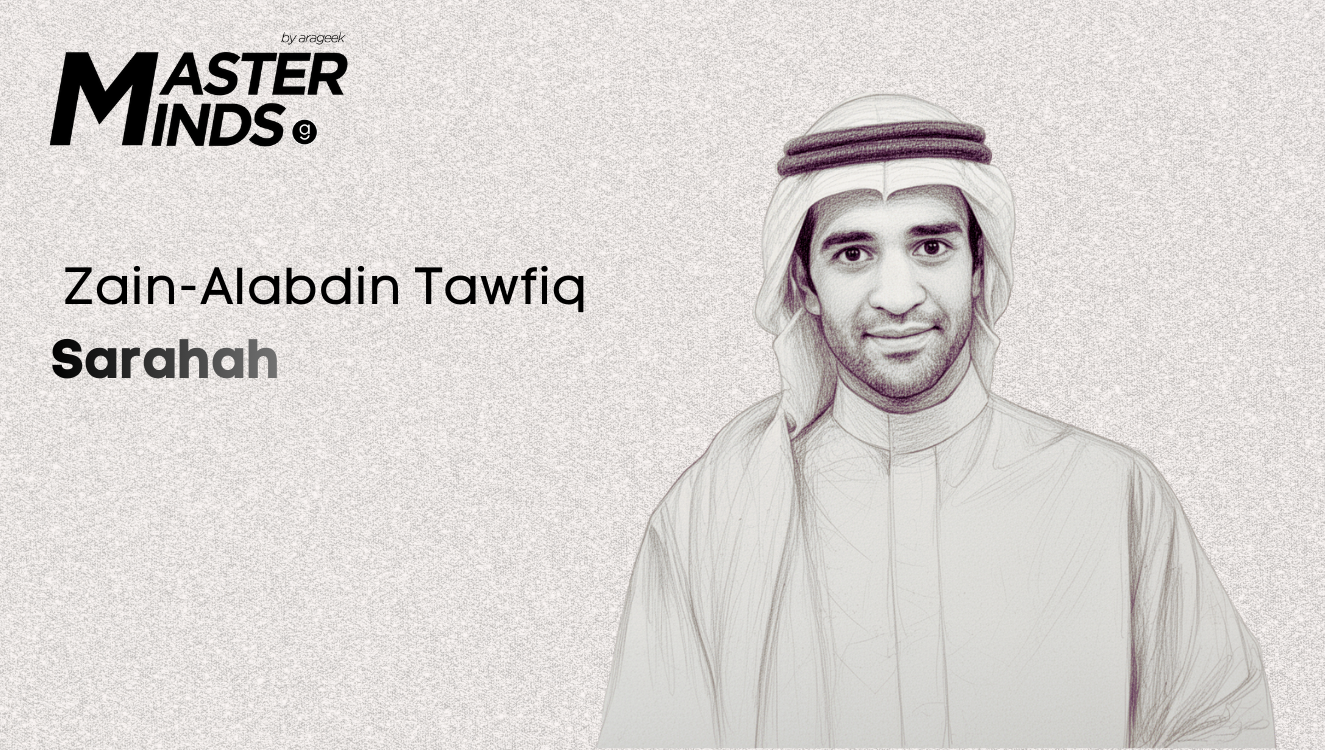
EgyptI am Zain-Alabdin Tawfiq. I ignored replies, and Sarahah spread faster

6 min
When a side project stopped behaving like a side project
When asked about the first moment Sarahah crossed from experiment to inevitability, Zain-Alabdin Tawfiq does not point to a press spike or a ranking screenshot. His original bar for success was modest, a thousand messages sent. He tracked users and message counts closely, but mentally the product still lived inside a small, containable frame. That frame broke when the numbers stopped climbing linearly and started compounding.
The spark was not a growth hack or a campaign. It was a person. A co-worker with an unusually wide social surface area shared the product, and it escaped into extended family WhatsApp groups across the region. Within days, usage jumped from thousands to millions. The insight came after the fact. Sarahah had collided with a regional dynamic of large, interconnected families spread across geographies, and once it entered those networks, it moved without friction.
Pressed on what he did next, Tawfiq focused less on dashboards and more on people. In the following days, he tried to form direct relationships with users, even sharing his own WhatsApp number. Those direct ties mattered. Users who felt personally connected continued to use Sarahah publicly, feeding the viral loop through their own social audiences.
How distribution worked, and where reality lagged behind growth
On the question of why Sarahah became the number one app in more than thirty countries, Tawfiq comes back to locality. Starting local was not a strategy buzzword, it was practical. He understood the cultural mechanics of his region, and the product leaned into them.
Once early users genuinely enjoyed the product, his focus shifted to reinforcing a single loop. Sarahah made it easy to share feedback publicly, and anyone who gave feedback was then prompted to create their own account. He did not measure virality formally at the time, but in retrospect he believes the coefficient was extremely high.
Where he misread things was not distribution, but durability. Infrastructure lagged behind adoption. He is pragmatic about early-stage engineering and does not believe in over-optimising too soon, unless the industry demands it. But he is clear that once critical mass hits, rebuilding and scaling is unavoidable. That transition came later than it should have.
The failures that did not show up on a chart
Asked to name the biggest failure inside Sarahah, Tawfiq refuses to collapse it into a single incident. There were many. The most lasting ones were personal. He neglected himself and the people around him, pulled by constant firefighting and explosive demand. One memory still bothers him, working on his laptop in a pizza shop while his mother waited patiently beside him.
From a customer perspective, he made decisions aimed at protection, such as disabling anonymous feedback without logging in, even though it reduced engagement. Looking back, he still feels it was not enough. The cost was not just users or reputation, but sleep, relationships, and a lingering sense that growth crowded out care.
Why saying no to a popular feature protected the system
When the conversation turns to his best decision during hypergrowth, Tawfiq points to something users repeatedly asked for and never got. The ability to reply to feedback inside the platform. On the surface, it seemed reasonable. In practice, he believed it would be fatal.
Allowing replies would have kept conversations contained, reducing the incentive to share feedback publicly on social media and comment there. That external sharing was the engine of growth. He had seen a similar platform die after adding exactly this feature. Given the constraints he was under, protecting the loop mattered more than satisfying requests.
The week he would rerun differently
Asked to reflect on his worst decision, Tawfiq is direct. He delayed a trip to Silicon Valley. At the time, he did not fully understand the market dynamics at play, or how quickly windows can open and close.
If he could rerun that period, the steps are simple. Answer calls earlier. Engage sooner with the ecosystem. Some conversations only exist briefly, and hesitation has a cost.
Choosing values when attention arrived
When asked about inbound interest from top venture firms and conversations with Google corporate development, Tawfiq is careful not to inflate the moment. These were early discussions, and events moved faster than decisions. Apple and Google eventually took Sarahah down before deeper consideration was possible.
What guided him throughout, though, was consistency. He only worked with companies and advertisers aligned with his values. Attention did not change that filter.
What he looks for when hiring, and what he avoids
On the subject of hiring, Tawfiq applies a single dominant filter. Humility. He would rather work with humble people than hire stronger technical talent with ego attached.
Instead of relying on trick questions, he focuses on interview atmosphere. He makes candidates comfortable, even encourages them to enjoy the conversation. This is not softness, it is diagnostic. Toxic behaviour tends to surface regardless of how relaxed the setting is. Comfort reveals character.
Building Wallble with lessons learned, not recycled
Switching to Wallble, when asked what problem he is solving now, Tawfiq places it firmly in the emotional-social category. Fast-paced lives leave little room for genuine moments. Wallble creates a space to collect heartfelt messages and sketches into a single memory wall, something that does not get buried in Slack threads or WhatsApp scrollback.
What he deliberately did differently traces directly back to Sarahah. He avoided anonymity entirely. He also avoided funnelling Sarahah traffic into Wallble, knowing that many users would try to recreate anonymous feedback dynamics in any adjacent product. Protecting the intended behaviour mattered more than short-term traffic.
Working without selling the fantasy

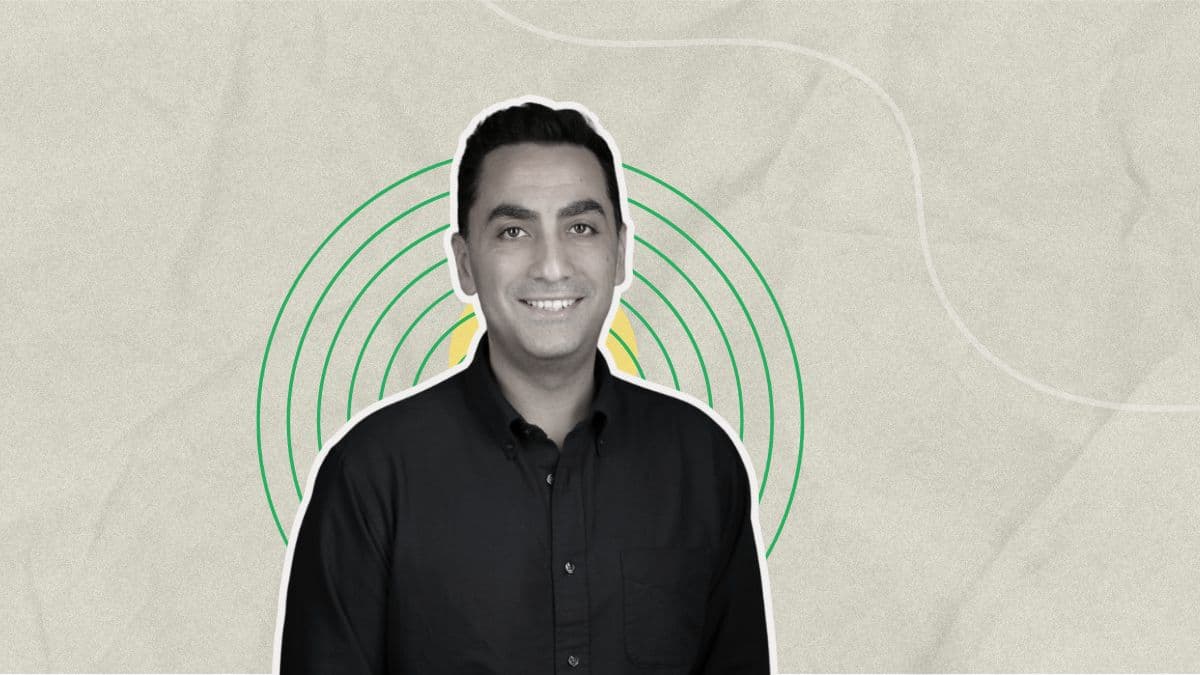

In closing, when asked about his current focus on consumer products and advising young founders, Tawfiq is blunt about one idea he actively resists. The romanticism of quitting your job to start a company.
With AI making MVPs easier to build, there is even less justification for unnecessary financial stress. He has lived that stress himself and found it counterproductive. Steady income buys clarity. For him, effectiveness now comes from building steadily, advising honestly, and refusing to package hardship as virtue.