 Ai Everything
 LEAP26
 AI
AI Saudi Arabia
 UAE
UAE Egypt
EgyptThales and AIO Forge New Partnership to Boost Egypt’s Tech Independence

3 min
Thales and Arab International Optronics aim to boost Egypt's technological independence and capability.
Their partnership seeks to embed Thales' solutions locally, enhancing Egypt's regional tech hub status.
AIO, a major player, already exports optical and electro-optical systems to friendly nations.
Thales' global expertise in AI and quantum tech complements Egypt's existing industrial base.
Collaboration between local talent and global experience may fuel innovation, despite potential challenges.
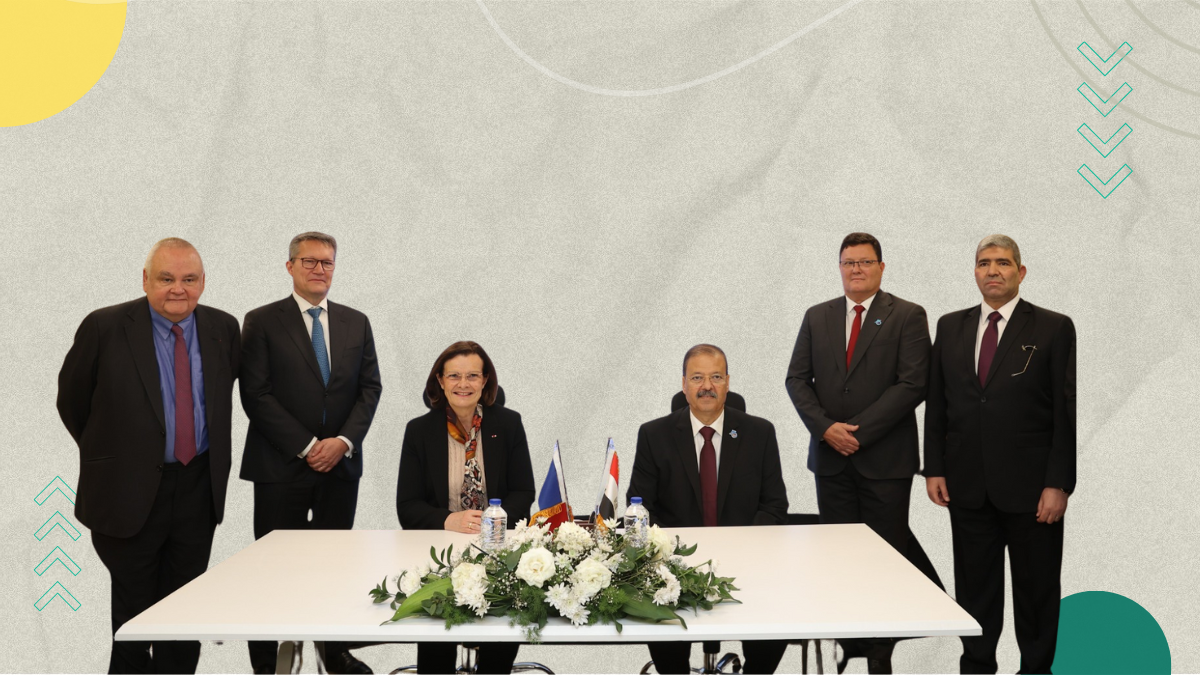
Thales and Arab International Optronics (AIO) are taking their long-standing relationship up a notch, setting the stage for what both sides describe as a fresh phase of strategic cooperation aimed at bolstering Egypt’s technological independence. I’ve seen plenty of these defence–tech partnerships pop up over the years, but this one feels a bit more grounded, perhaps because AIO has been a pillar of Egypt’s industrial landscape for decades.
The agreement spans six areas of collaboration, although neither side spelled out every detail publicly. Still, the intention is clear: deepen local capabilities and turn Egypt into a regional hub for advanced tech. Sherif Barakat, who leads Thales in Egypt, put it rather plainly. He said the strengthened partnership reflects the company’s pride in contributing to Egypt’s technological sovereignty, adding that embedding Thales’ high‑end solutions locally could help Egypt deliver and even export home-grown technologies to other markets. Spot on, really — and believe it or not, that kind of export mentality has become a lifeline for several manufacturing players across the region.
AIO, for anyone not familiar, isn’t some newcomer trying to make noise. It was set up by the Egyptian Armed Forces and now operates nine state-of-the-art factories producing optical and electro‑optical systems — everything from day and night vision gear to thermal and laser technologies. It’s one of the region’s heavyweights in this field. Beyond supplying critical equipment to the military, AIO also supports the wider economy by exporting its products to friendly nations, which helps bring in hard currency. I reckon that’s one reason the partnership matters: it builds on an industrial base that already knows what it’s doing, instead of starting from scratch.
Thales, on the other hand, brings the global edge. With more than 83,000 employees across 68 countries, the French group invests over €4 billion every year in research and development, especially in areas like AI, cybersecurity, quantum tech and cloud systems. That said, big global players sometimes struggle to localise effectively — it can be a bit of a faff — but this move seems intentionally rooted in Egypt’s existing expertise.
What stood out to me, thinking back to some of the entrepreneurs we’ve met through Arageek’s ecosystem work, is how often innovation thrives when local talent and global know‑how collide. I remember one founder joking that partnerships only work when both sides feel slightly uncomfortable. Maybe that’s true here too, in a good way.
On the flip side, grand announcements don’t always translate into results. But the industrial capacity is already there, the demand is clear, and the region’s push for tech sovereignty is stronger than ever. So I’m quietly optimistic — or chuffed to bits, as a friend of mine would tease — about what this could mean for Egypt’s tech future, even if the road ahead isn’t exactly straighforward.
🚀 Got exciting news to share?
If you're a startup founder, VC, or PR agency with big updates—funding rounds, product launches 📢, or company milestones 🎉 — AraGeek English wants to hear from you!
✉️ Send Us Your Story 👇