 GITEX Dubai
 Ai Everything
 LEAP26
 AI
AI Saudi Arabia
 UAE
UAE Egypt
EgyptValu Achieves Record Growth with 71% Revenue Spike in FY2025

4 min
Valu posted record revenues of EGP 5.
6 billion, up 71% year on year.
Net income jumped 81% as transactions doubled to 8.
7 million.
It kept a 23% market share and non-performing loans below 1%.
Prepaid cards, auto finance and premium lending drove strong GMV growth.
The firm expanded digitally, secured a Jordan licence and eyes regional growth.
Valu has wrapped up its first full financial year as a listed company with numbers that are, frankly, hard to ignore. For the year ending 31 December 2025, the Egyptian fintech reported record gross revenues of EGP 5.6 billion, up 71% year on year. Net income climbed even faster, rising 81% to EGP 764 million. Gross merchandise value (GMV) reached EGP 24.5 billion, a 50% jump, while total transactions more than doubled to 8.7 million.
That’s not just steady growth. That’s a company hitting its stride.
Valu also held onto a 23% market share and kept its non-performing loan ratio at 0.98%. In a market where credit quality can quickly become a bit of a faff, staying below 1% suggests disciplined underwriting rather than reckless expansion. I’ve seen startups chase growth at any cost — it rarely ends well. This feels different.
Daily activity tells its own story. Average daily GMV rose 48% to EGP 67.1 million, and average daily transactions nearly hit 24,000, up 113% year on year. Transaction frequency per customer increased 82% to 16.6 times annually, which signals something important: users are not just trying the platform once, they are coming back again and again. That kind of stickiness is spot on for a fintech trying to embed itself into everyday life.
A big driver of that engagement has been Valu’s prepaid card, where GMV surged 179% to EGP 5.16 billion. Shift, its auto financing arm, recorded a 78% increase in GMV to EGP 3.32 billion. Meanwhile, Ulter and Loans for premium purchases saw GMV soar 190% to EGP 1.35 billion. Big-ticket financing is clearly becoming a strong pillar of the business, and believe it or not, some purchases under its high-end programme can go up to EGP 60 million.
During the year, the company also launched Shop’IT, an integrated marketplace within its app, and introduced digitised instant approvals for large-ticket lending. The strategy seems clear: build a one-stop lifestyle financing platform rather than remain boxed into the “buy now, pay later” label.
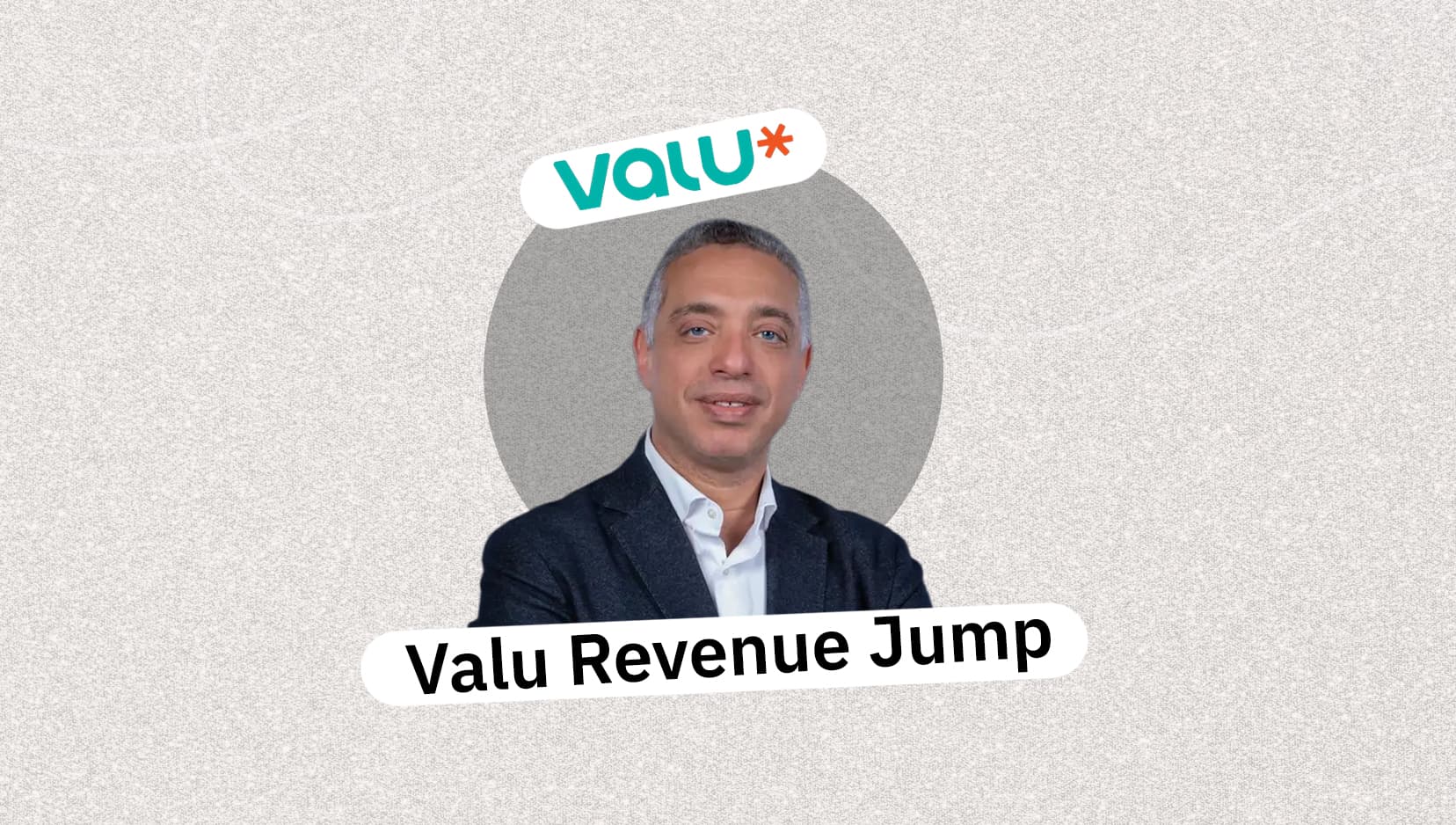
Walid Hassouna, CEO of Valu, described FY25 as a defining chapter, pointing to the company’s ability to scale profitably in its first year in public markets. He noted that Valu is on track to cross the one-million customer mark while expanding into new verticals and preparing for regional growth and SME penetration. He also highlighted the company’s proprietary credit rule engine as a competitive edge, allowing faster and more accurate risk pricing compared to traditional lenders.
Regionally, Valu secured final approval from the Central Bank of Jordan to begin operations there. It has also applied for an SME licence aimed at supporting its merchant network with data-driven credit solutions. Back home, the fintech rolled out fully digital onboarding on noon, marking what was described as Egypt’s first licensed BNPL transaction conducted digitally under the Financial Regulatory Authority’s FinTech licence.
Valu, legally known as U Consumer Finance S.A.E. and trading on the Egyptian Exchange under VALU.CA, was the first fintech focused on consumer finance to list on the EGX. Amazon holds a direct stake in the business, a detail that often gets investors chuffed to bits, and understandably so.
Its product ecosystem now spans BNPL solutions through U, investment offerings via Valu Invest with the AZ Valu fund and EFG Hermes ONE, the Sha2labaz instant cash redemption programme, Ulter for premium financing, Shop’IT marketplace services, and business-to-business products under Valu Business. The company also introduced prepaid and co-branded credit cards in partnership with Visa, widening its payment options even further.
From where I sit, covering MENA startups over the years for readers who follow Arageek, it’s interesting to watch how fintechs in Egypt are maturing. Not long ago, the conversation was all about user acquisition at lightning speed. Now, profitability, credit quality and regional licences are part of the same sentence. Well… I mean, that’s progress.
Of course, forward-looking statements remain just that, forward-looking. Market volatility, regulation, and competition can all shift the terrain. But for FY2025 at least, the performance is definatey one of the stronger fintech showings in the region.
🚀 Got exciting news to share?
If you're a startup founder, VC, or PR agency with big updates—funding rounds, product launches 📢, or company milestones 🎉 — AraGeek English wants to hear from you!





✉️ Send Us Your Story 👇