 Ai Everything
 LEAP26
 AI
AI Saudi Arabia
 UAE
UAE Egypt
EgyptAbu Dhabi and U.S. Chambers Forge Strategic Business Alliance to Boost Trade

4 min
Abu Dhabi Chamber signed a strategic cooperation deal with the U.
S.
Chamber.
The aim is to “expand investment flows” and open new trade channels.
Non-oil trade hit AED 111 billion in nine months of 2025.
Plans include trade missions, training programmes and shared market insights.
Startups hope smoother market entry and stronger cross-border networks will follow.
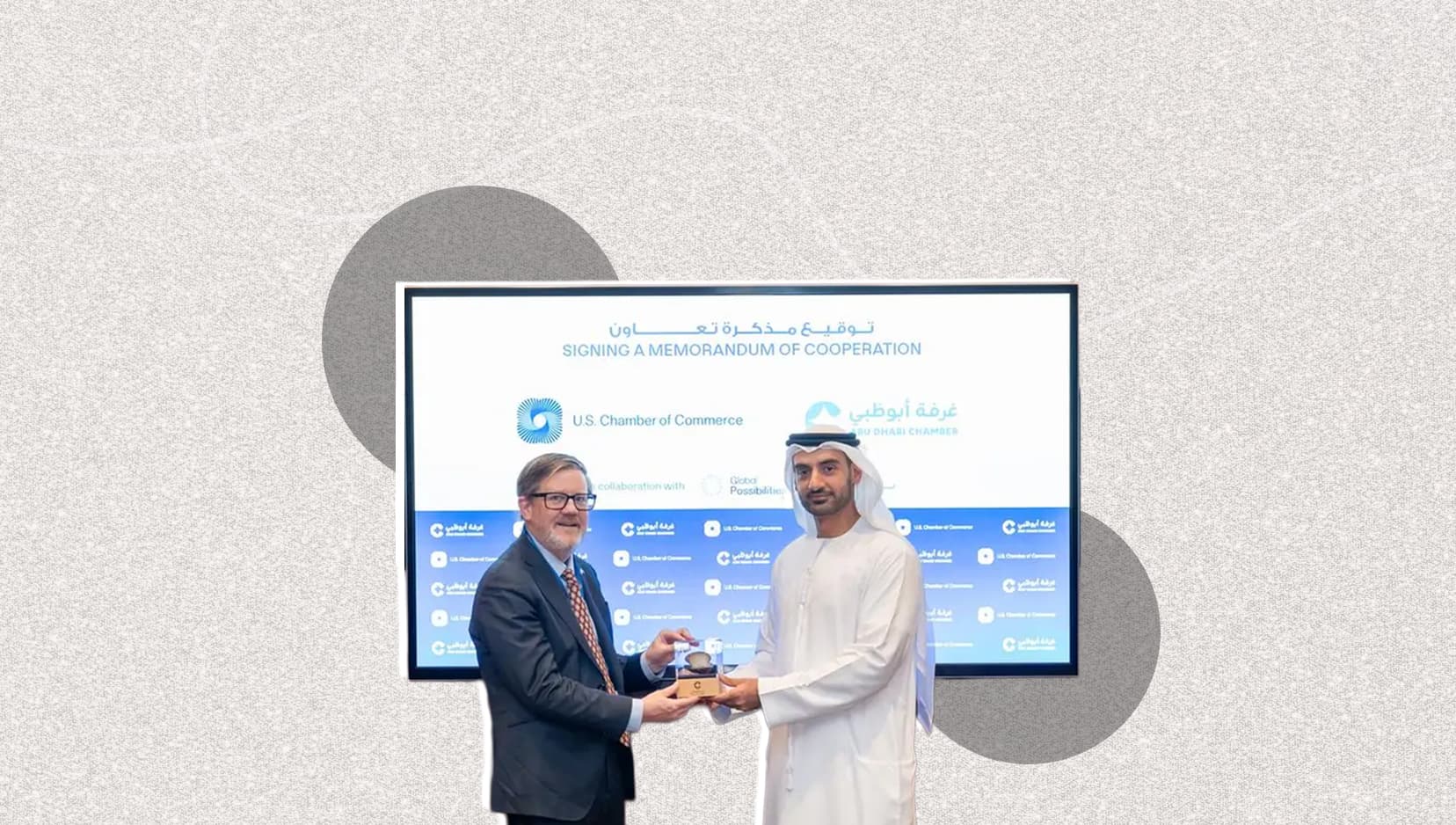
Abu Dhabi is doubling down on its US ties. In a fresh move to deepen economic cooperation, the Abu Dhabi Chamber of Commerce and Industry has signed a strategic cooperation agreement with the U.S. Chamber of Commerce, aiming to expand investment flows, open new trade channels and bring the two business communities closer together.
On paper, it’s about strengthening international partnerships. In practice, it’s about making it easier for companies on both sides to do business, swap expertise and, hopefully, scale faster. And for startups watching from the sidelines across the MENA region, that kind of institutional backing can be a real game changer.
The timing is not random. The UAE and the United States already share robust economic ties, with the US ranking among the UAE’s largest global trading partners. According to data from the UAE Federal Competitiveness and Statistics Centre, non-oil merchandise trade between the two countries reached AED 111 billion (USD 30.2 billion) in the first nine months of 2025. That’s a 10.2% increase compared to AED 100.7 billion during the same period in 2024. Not bad at all, especially in a global climate that has been, well… a bit choppy.
Thousands of American companies operate in the UAE across sectors such as technology, energy, advanced industries, financial services and healthcare. Mutual investments continue to grow, reflecting what both sides describe as strong confidence in each other’s business environments. The new agreement seeks to build on this momentum by creating a more structured platform for collaboration, less ad hoc, more strategic.
Under the deal, both chambers plan to cooperate on trade and investment promotion, knowledge exchange, economic events and trade delegation visits. There will also be a focus on sharing market insights and trade regulations, organising exhibitions and forums, and developing joint training and capacity-building programmes. In short, it’s about putting some muscle behind cross-border business engagement.
The agreement was signed by His Excellency Ali Mohamed Al Marzooqi, Director General of the Abu Dhabi Chamber, and Steve Lutes, Vice President for Middle East Affairs at the U.S. Chamber of Commerce, in the presence of representatives from both sides.
Al Marzooqi described the signing as a new milestone in strengthening economic relations with the United States. He noted that the partnership reflects the chamber’s continued efforts to expand international cooperation, support the global growth of the private sector and create broader investment opportunities for companies in Abu Dhabi. He also emphasised the United States as a strategic economic partner for the UAE, expressing confidence that the agreement would enhance knowledge exchange and boost global competitiveness.
For his part, Lutes said the agreement underscores the U.S. Chamber’s commitment to deepening cooperation with counterparts in Abu Dhabi and the wider UAE. He pointed to future opportunities for American and Emirati companies across investment, technology and trade, adding that stronger ties between the two business communities would support sustainable economic growth.
That said, beyond the formal statements and handshakes, what really matters is implementation. Agreements can sometimes look brilliant on stage but become a bit of a faff when it comes to execution. I reckon the real test will be how quickly SMEs and startups actually feel the impact—whether through smoother market entry, better access to networks or more visible joint initiatives.
At Arageek, we often see founders across MENA grappling with international expansion, visa processes, regulatory mazes, finding the right local partner, you name it. I still remember a conversation with a fintech founder from the Gulf who described entering the US market as “exciting but slightly terrifying”. Deals like this, if done right, can take some of that edge off and make global ambition feel less out of reach.
On the flip side, the US private sector also continues to eye the Gulf as a strategic growth corridor, particularly as the UAE pushes forward with economic diversification and bets big on advanced industries and digital transformation. The institutional bridge between the two chambers could provide a clearer runway for those ambitions to land.
And believe it or not, sometimes what makes these agreements spot on isn’t the headline numbers, but the quieter mechanisms, working groups, regulatory dialogues, trade visits, that oil the wheels of commerce. It may not sound glamorous, but it’s often where the real progress hides.
For Abu Dhabi, the message is clear: global partnerships remain central to its economic strategy. For startups across the region watching closely, this could definately be one to keep on the radar.
🚀 Got exciting news to share?
If you're a startup founder, VC, or PR agency with big updates—funding rounds, product launches 📢, or company milestones 🎉 — AraGeek English wants to hear from you!






✉️ Send Us Your Story 👇