 Ai Everything
 LEAP26
 AI
AI Saudi Arabia
 UAE
UAE Egypt
EgyptAI Adoption Surges as MENA Developers Lead Global Tech Transformation

5 min
JetBrains report calls MENA “young, ambitious, and all-in on AI”.
Ninety-six percent use AI tools, with coding agents becoming “infrastructure”.
Mobile and web dominate, with Dart, Kotlin, Python and TypeScript rising.
Developers wield strong influence, often having “significant or final say” on tools.
A youthful, AI-curious workforce is “carving its own lane” despite economic hurdles.
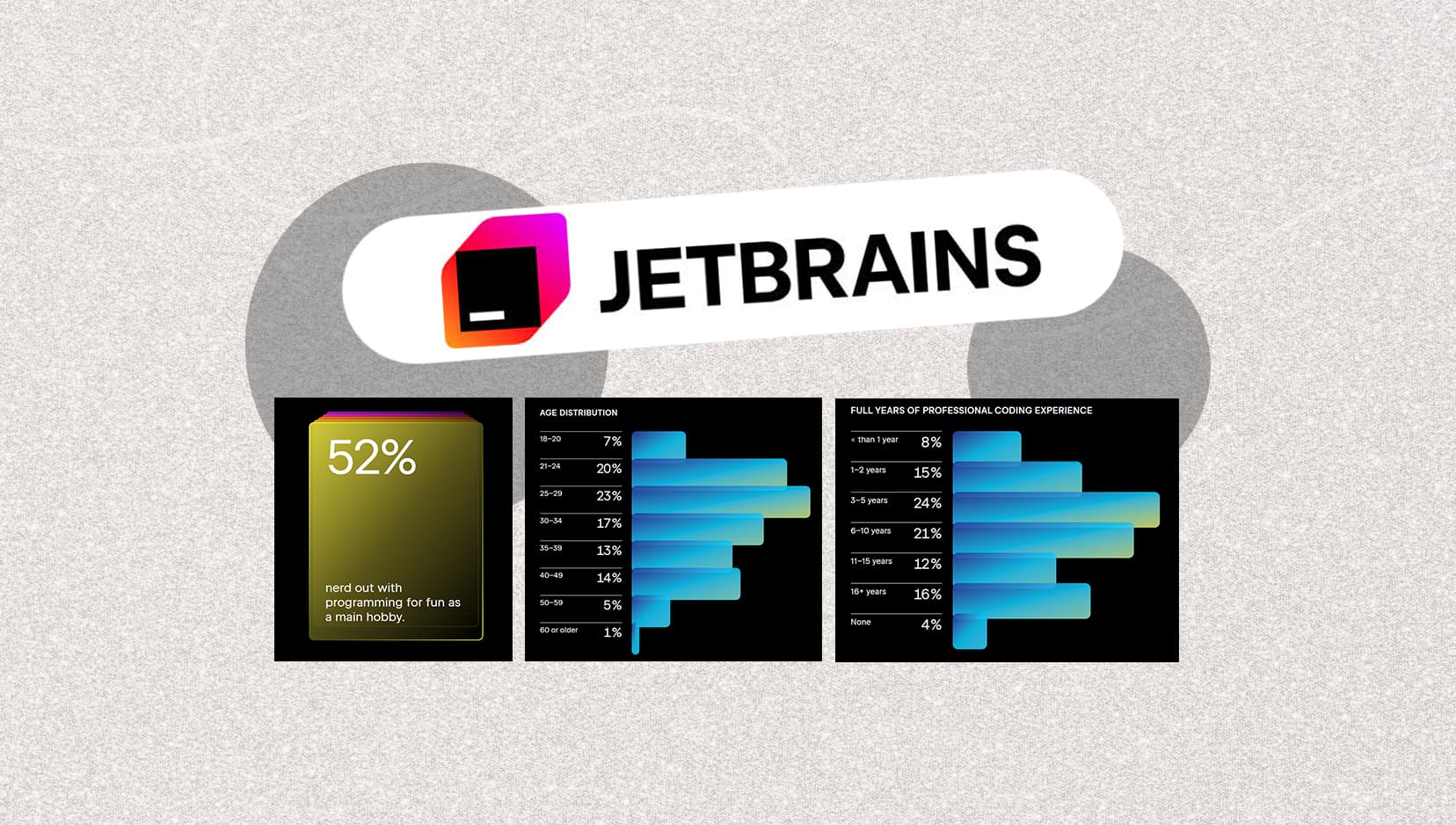
Every year, JetBrains releases its State of the Developer Ecosystem report, and for many of us in the startup world, it’s a bit like taking the temperature of the tech industry. The 2025 edition, alongside findings from the second wave of the JetBrains AI Pulse Survey conducted in January 2026, paints a vivid picture of what’s happening in the Middle East and North Africa. And if I had to sum it up in one line? Young, ambitious, and all-in on AI.
Across MENA, artificial intelligence has moved well beyond being a shiny new toy. According to the data, 96% of developers in the region use at least one AI tool at work. That’s slightly higher than the global average, and it shows. Around 66% believe their companies are likely to trial AI coding agents within the next 12 months, while 13% say their employers already use such tools. In other words, this isn’t experimentation anymore; it’s becoming infrastructure.
When it comes to specific tools, GitHub Copilot leads the pack at 24%, followed closely by Anthropic Claude Code at 22% and Cursor at 18%. JetBrains’ own AI tools come in at 9%. Looking ahead, intentions shift a little: 18% of developers plan to adopt Cursor in the coming year, 16% are eyeing Anthropic Claude Code, 15% JetBrains AI tools, 9% Google Antigravity, and 7% GitHub Copilot. It’s a competitive landscape, and developers here seem more than willing to test what’s spot on for their workflow.
The region’s tech stack tells another story — one that feels very consumer-facing. Mobile and web development dominate. Around 40% of developers in MENA are building end-user applications for mobile platforms, compared with 31% globally. That gap says a lot. Languages such as Dart (used by 13% regionally versus 8% globally) and Kotlin (19% versus 18%) reflect this mobile-first mindset.
There’s also stronger usage of HTML/CSS and PHP, underlining the weight of web development. While just 10% call PHP their primary language, 25% reported using it over the past year — a resilience that, frankly, many thought would fade. Java, meanwhile, is less dominant as a main language in MENA (16%) compared to 24% globally. Developers are increasingly leaning towards Python (19%) and TypeScript (11%), particularly as 32% are now building AI-powered apps, features or agents. It’s a shift that feels both pragmatic and inevitable.
One detail that caught my attention — and I reckon it matters more than we think — is how much influence developers have inside their organisations. In MENA, 55% report having significant or final say over new technology purchases, compared with 40% globally. That’s quite something. On top of that, 81% say they actively advocate for tools they like within their companies, roughly in line with the 84% global figure. This isn’t a passive workforce; it’s engaged, opinionated and shaping its own toolkit. Well… I mean, that kind of autonomy can either spark serious innovation or heated Slack debates, you know?
Still, the picture isn’t without friction. Economic barriers remain real. About 20% of developers say it is hard or impossible to purchase paid IDEs or code editors in their country — more than double the global average of 9%. For startup founders bootstrapping products across parts of the region, this won’t come as a surprise. It can be a bit of a faff navigating payments and licensing constraints in some markets.
Demographically, MENA stands out as one of the youngest developer markets in the world. A striking 61% of respondents are under 30, compared to 50% globally. That youthful energy shows up in sector focus too: 19% are working in e-commerce, 22% in mobile development, and 15% in banking and fintech. According to the AI Pulse Survey, 20% are now directly involved in AI engineering. That’s a sizeable chunk of talent embedding intelligence into products from the ground up.
From where we sit at Arageek, constantly speaking to early-stage founders and product teams across the region, this all feels very real. Many of the startups energising MENA’s ecosystem are built by twentysomethings who grew up mobile-first and AI-curious. They are not waiting for permission; they’re shipping fast, testing tools, and iterating in public. There is a sense that the region is not just catching up but carving its own lane.
On the flip side, youth and speed can sometimes mean rough edges. Ecosystems mature through cycles, and MENA is definately still in a rapid-growth chapter. Yet the direction of travel is clear. With high AI adoption, strong developer autonomy, and a clear tilt towards mobile and web platforms, the region is shaping a developer identity that is distinct from global averages.
And believe it or not, that might be its biggest advantage.
🚀 Got exciting news to share?
If you're a startup founder, VC, or PR agency with big updates—funding rounds, product launches 📢, or company milestones 🎉 — AraGeek English wants to hear from you!





✉️ Send Us Your Story 👇