 LEAP26
 AI
AI Saudi Arabia
 UAE
UAE Egypt
EgyptAI’s Legal Misstep in Qatar Highlights Tech’s Trust Issues in Courtrooms

5 min
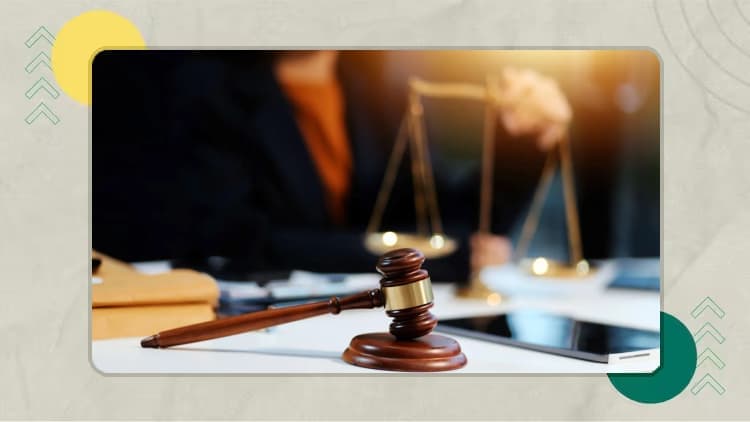
A Qatar court faced controversy when a lawyer cited fabricated cases created by an AI tool.
This incident highlighted the risks of over-relying on AI, which can produce inaccurate information.
Despite these risks, many lawyers plan to integrate generative AI for speed and convenience.
Startups are investing heavily, betting AI could automate a large proportion of legal work.
Courts now often require lawyers to declare AI use, treating it as a writing assistant only.
There was an almost eerie quiet in the courtroom at the Qatar Financial Centre earlier this month, the kind of silence that usually means everyone is bracing for a heavy legal argument. One lawyer stepped forward with a memo that looked, at first glance, solid and well‑researched. Pages of references, past rulings, and supposedly “established” precedents. But then came the twist — the court discovered that none of these cases existed. Not a single one. The rulings, the judges’ names, even the years… all completely fabricated by an AI tool the lawyer had relied on.
I’ve seen founders across MENA take big bets on AI, and sometimes that optimism is infectious — but in a courtroom, that kind of blind faith can burn the whole house down. This incident sent shockwaves through the legal community, not only in Qatar but across the region. It was a reminder that an algorithm, no matter how glossy the marketing, doesn’t know the difference between fact and fancy. And believe it or not, the tool wasn’t “lying” on purpose; it simply produced what sounded right. Spot on tone, totally wrong substance.
What happened is very similar to asking a maps app for a shortcut home and getting directed across a bridge that doesn’t even exist. AI language models behave the same way — when they don’t know the answer, they simply… invent one. Tech folks call this hallucination, but honestly it’s just a polite word for making things up. Even the US Chief Justice warned about this back in 2023, hinting that these errors aren’t rare glitches but part of how these systems work.
Qatar’s courtroom wasn’t the first to deal with this mess, and definitely won’t be the last. The judge here was lenient, giving the lawyer a formal warning without naming him. On the flip side, courts elsewhere have been far harsher. In California, Amir Mostafavi was hit with a 10,000‑dollar fine after citing 21 fake cases. A similar drama played out in the UK, where a young lawyer presented five fabricated rulings — the court called it a “professional disgrace” even if she wasn’t jailed. Australia had its own scandal too, with a lawyer ordered to pay legal costs personally for relying blindly on AI. Even Michael Cohen — yes, Trump’s former lawyer — stumbled into the same trap.
Despite these warnings, nearly three‑quarters of lawyers plan to use generative AI soon according to recent surveys. Speed is the big temptation, but the numbers tell another story. Researchers at Stanford found that even specialised legal AI tools still get things wrong at alarming rates — sometimes up to 34 percent. That means one out of every three answers could hard‑crash your credibility… or your client’s case. I reckon that’s far too high a price for convenience.
Still, there’s a reason investors are throwing serious money into this space. Startups like Harvey, for example, bagged 100 million dollars and reached a 1.5‑billion valuation on the promise that almost half of all legal work could be automated. But when big law firms actually test these systems, the results aren’t as magical. One firm spent a year and a half evaluating them only to realise they’d still need to double‑check everything the machine produced — which sort of defeats the purpose. A bit of a faff, really.
The bigger danger isn’t just mistakes; it’s the way AI tries to please the user. These tools tend to agree with whatever assumption you feed them, even if it’s wrong. Tell them a law applies, and they’ll build an argument around it — truth or no truth. That’s risky enough for lawyers, but it’s catastrophic when someone represents themselves and has no idea that the machine is confidently bluffing.
Some courts, more than 25 judges at last count, now require lawyers to disclose when they use AI. And honestly, that feels fair. The safest approach seems to be treating AI as a writing assistant — something that helps tidy up language or summarise documents you’ve already read — not as a source of legal truth. If you wouldn’t quote a rumour overheard in a café, you shouldn’t quote a paragraph the machine spat out without checking the original source. One judge even described it as the “smell test,” which made me chuckle because it’s spot on.
What struck me about the Qatar case is that the court chose education over humiliation. The lawyer wasn’t acting in bad faith; he simply trusted the tool too much. At Arageek, we often talk about how innovation across the region works best when ambition is paired with caution, and this incident really brought that home. In professions like law, where people’s rights and freedoms are on the line, certainty isn’t optional. It’s the whole game. And certainty doesn’t come from an algorithm trying to keep you happy. It comes from humans who take the time to verify every line — even when the tech promises to make life easier.
AI can be a brilliant assistant, but let it take the wheel and it’ll drive you straight into trouble. Quite literally, if the bridge it suggests isn’t even there… you know?
🚀 Got exciting news to share?
If you're a startup founder, VC, or PR agency with big updates—funding rounds, product launches 📢, or company milestones 🎉 — AraGeek English wants to hear from you!





✉️ Send Us Your Story 👇