 Ai Everything
 LEAP26
 AI
AI Saudi Arabia
 UAE
UAE Egypt
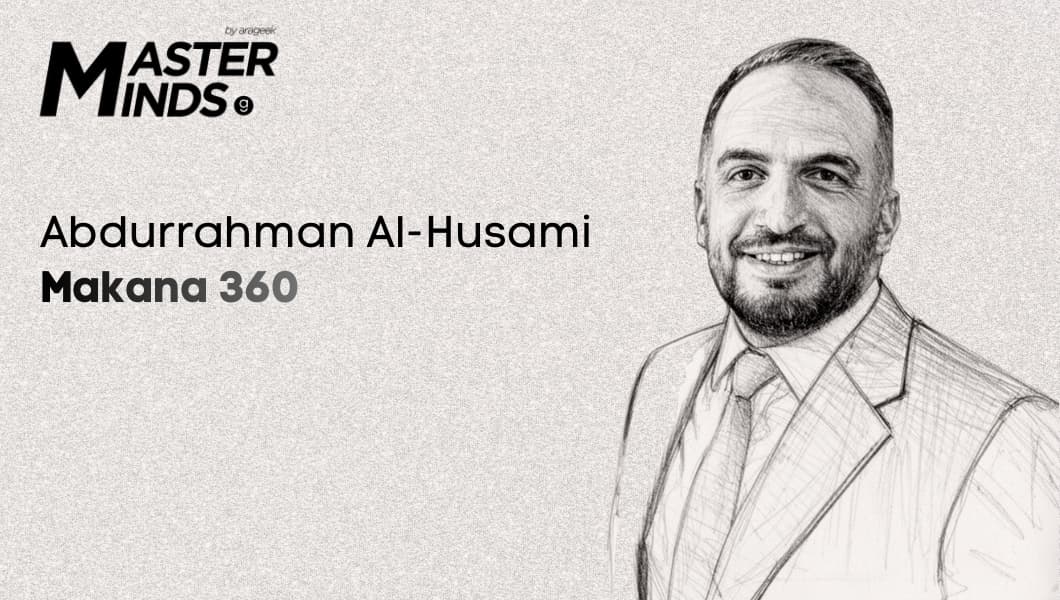
EgyptI am Abdurrahman Al-Husami. I left government to fix communications.

8 min
Abdurrahman Al-Husami on the discipline of trust
There is a strain of modern communications that confuses output with impact. More posts, more campaigns, more noise. Abdurrahman Al-Husami’s career cuts against that instinct. Across government and now in the private sector, he has insisted on a simpler standard: communication only works when it is tethered to reality, built on an honest reading of people, and disciplined enough to hold up in a crisis.
He frames himself not as a storyteller for hire, but as a strategic communicator and analyst who has spent years working at the intersection of politics, media, public opinion, and the tools that now mediate all of it. What stands out is the order of operations. Tools matter, but context comes first. Messages matter, but credibility comes first.
How he explains a career that sits between politics and public opinion
When asked how he introduces himself, Al-Husami does not reach for prestige, he reaches for function. He describes a career built inside official institutions, moving through roles centred on message development, strategic communications, and managing communication during sensitive moments and crises. Digital work was not a side project, it was part of how the job had to evolve.
That long run inside government shaped his operating assumptions. It taught him how decision-makers think under pressure, and just as importantly, how citizens interpret those decisions in real time. In his telling, the skill is not simply saying the right thing, it is understanding what people are already hearing, fearing, comparing, and repeating.
Why he walked away from government, and what he thought was missing
Pressed on the decision to leave high-level public-sector work and start Makana 360, Al-Husami is clear about what government gave him: discipline, responsibility, and an education in how public policy is formed. But he also saw the limits. In the private sector, he found more room to innovate, to build new models, and to make long-term impact stick.
The move was less about escape than about a gap. He felt institutions were not being served by what “communications” traditionally offered. Too much of the work was cosmetic, too focused on publishing content, too detached from the actual needs of organisations navigating public scrutiny. Makana 360, as he frames it, exists to bridge that gap.
The non-negotiable lesson from political communication
On the question of what reputation management really demands, Al-Husami comes back to one word: honesty. He argues that you cannot manage an image that is detached from reality. What you can do is explain reality, place it in context, and present it in a fair, clear way that respects the audience’s intelligence.
It is a pragmatic ethic, not a moral slogan. In politics and public institutions, the audience is not captive. They are sceptical by default. They respond to what affects their lives, not what flatters the institution. He treats honesty as the only sustainable strategy because anything else collapses the moment the public meets friction, contradiction, or crisis.
What it takes to modernise communication inside a sovereign institution
When the conversation turns to his experience leading digital communication at the Royal Hashemite Court, he describes it as sensitive and precise work, the kind that cannot be reduced to platform tactics. He emphasises that digital transformation inside a sovereign institution is a broader change in media and communication practice, one that began in 2012.
His role was to establish a Digital Communication Unit responsible for social media and digital media management. The work, as he explains it, was a balancing act: respect institutional traditions and the state’s unique nature, while introducing modern tools without eroding core values. The implication is that “modernisation” is not copying private-sector habits, it is translating them into a context where legitimacy, continuity, and restraint carry real weight.
How social media rewired the citizen-state relationship
Asked to reflect on what platforms changed most, Al-Husami points to the end of one-way communication. Citizens now comment, share, compare, and evaluate institutions against each other in public. In that environment, a government that speaks in an old language is not merely out of date, it is unreadable.
His critique is sharp: many institutions entered the new arena without changing how they think, and the result is a trust problem. The issue is not that citizens are “harder to please”. It is that the public now has a constant stream of alternatives, counter-narratives, and evidence of inconsistency.
Why good communication changes crisis outcomes
When asked whether communication genuinely affects crisis management and political decision-making, he does not hedge. He argues that good communication does not “beautify” a crisis. It prevents escalation, reduces volatility, and gives decision-makers room to act with calm and clarity.
This is a more operational view of messaging than most leaders admit. In his framework, communication is part of governance. It shapes the temperature of the moment. It buys time, or wastes it. It can widen options, or trap leaders in reactive moves.
The Makana 360 thesis: influence before content
On the question of what makes Makana 360 different, Al-Husami rejects the idea that the job is primarily publishing. He says the firm starts with influence, and with a deep understanding of audiences. The first question is not “What should we post today?” but “What change will this communication create?”
That is a demanding standard. It forces clarity about purpose. It pushes clients away from vanity metrics and toward outcomes, whether that is policy understanding, citizen engagement, reputational stability, or behaviour change.
What data is good for, and what it will never replace
When asked how data contributes to messaging, his answer is grounded: it shows what people are actually saying, not what insiders assume they are saying. That difference is the gap between emotional messaging and reality-driven messaging, between improvisation and precision.
But he is equally explicit about data’s limits. Data can illuminate the road, but it cannot drive the car. Experience and political intuition still matter, particularly in environments where reputation is fragile and context shifts quickly. Even his stance on AI follows that logic: Makana 360 uses AI as a supporting tool, but final decisions remain human because politics and reputation cannot be managed by numbers alone.
The real barrier to modern digital communication is fear
Pressed on why some entities struggle to adopt modern practices, Al-Husami points to a less technical obstacle: fear. Fear of transparency. Fear of speed. Fear of direct public feedback.
It is a useful diagnosis because it reframes “digital transformation” as cultural transformation. The platform can be purchased. The mindset cannot. And without that mindset, digital channels become just another place to broadcast, which is exactly what citizens have learned to ignore.
How he judges progress in Arab government communication
When asked to assess the current state of Arab government communication, he gives a balanced diagnosis. There is progress in form, he says, but deeper development is still needed in content, courage, and clarity.
His most telling point is structural. Many institutions have improved the writing, the visuals, the cadence. But they have not completed the full communication supply chain: research and benchmarking, strategic goal-setting, audience targeting, message development, creative execution, distribution, and comprehensive evaluation. In other words, they have improved the surface without fully building the system underneath it.
What builds trust, and what audiences no longer tolerate
On the question of trust and public engagement, Al-Husami is direct about what works: genuine listening, acknowledging mistakes, making immediate improvements, and linking communication to results rather than slogans.
This is less a set of tactics than a posture. It requires institutions to treat feedback as information, not insult. It requires the humility to correct course publicly. And it demands that messages point to outcomes people can measure in their lives.
Where the industry is heading, and how he chooses clients
When asked about trends, he sees a shift away from discrete campaigns and toward continuous relationships with audiences, and away from mass messaging toward tailored communication. That direction makes his client criteria make sense. He looks for organisations that treat communication as a responsibility, not a decorative layer, and that value understanding the audience more than temporarily pleasing them.
His proudest successes follow the same theme. They are not stories of viral reach. They are cases where official entities changed how they think about audiences and improved content so it reached all target segments, not just the ones that inflate digital metrics.
The advice he gives to people entering the field
Asked what he tells young professionals, Al-Husami returns to first principles. Understand context before tools. People before platforms. Responsibility before fame. Communication is not noise, it is impact.
It reads like a closing argument for his whole career: in the long run, influence comes from credibility, and credibility comes from doing the hard work of understanding what the public actually needs to hear, and why.




If you are looking for inspiration, you are in the right place and If you see yourself in this, we would love to hear from you at press@arageek.com