 Ai Everything
 LEAP26
 AI
AI Saudi Arabia
 UAE
UAE Egypt
EgyptI am Ahmed El-Mallahy. I built technology for people, not prestige

5 min
Building technology that serves people
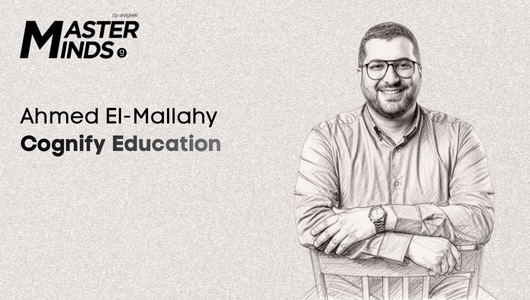
When asked to introduce himself, Ahmed El-Mallahy does not start with titles or exits. He starts with time. Seventeen years across demanding sectors shaped his view that technology only matters when it improves how people live, learn, and decide. His early work moved between education, energy, oil and gas, and high-stakes control and security systems, before pulling him towards leadership roles and eventually to building his own companies. What runs through the story is a steady shift from execution to judgement.
Why leaving executive roles became inevitable
On the question of why he stepped away from senior roles to found Eagle Owl Technology and Cognify Education, El-Mallahy frames it as a matter of agency. He had reached a point where implementing other people’s strategies felt limiting. Founding his own companies allowed him to turn conviction into structure and values into products. Technology, in his words, is not the goal, it is the vehicle.
Turning sector diversity into an operating advantage
Asked to reflect on his movement across industries, he is clear that the range was not accidental. Oil and gas instilled discipline and precision. Education revealed the human consequences of technical decisions. Military and security systems taught him how to manage complexity without failure. When he began building companies, those lessons merged into an operating style that prioritises quality, order, and innovation without losing sight of people.
How technology can genuinely serve children with special needs
When the conversation turns to education for children with special needs, El-Mallahy avoids grand promises. He focuses on personalisation. Technology, particularly AI and behavioural analysis, makes it possible to adapt learning to each child’s pace and ability. Just as important is emotional safety. Digital tools can give children space to explore and fail quietly, which makes learning more humane rather than more mechanical.
Thinking regionally, not prematurely
Pressed on expansion, he signals ambition paired with restraint. Cognify Education is preparing to move into Arab and African markets, with attention on the Gulf and North Africa. The emphasis is on partnerships rather than speed, transferring expertise in ways that fit local realities instead of exporting rigid models.
Closing the gap between universities and the market
Asked about his role advising at the Egyptian Chinese University, El-Mallahy returns to application. Academic alignment, he argues, only works when students engage with real problems while they study. Programmes that connect students to live projects and companies produce graduates who understand context, not just content.
What digital transformation looks like in practice
When asked about Eagle Owl Technology’s work, he draws a sharp line between systems and outcomes. The company focuses on integrated digital transformation in education, from data management to smart governance and international collaboration platforms. With projects across private and international universities and schools, the goal is not digitisation for its own sake but decision-making that is transparent, efficient, and sustainable.
The mistakes first-time founders repeat
From his interactions with young entrepreneurs, one pattern stands out. When asked what goes wrong most often, he points to haste. Founders rush launches, scale before foundations hold, and prioritise image over substance. His advice is deliberately unglamorous, start small, test thoroughly, then grow with intent.
Defining success without shortcuts
Asked to distil a recipe for success, El-Mallahy lists elements rather than tactics. Vision and team come first, followed by human values, continuous learning, and persistence. Faith also plays a role for him, remembering God in every action as a compass rather than a slogan. Passion, he adds, must be durable, not performative.
What inclusive education demands in Egypt
When the discussion shifts to inclusion at a national level, he speaks about systems rather than sympathy. Egypt needs awareness, trained teachers, public-private collaboration, and tools designed for real inclusion. Most difficult is the cultural shift, moving from seeing students with special needs as objects of care to recognising them as capable learners.
AI as leverage, not replacement
Asked how AI and digital transformation will shape Egypt’s future, El-Mallahy is measured but optimistic. AI enables personalised education and sharper evaluation. For entrepreneurs, it accelerates analysis and decision-making. With the country’s youth potential, he believes technology-driven education could underpin genuine regional leadership if investment is thoughtful.
The hardest part is always people
When asked about personal challenges, he does not mention funding or technology. The difficulty, he says, lies in building teams, sustaining motivation, and earning trust under pressure. Transparency and values helped him navigate setbacks. Failure, in his view, is not a detour but part of forward motion.
Moments that justify the work
Asked to share an impact story from Cognify, El-Mallahy recounts seeing a child with autism engage meaningfully with the platform for the first time. Improvements in eye contact and interaction followed. He does not embellish the moment. Its power lies in confirmation that the work matters beyond metrics.
Transformation versus digitisation theatre
When pressed on the difference between real transformation and superficial digitisation, his answer is blunt. Transformation is cultural before it is technical. It changes how decisions are made and how value is felt. Surface-level efforts simply move paper to screens while habits remain untouched.
Teaching entrepreneurship without illusions
Asked about his teaching approach, realism surfaces again. Ideas are cheap without execution. He focuses on market analysis, risk management, customer understanding, and resilience. Students are taught to expect failure and continue regardless.
Why Cognify Education had to exist
On the origins of Cognify, El-Mallahy points to a gap he could not ignore. Tools for children with special needs were scarce and fragmented. The platform was built to combine science and technology for children, parents, and teachers, starting with interactive content and smart assessment that measures progress without pressure.
A closing message grounded in intent
Finally, when asked what he would tell young technologists, he returns to intention. Start now, he advises, and keep your purpose clean. Benefit others as you benefit yourself, avoid unethical shortcuts, and trust that honest work compounds. For El-Mallahy, success begins internally, long before it becomes visible.