 Ai Everything
 LEAP26
 AI
AI Saudi Arabia
 UAE
UAE Egypt
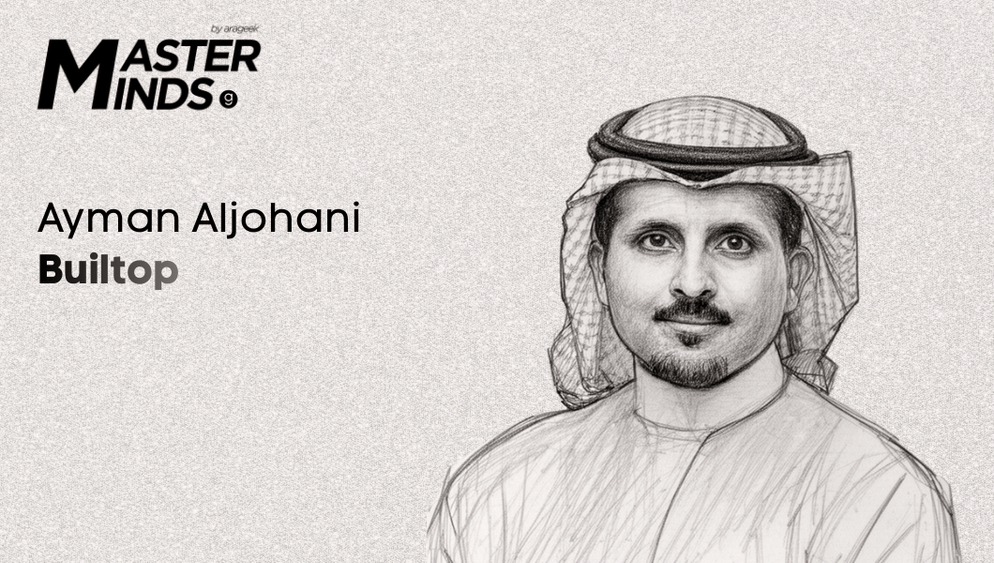
EgyptI am Ayman Aljohani. I turned construction chaos into a finance engine

6 min
Why procurement, not another construction platform
When asked about the origin of Builtop, Ayman Aljohani goes straight to a frustration he had seen too many times to ignore. Contractors were losing weeks sourcing materials, comparing prices, and arranging financing, not because projects were complex, but because procurement was broken. Information was fragmented, pricing opaque, and teams were buried in WhatsApp threads and manual follow-ups.
Saudi Arabia was building at historic scale, yet the engine behind that growth was outdated. Aljohani did not want to build another directory or marketplace. He wanted to level the playing field, giving contractors and developers the same purchasing power, financial access, and transparency that only the largest players enjoyed. That decision became the foundation of Builtop.
How institutional experience shaped a technology mindset
When the conversation turns to his background, Aljohani frames his career as preparation rather than progression. Working inside organisations like Saudi Aramco taught him structure and systems. Time at Amazon reshaped how he thought about speed, automation, and customer obsession. His role within the Ministry of Culture showed him how to operate inside complex ecosystems with multiple stakeholders and competing priorities.
These environments influenced how Builtop was built. Fast where speed matters, disciplined where risk exists, and collaborative where scale depends on alignment. For Aljohani, technology was never the starting point. Operations were.
Trust as a system, not a promise
Pressed on how Builtop manages trust across contractors, suppliers, and financiers, Aljohani is clear that goodwill is not enough. Trust, in his view, comes from structure. Every transaction on the platform runs through secured workflows, verified suppliers, transparent pricing, milestone-based payments, and digital records that remove ambiguity.
The objective is simple. Reduce excuses, eliminate disputes, and replace informal agreements with accountability. By making every step visible and documented, Builtop shifts procurement from negotiation-heavy relationships to execution-driven ones.
Scaling Saudi first, by design
Asked about regional expansion, Aljohani resists the temptation to rush. Saudi Arabia remains the focus, not out of caution, but because of scale. It is the largest and fastest-growing construction market in the region, driven by Vision 2030 and giga-projects reshaping the Kingdom.
That said, the infrastructure is already designed for growth. Expansion into the UAE, Qatar, and Egypt is planned once key milestones are reached, particularly where cross-border sourcing and financing create natural demand.
Building and scaling at the same time
When the discussion turns to balancing growth with product development, Aljohani rejects the idea that companies must choose. Builtop operates with a build-and-scale mindset. While engineering teams advance AI-driven procurement and finance tools, commercial teams deepen partnerships across the Kingdom.
Expansion and innovation are not competing priorities. Each feeds the other. Real-world usage informs product decisions, while stronger technology accelerates adoption.
The future of procurement is predictive
Asked to look five years ahead, Aljohani sees procurement becoming automated and predictive. AI will generate RFQs, negotiate pricing, allocate suppliers, and flag risks before humans step in. The human role does not disappear, but it shifts.
Instead of processing transactions, people validate decisions, manage relationships, and handle exceptions. Procurement moves from reaction to anticipation.
AI as the operating engine
When asked how AI functions inside Builtop, Aljohani describes it as the system’s core. AI analyses demand patterns, predicts material costs, matches suppliers, and reviews RFQs and contracts in seconds.
For clients, it acts as a procurement assistant. For suppliers, a demand forecasting engine. For financiers, a real-time risk lens. The goal is to turn fragmented construction workflows into predictable, fast, and transparent operations.
Aligning with Vision 2030 at execution level
On collaboration with government entities and mega-project developers, Aljohani frames Builtop as an enabler of Vision 2030 goals. Efficiency, digitisation, transparency, and financial innovation are not slogans but operating requirements.
The company is strengthening partnerships with semi-government bodies, municipalities, giga-projects, and credit entities to support standardised procurement, real-time sourcing, and flexible financing structures suited to projects of national scale.
Procurement and finance in one system
Asked to explain Builtop’s model in practice, Aljohani breaks it down simply. A client submits a request. The platform sources suppliers and benchmarks pricing. If financing is required, Builtop pays the vendor upfront through pay-later or LC-backed structures. The client repays based on agreed terms.
Instead of chasing payments or coordinating multiple parties, Builtop becomes both the procurement department and the finance department in one place.
The trillion-dollar paradox
Despite Saudi Arabia’s construction boom, Aljohani points to three persistent challenges. Cashflow gaps between contractors and suppliers. Price volatility in key materials like steel and cement. Execution delays driven by slow procurement decisions.
Digital transformation is helping, but it is not enough without faster financing, automated workflows, and clearer supplier visibility. These gaps are where Builtop positions itself.
The moment delay became unacceptable
When asked what finally pushed him to act, Aljohani recalls watching a contractor lose weeks and millions because procurement relied on outdated habits. Manual quotations. Phone calls. Endless message threads.
That experience crystallised his thinking. If industries can solve problems at planetary scale, construction procurement had no excuse to remain stuck in the past.
Lessons learned while building
Reflecting on his journey so far, Aljohani highlights two lessons. Markets move through people, not technology alone. Relationships and partnerships remain decisive.
The second is speed. Companies that move quickly, even imperfectly, shape industries. Waiting for the perfect moment only guarantees being late.
What truly differentiates Builtop
When asked how Builtop differs from traditional platforms, Aljohani draws a clear line. Most platforms connect buyers and sellers. Builtop takes responsibility for the entire cycle. Sourcing, price benchmarking, vendor matching, financing, risk management, and delivery.
It is not a marketplace. It is a procurement and finance engine.
Fuel for the next phase
On the recent USD 11 million Seed round led by TAM Capital, Aljohani outlines three priorities. Expanding credit capacity to serve mega-projects. Advancing AI engines to simplify buying construction supplies. Strengthening vendor networks across core materials and top-tier contractors.
The funding is not an endpoint. It is acceleration.
A long-term role in how the Kingdom builds





Asked to define his long-term vision, Aljohani keeps it direct. He wants Builtop to become the central engine powering construction procurement and trade finance across Saudi Arabia and the region.
If procurement cycles can be cut from months to days, Vision 2030 projects move faster by default. In his view, Builtop’s role is not to disrupt for attention, but to enable the Kingdom to build faster, smarter, and with full transparency.