 Ai Everything
 LEAP26
 AI
 Saudi Arabia
 UAE
 Egypt
Fina Launches $133M Fund to Boost SME Financing in Saudi Arabia

4 min
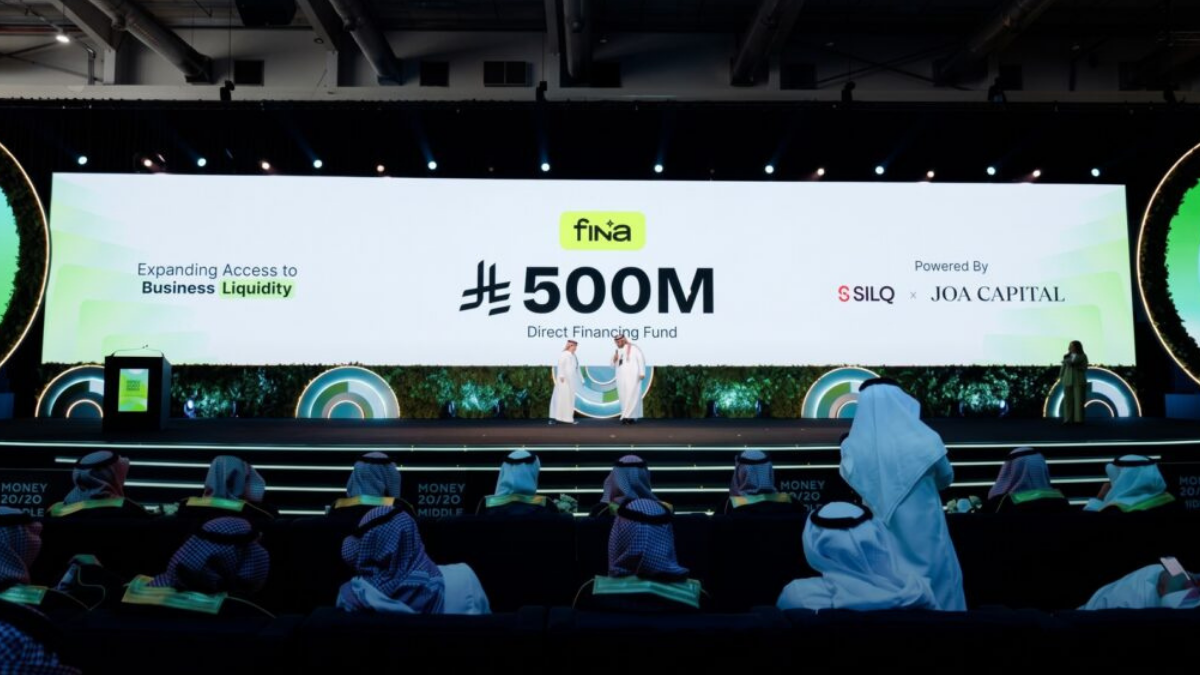
Fina launched the Fina Fund, targeting USD 133 million for Saudi business financing.
It aims to place funding inside everyday workflows like buying stock and paying suppliers.
The move tackles a huge SME funding gap, with lending still below 2030 goals.
Joa Capital manages the closed-ended fund, while Fina provides technology, data and trade links.
If it works, working capital could become part of commerce, not a separate event.
Fina is making a bigger play in Saudi Arabia’s business financing market with the launch of the Fina Fund, a new direct financing vehicle targeting USD 133 million, or SAR 500 million. The aim is fairly straightforward: give companies better access to liquidity by placing financing closer to the everyday business actions where cash gaps usually show up, from buying stock to paying suppliers and collecting receivables.
It sounds simple on paper, but anyone who follows SMEs in the Kingdom knows this is where things often get a bit sticky. Saudi Arabia has made progress in widening access to capital, yet the financing gap is still enormous. According to the figures cited in the announcement, SMEs face an estimated SAR 400 billion shortfall, while SME financing represented just 11.3% of total bank lending in 2025. That is still some distance from the country’s 2030 target of 20%. I reckon this is why embedded finance keeps popping up across the region — traditional lending alone is clearly not doing the full job.
Fina, which is SILQ’s B2B embedded finance arm, launched the fund in partnership with Riyadh-based alternative asset manager Joa Capital. The fund itself is licensed by the Saudi Capital Market Authority and is set up to provide corporate finance solutions across the broader B2B ecosystem in the Kingdom. In plain terms, it is designed to support financing needs inside routine business workflows, including procurement, supplier payments and receivables, subject to the fund’s eligibility rules and usual terms.
There is a longer story behind this move. Fina’s model grew out of SILQ’s B2B commerce activity in Saudi Arabia, which began with Sary. Sary focused on making inventory sourcing and purchasing easier for merchants, and through that process the company kept running into the same pain point: businesses needed liquidity, often at exactly the moment they were trying to operate and grow. After Sary merged with ShopUp to create SILQ, that financing capability was developed further under Fina as a dedicated business. Now, with this new fund, it is being pushed beyond the old Sary ecosystem and into the wider Saudi market.
That said, the structure of the fund matters too. This is a private, closed-ended direct financing investment fund managed by Joa Capital, and its units will be offered through private placement to eligible investors rather than the general public. So it is not a mass-market fundraising push, and it is also not money already sitting in the bag. The USD 133 million figure is the target fund size, not cash already raised or committed. That distinction is spot on, especially because these numbers can sometimes be dressed up in a way that causes confusion.
The partnership leans on two different strengths. Joa Capital brings credit investment management, while Fina contributes the technology layer, data tools and commercial connectivity built through B2B trade. And believe it or not, that back-end detail can be the real difference-maker. In MENA startup conversations, we often hear founders talk about capital as if it lives separately from operations, but in reality the strongest financing models are the ones that sit right inside the workflow. I have seen early-stage founders in the region spend months chasing capital for invoices and stock orders when what they really needed was something less glamorous and more practical — funding that appears at the right time, not after a mountain of paperwork and a bit of a faff.
Fina has also previously facilitated more than SAR 2 billion in trade liquidity, although the announcement makes clear that this should not be read as any sign of how the new fund will perform. On the flip side, it does suggest the company is not starting from zero. There is already operating experience behind this expansion, even if the new vehicle will now be tested at a wider scale.
For Saudi SMEs, the bigger question is how quickly the fund starts reaching firms beyond the familiar digital commerce circles and how broadly it can plug into day-to-day business transactions. If it works as intended, financing could become less of a seperate event and more of an operational tool woven into commerce itself. For readers at Arageek who care about how startups and smaller businesses actually survive the messy middle of growth, well... I mean, this is the kind of development worth watching closely. It may not be flashy, but access to working capital is often what keeps the wheels turning.
🚀 Got exciting news to share?
If you're a startup founder, VC, or PR agency with big updates—funding rounds, product launches 📢, or company milestones 🎉 — AraGeek English wants to hear from you!


✉️ Send Us Your Story 👇