 GITEX Dubai
 Ai Everything
 LEAP26
 AI
AI Saudi Arabia
 UAE
UAE Egypt
EgyptFrom Fear to Opportunity: Is AI Stealing Jobs… or Reshaping the Future of Work?


7 min
Artificial intelligence is now a “core component” of business strategy, reshaping work.
It is not “stealing jobs”, but transforming roles and creating new ones.
Successful adoption starts with real business problems, not technology for its own sake.
Organisations must invest in skills, culture and readiness for human-AI collaboration.
The future belongs to those who “learn alongside it” and create genuine value.
Artificial intelligence is no longer a futuristic concept or a theoretical discussion. It is already transforming how businesses operate changing the way decisions are made, teams are managed, performance is measured, and even how jobs themselves are defined. What was once considered a supporting technology has become a core component of modern business strategy and competitive advantage.
As this transformation accelerates, one question continues to dominate the conversation: Will artificial intelligence replace people at work?
The answer is far more nuanced than a simple yes or no. Rather than creating a direct competition between humans and machines, AI is fundamentally reshaping the nature of work, the skills organizations need, and the way value is created within businesses.
At Procapita Group and Zenithr, its technology arm, AI is viewed not as a passing trend but as a strategic necessity. Their mission is to help organizations make smarter talent decisions from attracting and assessing talent to developing employees, improving performance, and enhancing the overall employee experience.
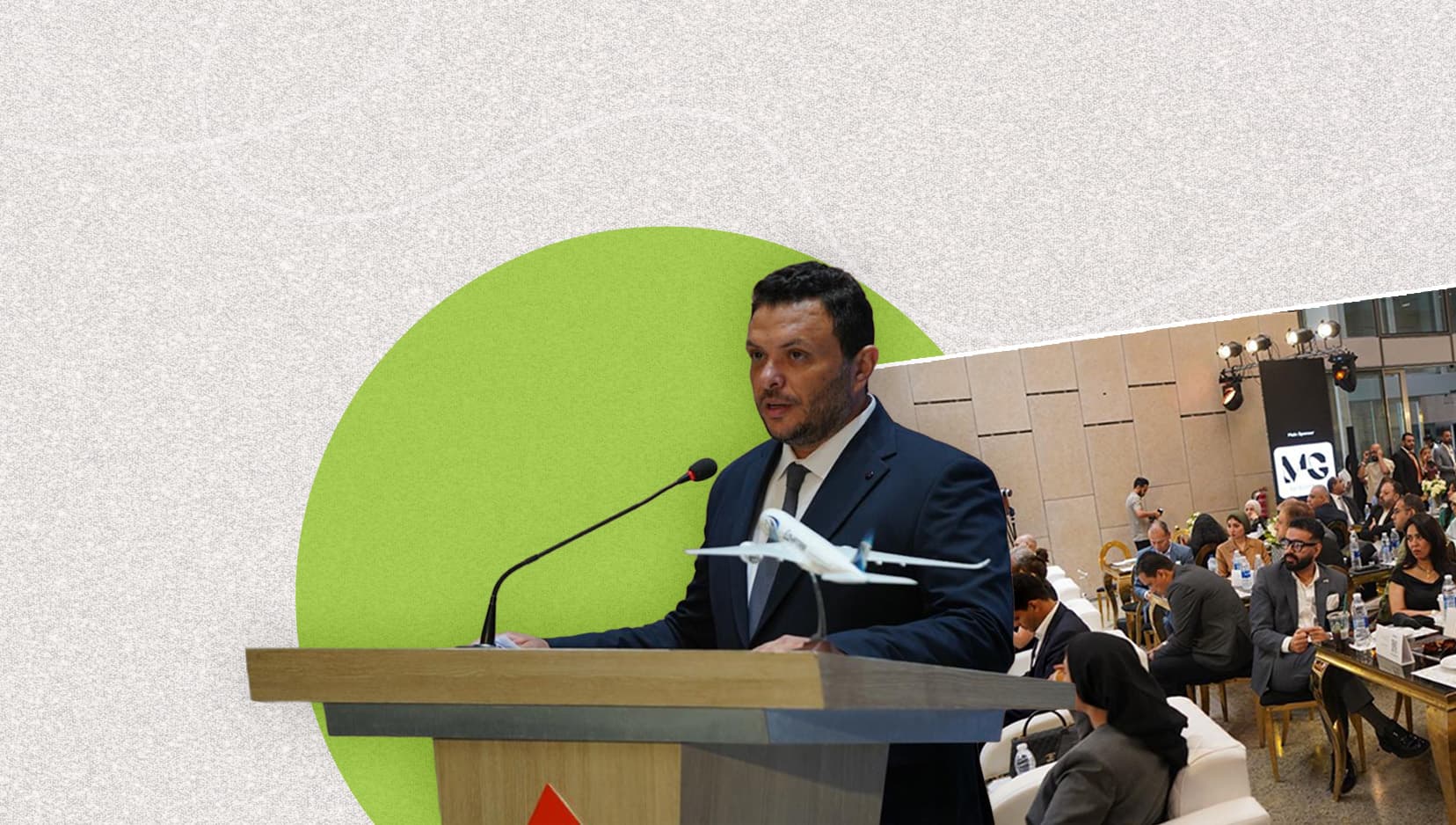
In our conversation with Mohammad Abu Al-Rob, CEO of Procapita Group and Founder of Zenithr, he explained that artificial intelligence has become a powerful catalyst for transforming human resources provided it is implemented thoughtfully and aligned with genuine business needs. This philosophy is reflected in Zenithr’s platform, which leverages specialized AI agents to help organizations manage talent with greater intelligence, accuracy, and efficiency.
Is AI Really a Threat to Jobs?
According to Abu Al-Rub, viewing AI as a direct threat to employment oversimplifies what is actually happening. Artificial intelligence is not eliminating jobs in the traditional sense it is changing them.
“I don’t believe AI is stealing jobs in the conventional sense. What we’re seeing is that certain tasks are evolving, some roles are being transformed, and entirely new jobs are emerging that didn’t exist before.”
AI excels at repetitive, data-intensive tasks, allowing people to dedicate more time to what machines still struggle to replicate: strategic thinking, contextual understanding, leadership, creativity, communication, and emotional intelligence.
Organizations that embrace AI effectively do not become less dependent on people they become more dependent on a different kind of talent. They need professionals who understand technology, know how to guide it, and can integrate it into business strategy.
A compelling example is IKEA, which adopted AI to automate thousands of routine customer service and operational tasks. Rather than using automation to reduce headcount, the company invested in reskilling employees and moving them into higher-value roles such as interior design consulting, specialized customer support, and advisory services.
This illustrates the true nature of AI-driven transformation. Artificial intelligence does not replace people it enables them to move toward more meaningful and impactful work when organizations are willing to invest in their development.
For individuals, the real challenge is no longer whether jobs will exist, but whether they are prepared to continuously learn and adapt. Those who use AI to increase their productivity and deepen their expertise will become more valuable in the labor market. Those who continue relying solely on traditional ways of working may find themselves at a growing disadvantage.
Why Do Some AI Initiatives Succeed While Others Fail?
Despite the excitement surrounding artificial intelligence, many AI initiatives fail to deliver meaningful business outcomes.
According to Abu Al-Rub, one of the most common reasons is that organizations start with the technology instead of the problem.
Companies often invest in AI platforms simply because they want to appear innovative or keep pace with competitors, without first asking the most important question: What business problem are we trying to solve?
He believes successful AI adoption depends on three fundamental pillars.
The first is ensuring that AI addresses a genuine business challenge. Whether the objective is improving decision-making, reducing operational costs, enhancing customer experience, or making talent assessment more accurate, every AI initiative should begin with a clearly defined business need not technology for its own sake.
The second is viewing AI as a tool for creating entirely new possibilities rather than merely optimizing existing processes. Its greatest value lies not only in improving efficiency but also in uncovering hidden patterns, predicting future needs, personalizing experiences, and enabling entirely new business models.
The third and perhaps most overlooked factor is organizational readiness.
Even the most advanced AI technologies cannot create meaningful impact if an organization lacks structured data, a culture that embraces change, or employees who possess the skills to work alongside AI.
This is why assessing AI readiness has become an essential first step before large-scale adoption. Such assessments help organizations evaluate whether they have the right technical infrastructure, accessible and reliable data, workforce capabilities, and leadership commitment required to support transformation.
Without these foundations, AI risks becoming an expensive experiment with little measurable value. When built around real business challenges, clear opportunities, and organizational readiness, however, AI becomes a powerful driver of sustainable growth.
How Are Companies Redefining Skills and Culture in the Age of Human-AI Collaboration?
In Abu Al-Rub’s view, the future of work will not be defined by replacing humans with AI, but by creating a new partnership between them.
Artificial intelligence can dramatically improve speed and efficiency, but it still depends on people to provide direction, judgment, ethical decision-making, and strategic thinking.
The most forward-looking organizations have stopped asking:
“How many jobs can AI replace?”
Instead, they ask:
“How can AI help our employees become more productive, analytical, and innovative?”
Microsoft is a leading example of this mindset through its vision of the AI-augmented employee. Rather than replacing people, AI serves as a productivity multiplier handling routine tasks so employees can focus on higher-value work that requires creativity, critical thinking, and collaboration.
This shift requires organizations to rethink their internal culture.
Simply providing employees with AI tools is no longer enough. Companies must create environments that encourage experimentation, continuous learning, and curiosity. Artificial intelligence cannot thrive in cultures that fear mistakes or resist change.
The required skill set is evolving as well.
Experience alone will no longer guarantee success, nor will financial resources alone secure competitive advantage. Organizations and individuals who learn quickly, adapt rapidly, and effectively integrate AI into their work will be the ones that lead.
As a result, uniquely human capabilities including leadership, critical thinking, communication, creativity, and contextual understanding are becoming even more valuable. Far from diminishing their importance, AI is making these skills the true differentiator between simply using technology and using it to create meaningful impact.
The Most Important Advice for Organizations and Individuals
Abu Al-Rub advises organizations not to approach artificial intelligence as a race to acquire the latest tools.
Successful AI adoption begins not with the question:
“Which AI platform should we implement?”
but rather:
“What business outcome are we trying to achieve?”
Every investment in AI should be linked to measurable business value whether that means improving efficiency, reducing costs, strengthening decision-making, enhancing employee experience, or unlocking new growth opportunities.
Equally important is investing in people.
Learning and development can no longer be treated as optional initiatives. They have become essential components of organizational resilience and long-term competitiveness. The companies that succeed will be those that build internal capabilities and equip their teams with the knowledge and confidence to work effectively with AI.
For individuals, the message is equally clear.
Continuous learning is no longer optional. Regardless of profession or industry, everyone must understand how AI is reshaping their field and identify the new skills they need to remain relevant and valuable.
The future will not belong to those who reject AI out of fear, nor to those who use it superficially simply because it is available.



It will belong to those who understand it, learn alongside it, and know how to apply it to create genuine value.
Ultimately, artificial intelligence is not stealing jobs as much as it is exposing the gap between those who prepare for change and those who wait for change to happen. And within that gap, the future of work is being rewritten.