 Ai Everything
 LEAP26
 AI
AI Saudi Arabia
 UAE
UAE Egypt
EgyptDubai Debuts Fully Driverless Taxis with Baidu’s Apollo Go Expansion

4 min
Dubai launches fully driverless commercial taxis with Baidu’s Apollo Go platform.
Fifty vehicles begin service, with plans for over 1,000.
The move supports Dubai’s target of 25% driverless journeys by 2030.
Trials showed “safety, reliability and operational efficiency”, officials say.
Success could boost regional deep tech, from AI to urban planning.
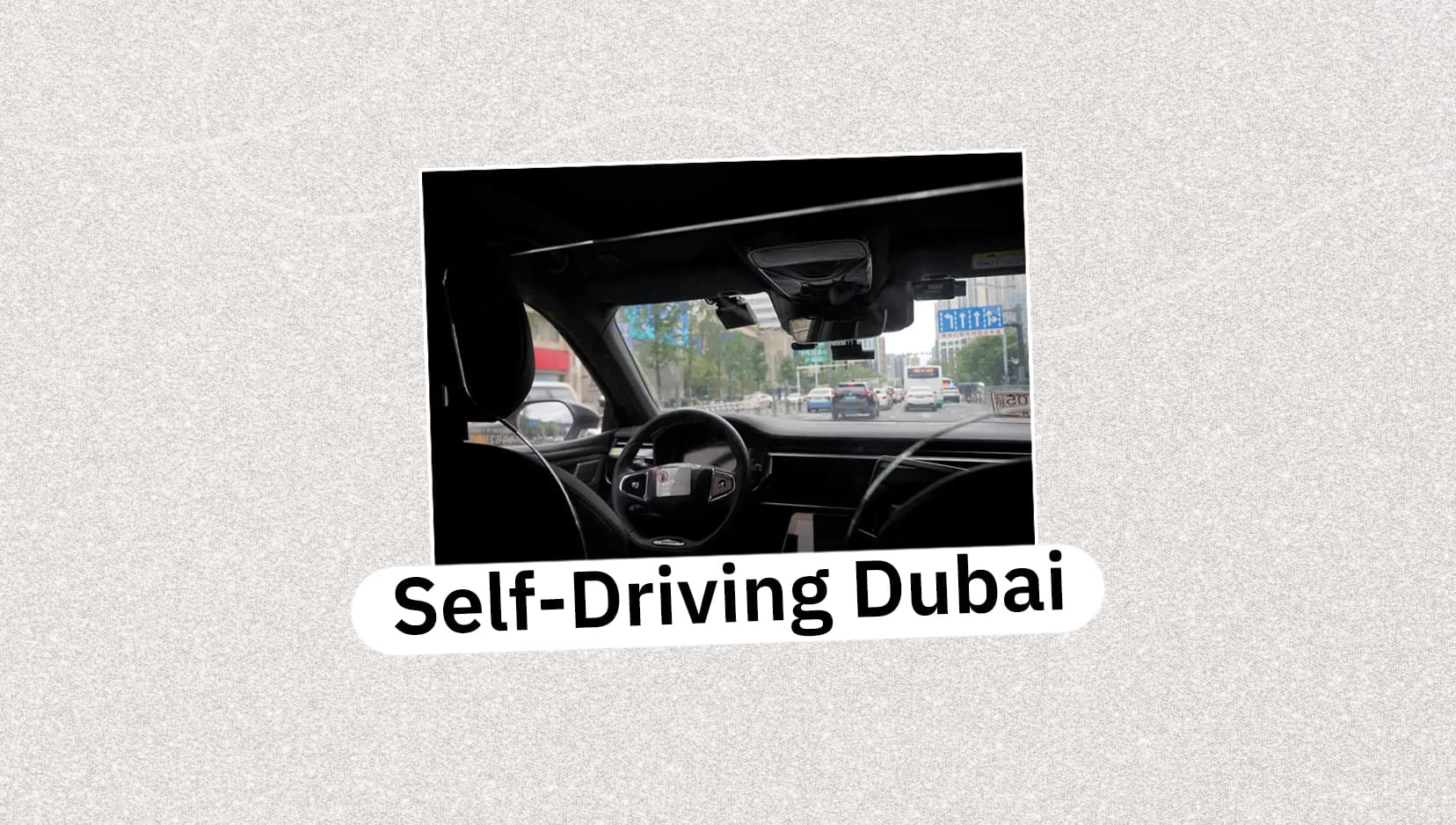
Dubai’s streets are about to feel a little more futuristic. The Dubai Taxi Company (DTC), in partnership with China’s Baidu and its autonomous ride-hailing platform Apollo Go, has officially launched fully driverless commercial taxi services in the emirate. And yes, these are vehicles operating without a safety driver behind the wheel.
For a city that has built its brand around bold bets on the future, this move feels almost spot on.
The service is now live through the Apollo Go app, marking the platform’s first international app deployment outside China. Residents and visitors can download it from the App Store or Play Store to book a ride. As the rollout gathers pace, booking options are expected to expand to platforms such as Bolt and other e-hailing providers.
The initial phase will see 50 driverless vehicles operating in the first year. But that’s only the beginning. There are plans to scale to more than 1,000 autonomous taxis over the next few years. It’s a phased expansion, and if executed as planned, it could reshape how people move around the city.
This step ties directly into Dubai’s Self-Driving Transport Strategy, which aims to convert 25 per cent of all transport journeys into smart and driverless trips by 2030. It’s an ambitious target, some might say a tall order, but Dubai has rarely been shy about aiming high. I’ve seen over the years how quickly pilot projects here can turn into full-blown citywide systems. What starts as a test often becomes the norm. That kind of momentum can be infectious for startups watching from the sidelines.
Nan Yang, Vice President of Baidu and General Manager of the Overseas Business Unit at its Intelligent Driving Group, described the partnership as a new chapter for autonomous mobility in Dubai. He noted that combining Baidu’s technology with DTC’s operational experience allows for what he called a safe, efficient and scalable ride-hailing service, setting a new standard for the region.
From DTC’s side, Group CEO Mansoor Rahma Alfalasi said the rollout marks a significant milestone in advancing Dubai’s vision for smart and sustainable mobility. He highlighted the support of the Roads and Transport Authority (RTA) in building the regulatory and infrastructure framework needed for such vehicles to operate seamlessly. According to him, trials conducted in recent months demonstrated the vehicles’ readiness, particularly in safety, reliability and operational efficiency.
It’s worth noting that this commercial launch did not come out of the blue. In January 2026, Apollo Go received Dubai’s first-ever testing permit for fully autonomous vehicles without a safety driver. In the same month, Baidu inaugurated the Apollo Go Park in Dubai, its first overseas operations and management hub. The facility is intended to support the planned fleet of more than 1,000 autonomous vehicles.
Globally, Apollo Go has already logged over 20 million rides as of February 2026, with weekly rides surpassing 300,000 at their peak during the fourth quarter of 2025. Its fleets have covered more than 300 million autonomous kilometres, including over 190 million kilometres in fully driverless mode. The safety record, according to company figures, has been strong.
On paper, at least, the numbers are impressive.
DTC itself is no small player. With more than 6,000 taxis and limousines and over three decades of operational experience, it positions itself as Dubai’s leading comprehensive mobility provider. The company says it will rely on advanced monitoring systems and data-driven operations to ensure each driverless journey is safe and smooth.
Of course, public trust will be the real test. Getting into a car without anyone at the wheel still feels, for many, like stepping into sci-fi. I’m not a fan of hype for hype’s sake, and autonomous mobility has had its share of bumps globally. That said, Dubai’s structured, regulator-led approach might just give it an edge.
For founders and mobility startups across MENA, this development is more than just a headline. It signals that regional governments are not only open to deep tech but willing to deploy it at scale. And when infrastructure, regulation and capital align, things can move very fast, definately faster than many expect.
If this rollout proves successful, it won’t just be about getting from A to B without a driver. It could push the whole ecosystem forward, from AI software to fleet management and urban planning. And believe it or not, that ripple effect is often where the real opportunity lies.
🚀 Got exciting news to share?
If you're a startup founder, VC, or PR agency with big updates—funding rounds, product launches 📢, or company milestones 🎉 — AraGeek English wants to hear from you!





✉️ Send Us Your Story 👇