 Ai Everything
 LEAP26
 AI
AI Saudi Arabia
 UAE
UAE Egypt
EgyptHUMAIN and Qualcomm Team Up to Build Saudi Arabia’s AI Future

3 min
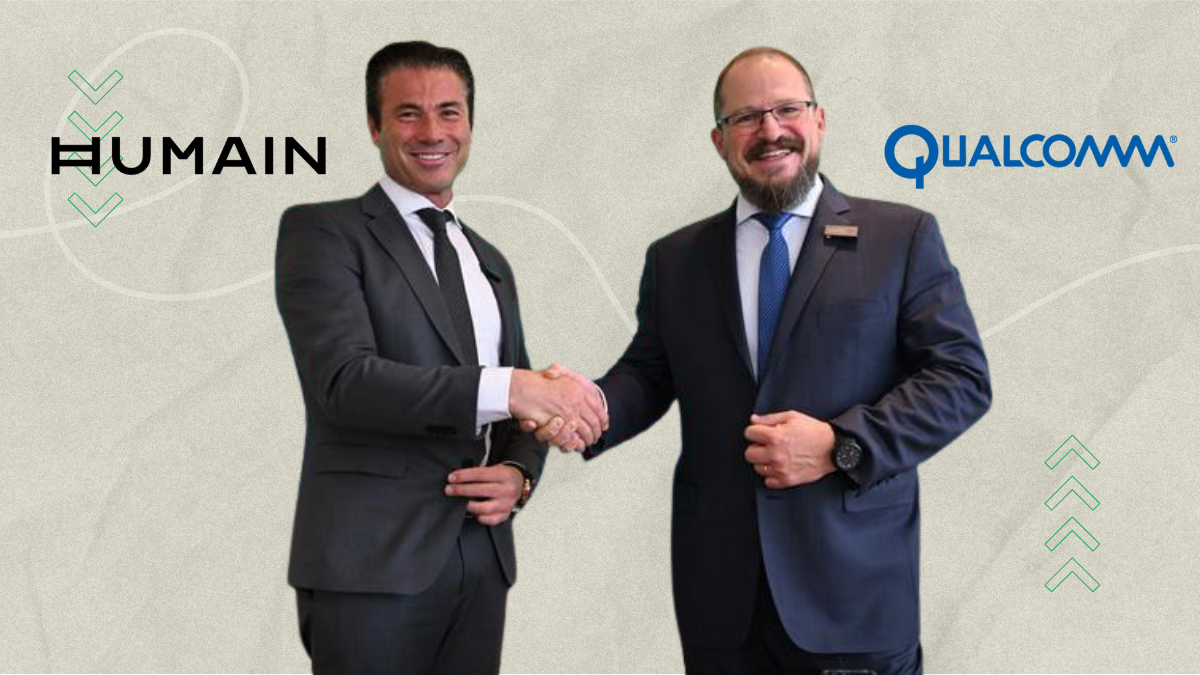
HUMAIN partners with Qualcomm to build game-changing AI infrastructure in Saudi Arabia.
The initiative will deploy 200 megawatts of Qualcomm’s AI solutions starting in 2026.
This collaboration blends local ambitions with Qualcomm's semiconductor expertise.
HUMAIN aims to make Saudi Arabia a global AI hub through this ambitious project.
The deal could boost regional startups by providing local cloud AI resources.
HUMAIN is joining hands with tech giant Qualcomm Technologies to roll out what could be a game-changing AI infrastructure in Saudi Arabia, just before the ninth Future Investment Initiative in Riyadh. The goal? To create the world’s first fully optimised hybrid system that connects the edge to the cloud — a setup expected to make the Kingdom a serious contender in the global AI race.
The partnership follows an earlier announcement at the US–Saudi Investment Forum in May 2025, and if all goes according to plan, HUMAIN will deploy around 200 megawatts of Qualcomm’s AI200 and AI250 rack solutions starting in 2026. In simple terms, that’s high-performance computing power designed to process AI tasks faster, better, and (hopefully) cheaper — a big deal for both industries and government agencies trying to scale up their AI capabilities.
What strikes me as particularly interesting is how this collaboration merges local ambition with international expertise. HUMAIN, backed by the Public Investment Fund, is fast becoming a local powerhouse with full-stack AI experience — from data centres to language models like its Arabic ALLaM system. Pair that with Qualcomm’s decades of semiconductor wizardry, and you’ve got a duo that might just redefine the tech landscape in the region. I reckon it’s not just about digital transformation — it’s about sovereignty in tech infrastructure, something Middle Eastern nations are increasingly keen on.
Speaking about the project, HUMAIN’s CEO Tareq Amin said the aim is to lay the foundations for an “AI-powered future”, while Qualcomm’s boss Cristiano Amon described it as an effort to accelerate the Kingdom’s smart computing ambitions. Pretty spot on, considering both firms stand to gain from transforming Saudi Arabia into a global AI hub.
For context, Qualcomm’s AI200 and AI250 platforms are engineered for fast, large-scale inferencing (that’s basically how machines interpret data). They’re built for high memory capacity and energy efficiency, offering strong performance per dollar of operational cost — or as people in the data world say, best-in-class TCO. Behind the technical jargon, this means generative AI models could run smoother and quicker across multiple industries, whether we’re talking healthcare, logistics, or public administration.
On the flip side, some observers caution that large-scale deployment of AI infrastructure requires a tricky balance between innovation and regulation. But given Saudi Arabia’s appetite for big tech bets, from NEOM to Vision 2030’s digitisation agenda, the risk appetite doesn’t seem to faze many decision makers. And believe it or not, such infrastructure could also boost regional startups — especially those who can tap into local cloud AI resources without the faff of relying on pricey overseas setups. That’s something we at Arageek are always keen to see — startups with access to real, scalable tech muscle.
All told, the HUMAIN–Qualcomm deal might just be the key to putting Saudi Arabia on the global AI map for good. It’s ambitious, forward-looking, and if executed properly, could turn the Kingdom into a central node of global AI innovation. I’m not a fan of overhyping big announcements, but this one, well… it definately feels like a serious step forward.
🚀 Got exciting news to share?
If you're a startup founder, VC, or PR agency with big updates—funding rounds, product launches 📢, or company milestones 🎉 — AraGeek English wants to hear from you!




✉️ Send Us Your Story 👇