 Ai Everything
 LEAP26
 AI
AI Saudi Arabia
 UAE
UAE Egypt
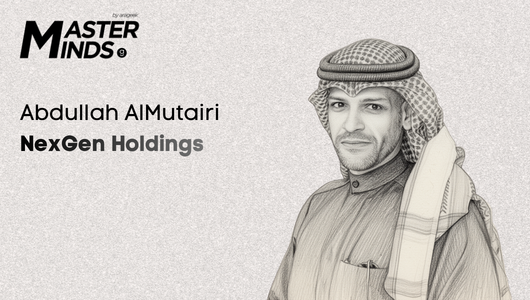
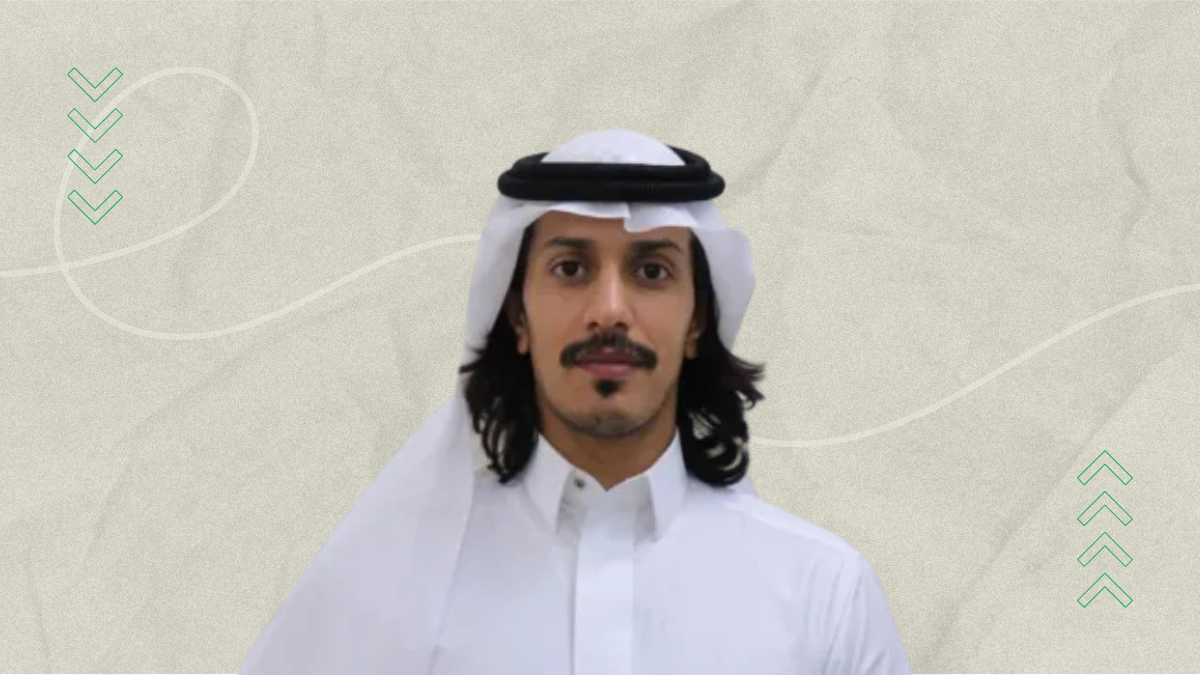
EgyptI am Abdullah Sultan Mohammed AlMutairi. I built platforms, not projects, to last

5 min
Why platforms mattered more than projects
From the outset of his career, Abdullah Sultan Mohammed AlMutairi oriented himself away from single assets and toward platforms. When asked about his early direction, he frames it as a deliberate response to structural problems he saw across energy, technology, and enterprise systems in the Gulf. Short-lived projects could not address issues of efficiency, scale, or resilience. Platforms could.
That conviction shaped the formation of NexGen Holdings. Rather than building a portfolio of disconnected businesses, he focused on a holding structure designed around governance, execution discipline, and long-term growth. The ambition was not rapid expansion for its own sake, but durability, creating organisations that could outlast market cycles and leadership changes.
The shift from operator to institutional leader
A defining inflection point came when the conversation turns to leadership evolution. Moving from direct operational execution to institutional leadership required a change in posture. Managing projects rewards control and proximity. Building institutions demands trust in systems and people.
Consolidating multiple ventures under a single holding-company model was not simply a structural decision, but a philosophical one. It forced clarity around accountability, capital allocation, and decision rights. Cross-border initiatives across the Gulf reinforced this discipline, exposing how quickly complexity grows when governance is weak. For AlMutairi, clarity and execution became non-negotiable.
Aligning business with the Gulf’s economic transition
Pressed on what drew him to sustainability and innovation at this stage, he points to timing as much as ideology. The Gulf’s economic transformation has made innovation and sustainability prerequisites rather than aspirations. The opportunity lay in aligning commercial growth with national development agendas.
He sees innovation less as novelty and more as infrastructure, smarter energy systems, digitally enabled institutions, and technology that compounds value over decades. In that context, NexGen is positioned not as a trend-driven investor, but as a long-term builder aligned with where the region is heading.
How NexGen is structured to scale
On the question of how such breadth is managed, AlMutairi is explicit about separation of roles. Each vertical operates with dedicated leadership accountable for execution. Renewable energy, smart infrastructure, and AI-driven solutions each have their own mandates and expertise.
Strategic direction, governance, and capital allocation sit centrally at the holding level. This is where alignment is enforced. Technology is the common thread, but efficiency and scalability are the real objectives. The structure is designed to avoid fragmentation while still allowing sector-specific depth.
Regulation as friction and opportunity
When asked about regional expansion, he acknowledges regulatory variation as the primary challenge. Different frameworks test consistency of execution and slow momentum if not managed carefully. Yet he sees the broader environment as unusually favourable.
Across the Gulf, economic visions are aligned and support for innovation and sustainability is strong. This shared direction reduces strategic risk and makes regional scale both achievable and durable, provided execution standards do not slip.
Choosing partners for execution, not optics
Partnerships, in his view, are a test of seriousness. Asked to explain how NexGen approaches them, he emphasises alignment over branding. Vision, governance standards, and execution capability matter more than commercial optics.
Sector leadership plays a critical role here. Renewable energy initiatives are backed by deep technical expertise, while digital transformation efforts are led by executives focused on secure, scalable deployment. The intent is to move decisively from agreement to delivery, avoiding the common trap of stalled collaborations.
Talent as an institutional asset
When the conversation turns to talent, AlMutairi avoids rhetoric. Institutions are built by people who are trusted with responsibility and held to clear standards. Empowerment, in his framework, is inseparable from accountability.
NexGen attracts talent by offering exposure to high-impact work and real decision-making authority. Long-term development matters, but so does performance. Culture, he suggests, is not what is said, but what is reinforced through systems.
Closing a company to scale impact
One of the more revealing moments comes when asked to reflect on Green Sustainable Solutions. The business sharpened his understanding of applied sustainability, but also exposed its limits. Scaling impact required access to specialised, globally proven technology that the company could not develop alone.
Closing the business was a strategic decision, not a retreat. Transitioning to a partnership model with the American firm InPipe enabled deployment of energy recovery solutions within existing infrastructure, without disruption or new construction. Demand from governments and the private sector has since validated the choice, underscoring the region’s appetite for practical sustainability.
Leadership, systems, and letting go
Asked to assess his leadership today, AlMutairi describes a shift from hands-on control to systems thinking. Experience taught him that delegation and governance are not abdications, but prerequisites for sustainable growth.
His focus now sits firmly on direction-setting, disciplined decision-making, and building leadership capacity beneath him. Institutions, not individuals, carry the weight of longevity.
What the next decade will reward
Looking ahead, he is clear about where value will accrue. Renewable energy and smart infrastructure will become foundational to Gulf economies. Scale, capital, and policy alignment give the region an advantage, but integration will define winners.
Energy systems, infrastructure, and data will increasingly converge into intelligent ecosystems. AI will accelerate this shift, improving efficiency, transparency, and service delivery, provided deployment remains responsible and governed by trust.
Where transformation fails
When asked about common mistakes, AlMutairi is blunt. Treating technology as the objective rather than the enabler undermines transformation. Governance, change management, and human factors are routinely underestimated.
Successful initiatives begin with clarity of purpose and realistic execution. Alignment must be continuous, not assumed.
Advice and legacy

Pressed for advice, he returns to fundamentals. Governance before scale. Market understanding before expansion. Execution over hype. The Gulf offers rare opportunity, but patience and resilience separate lasting institutions from short-lived successes.
Asked finally about legacy, AlMutairi does not cite deals or valuations. He wants NexGen remembered as a platform that built institutions, empowered talent, and delivered tangible impact. For him, legacy is measured by systems that continue creating value long after leadership has moved on.