 LEAP26
 AI
AI Saudi Arabia
 UAE
UAE Egypt
EgyptI am Mohamed Badawy. I chose venture building, which compressed startup timelines

5 min
From technologist to company builder
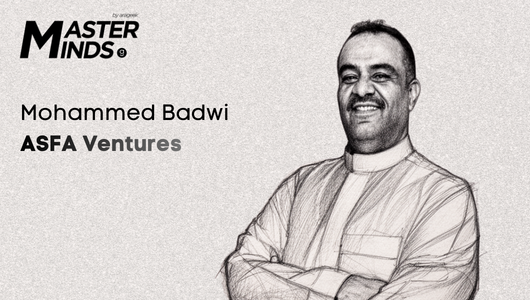
The throughline in Mohamed Badawy’s career is not a title shift but a widening of responsibility. When asked to introduce himself professionally today, he resists the labels others use for him, entrepreneur, investor, mentor, and instead anchors on what he is actually doing now, co-founding and partnering at ASFA Ventures, a venture builder. The decisive inflection point came earlier, when he stopped treating soft skills as optional. Investing seriously in communication, negotiation, leadership, and social intelligence changed his ceiling. It is what allowed him to move from being effective individually to building teams and creating sustained impact, something he credits to discipline, people, and faith rather than luck.
Why staying technical still matters at the top
On the question of his years as a CTO across multiple countries, Badawy is direct about the danger of distance. The first lesson is staying relentlessly current, because a single new tool or approach can erase years of unnecessary work. The second is more personal, never become a manager detached from detail. He believes leaders earn authority by understanding the work deeply enough to help, correct, and model standards, not by managing from abstraction.
Leadership without leaving the code
Asked to reflect on his shift from technical roles into leadership, Badawy pushes back on the premise. He never left the technology. Remaining close to engineering teams has reduced cost, headcount, and wasted effort. Management, in his view, is not a replacement for technical depth but an added layer, necessary for scale and company building rather than a signal that hands-on work is finished.
What different ecosystems actually teach you
When the conversation turns to geography, Badawy distinguishes between exposure and speed. His work in Turkey offered breadth, proximity to Europe, demographic scale, and operational variety that still informs his judgement. Saudi Arabia, however, stands alone for the pace and scale of digital transformation. He speaks from direct involvement, describing a learning curve unmatched by other Gulf, Arab, or European markets he has worked in.
Why he chose to build companies, not just back them
Pressed on the origins of ASFA Ventures, Badawy traces it to a period of alignment rather than ambition. After leaving Azm Saudi Arabia and briefly joining BIM Ventures, he recognised a mode of thinking that matched how he already operated. Building companies from zero in emerging technologies like AI and blockchain was not a strategic pivot but a return to where he felt most effective.
Sector focus driven by real problems
On the question of why ASFA concentrates on FinTech, Web3, HR Tech, and Logistics, the explanation is practical rather than thematic. HR Tech came first through acquisition and internal rebuilding. FinTech followed after uncovering gaps while serving HR clients. Logistics emerged as an operational extension of those same problems. Web3 stands apart as a long-held interest, one he believes will benefit from regulatory clarity sooner than many expect.
The venture builder difference
Asked what separates ASFA from accelerators or VCs, Badawy frames the distinction in commitment. A venture builder combines incubation, acceleration, and capital, but operates as a co-founder institution from day one. ASFA brings ideas, teams, funding, and exit thinking, compressing years of trial and error and allowing operators to focus on execution rather than survival.
How ideas actually get chosen
When asked about selection, Badawy describes a disciplined funnel. Ideas surface from markets, research, and existing operational resources. They are rapidly validated for feasibility, then matched with a person capable of running them. Without the right operator, he says, an idea has no value.
Solving a salary problem at scale
On the question of QSalary’s origins, the trigger was exposure to scale. Working with HR organisations managing workforces of 20,000 or more revealed high turnover, complex salary advances, and employees excluded from banking services. Earned Wage Access became a tool to increase loyalty, reduce churn, and remove administrative friction, not a product built in search of a market.
Balancing product, people, and growth
Asked how he balances competing demands as a co-founder and CTO, Badawy redirects credit. Strong partners and product managers make balance possible. On his own he is, by his own assessment, a good technologist. With the right team, that capability turns into competitive products built with cost discipline.
The hardest part of FinTech
Pressed on challenges at QSalary, his answer is unsurprising but unromantic. Regulation, compliance, and liquidity define the difficulty. Progress depends on patience, depth of understanding, and long-term regulatory relationships rather than technical cleverness alone.
What a startup CTO is really for
When asked to define the CTO role, Badawy returns to integration. The CTO is the bridge between technology and business. Impact increases as technical closeness and business understanding converge, resulting in faster development, lower costs, and products that scale both technically and operationally.
Hiring for philosophy, not just tools
On building teams in volatile environments, Badawy focuses less on stacks and more on mindset. He looks for technologists who are both smart and fast. In his words, intelligence without speed has little value in a world where time and cost are unforgiving.
Are Web3 and FinTech ready in the region?
Asked about readiness in the Arab region, Badawy is confident. Regulation is early but moving quickly. The infrastructure and appetite are already in place, and he expects formal frameworks to arrive sooner than most anticipate.


Advice he wishes he had followed sooner
Asked to look back, his counsel returns to the same theme that reshaped his career. Develop social intelligence. Excel where you are. Excellence, he believes, is what actually opens doors.