 GITEX Dubai
 Ai Everything
 LEAP26
 AI
AI Saudi Arabia
 UAE
UAE Egypt
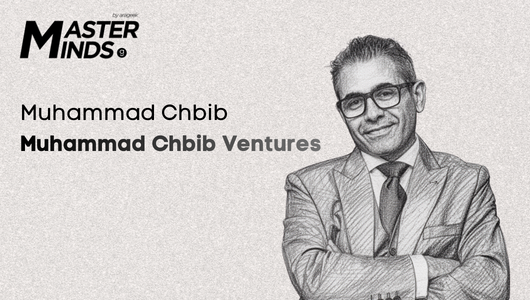
EgyptI am Muhammad Chbib. My teams and I have built nine ventures, shaping MENA tech for global impact

5 min
From Germany to Dubai: Choosing a Path Against the Narrative
When asked about his decision to move to the MENA region, Muhammad Chbib traces it back to the early 2000s and formative global events. The first Gulf War, followed by the post-9/11 shift in Western narratives, planted the seed of purpose in him. “All of a sudden we became the villains of every Hollywood movie,” he recalls. For Chbib, the response was clear: if the region could produce global tech successes, it could rewrite its story. A visit to Dubai for Gitex in 2003 sealed it, he was captivated by a city unlike any other in the Arab world. “I decided to stay, and here I am 23 years later.”
Learning the Hard Way: The First Entrepreneurial Lesson
Pressed on his earliest lessons in entrepreneurship, Chbib highlights the importance of co-founder alignment. His first venture in 2000 taught him a lesson that still shapes his choices today: “If you have the slightest doubt about the person that you share your cap-table fate with, then don’t do it.” Trust, shared values, and the ability to push and improve each other remain non-negotiable for him.
Defining Success Through People
When reflecting on milestones, Chbib focuses less on financial metrics than on the people he has developed. From transforming a young Saudi woman into a talent sought by Silicon Valley tech giants, to guiding an accountant into a CFO role, he sees these achievements as his proudest. From a business perspective, Chbib singles out Almosafer.com, the online travel arm of Seera Group, noting how his departure did not derail its growth. “Key people stayed on board and took it from success to success,” he says.
Navigating the Toughest Moments
On the question of challenges, Chbib recalls his darkest moment at age 25, when a failed funding round forced him to lay off 30 employees and file for insolvency in Germany. The experience led to burnout that he only recognised years later. Yet, the lesson endured: risk-taking is vital, but so is ethical leadership. “I make it crystal clear to candidates about the risks of joining an early-stage startup,” he says. No one is pushed blindly into uncertainty under his watch.
The Missing Piece in MENA’s Tech Ecosystem
Asked about the region’s constraints, Chbib identifies two structural gaps: capital and distribution. While talent and resilience exist in abundance, professionalised, visionary capital is still limited, and dependency on foreign platforms remains a vulnerability. He compares the MENA landscape to China, which has its own ecosystems and payment engines. “Why is no one bold enough to back founders to build self-reliant systems?” he asks.
A Global Vision Rooted Locally
When the conversation turns to his dream of building Middle Eastern tech brands for global markets, Chbib reiterates the fundamentals: capital, distribution, and talent repatriation. He envisions a united regional initiative to attract Arabs back to the region, coupled with corporate investment in startups and the development of world-class universities. “We must stop the brain drain of top school grads,” he says.
He also stresses cultural authenticity. “Most people think about copying what works elsewhere. Very few work on ventures anchored in our own heritage,” he notes, frustrated by investors who ask, “Has this been funded elsewhere?”
Getting the First 1,000 Days Right
Chbib is adamant that founders must master three elements before scaling: product, people, and sales. The product must launch within the first 100 days. The founder is the first builder of company culture. And sales prowess is essential, whether pitching to investors, media, or talent. “If you’re not good at that, get someone who is unbelievably good by your side on day one.”
Coaching Like Football
Comparing his management style to football coaching, Chbib explains how he empowers his teams to make decisions. “I am outside the pitch. They are the strikers and goalkeepers,” he says. His role is to ask the right questions, offer guidance, and let the team act. Early hires must understand that they are smarter in their domains, forcing them to evaluate, decide, and learn from mistakes independently.
Scaling Culture with Intent
Culture, Chbib believes, is built by role-modelling behaviours early, then handing ownership to the team once it reaches 20-25 people. He convenes all-hands sessions to define mission, vision, and values, letting the team enforce adherence. “They have the authority to go after even myself if anyone violates the values,” he says, creating a system where culture becomes the highest moral authority.
AI, Startups, and the ROI Mindset
On AI and innovation, Chbib is cautious about hype. Early ventures used predictive models to optimise advertising spend, delivering 15-20% uplift in return. “Unless you fundamentally understand the workflow, AI won’t optimise anything sustainably,” he notes. For scaling founders, his warning is simple: costs must not outpace revenues, and cashflow-positive growth is preferable before aggressive fundraising.
Unflinching Truths About the Region
Chbib’s show UNFLTRD aims to break taboos. “A lot of people avoid discussing the structural problems in venture capital,” he says. Diplomacy dominates public discourse, even when intent is good. Honest conversations, he argues, are essential to address gaps and build meaningful solutions.
Advice for Aspiring Global Founders
Finally, Chbib encourages founders to dream big and tackle audacious problems. He points to the lessons of Zuckerberg, Jobs, Musk, and Bezos: start at zero, in one country, with massive ambitions. “Why don’t you create the next LinkedIn or a platform that fights online addiction? Work on something that gives us sovereignty long-term,” he challenges.