 Ai Everything
 LEAP26
 AI
AI Saudi Arabia
 UAE
UAE Egypt
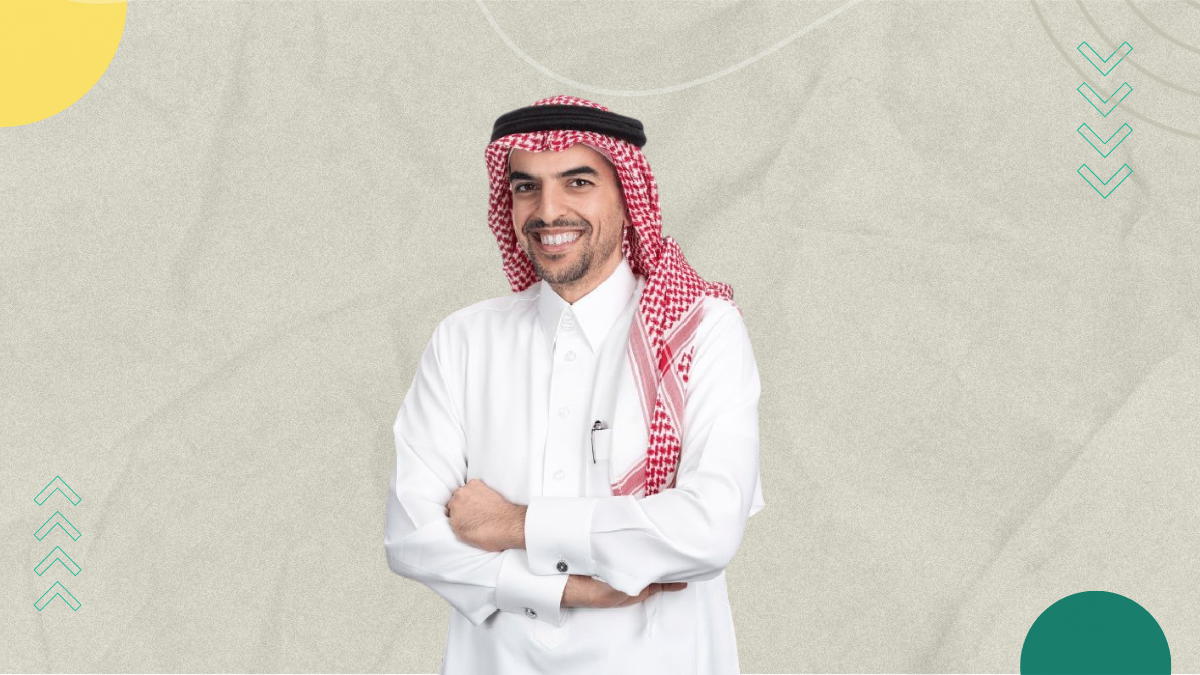
EgyptI am Shehab Mohamed. I chose fintech after seeing a $200bn gap

6 min
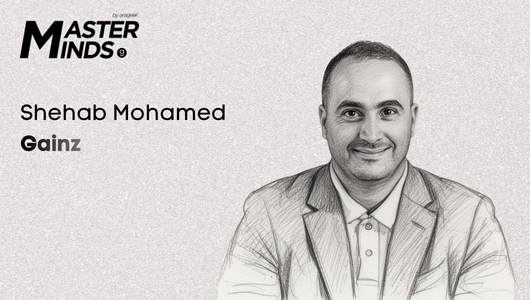
Shehab Mohamed did not arrive at entrepreneurship in a straight line
Long before Gainz existed, Shehab Mohamed was moving between industries, geographies and operating models. When asked about the steps that preceded entrepreneurship, he frames them less as a master plan and more as deliberate exposure. Engineering, operations, finance and investment all came before founding a company, and each stage sharpened how he thinks about risk, scale and execution.
He began as a telecommunications engineer at Vodafone, working inside the technology team responsible for launching 3G services. From there, the path shifted into supply chain and operations management in the food sector, a move that brought him closer to unit economics and logistics. An MBA in Spain followed, before he returned to Egypt to work at a company owned by the Kuwaiti sovereign wealth fund, tasked with deploying $100 million into mid-sized Egyptian businesses.
The experience, he says, was both academic and practical. It exposed him to how capital is allocated, how governance works in emerging markets, and how businesses look when viewed from the investor’s side rather than the founder’s.
How family and timing shaped his move into startups
When the conversation turns to how he entered the startup world, Mohamed points first to family rather than market trends. He grew up around entrepreneurship. His father moved from banking into running his own business, and that shift left a lasting imprint on how Mohamed thought about work and ownership.
By 2019, when he decided to start building, Egypt’s startup ecosystem was still taking shape. Interest was rising, but the playbook was far from mature. Friends around him had already launched companies and seen real success, which helped make the leap feel tangible rather than theoretical. Combined with his academic background, it was enough to push him out of corporate roles and into building something of his own.
The first venture and a forced pivot
Asked to reflect on his first entrepreneurial venture, Mohamed goes straight to execution. Appetito was built around his experience in the food industry, selling healthy products through gyms and petrol stations. The model worked until COVID-19 disrupted physical distribution.
The response was not to wait it out. The company shifted online, scaled the new model, and eventually attracted acquisition interest. In 2023, Appetito was acquired by a Saudi company through a share swap, merging under the name Nomu. Mohamed relocated to Saudi Arabia and spent a year working in the B2B segment, expanding relationships with restaurants and cafés while entering storage and financing operations.
It was a successful chapter, but not one he intended to extend indefinitely.
Choosing to leave and start again
Pressed on what came next, Mohamed describes a clean break. In 2024, he left the merged company to begin a new journey, this time with a clear focus on fintech. Before launching, he joined Antler, a global startup accelerator operating across more than 25 countries.
Antler’s model appealed to him because it forced discipline at the idea stage. Teams were expected to validate market size, profitability and execution before capital was committed. It was there that he met Sherif Abdel Atti. Together, they began shaping what would become Gainz.
Identifying a structural financing gap
On the question of how the idea for Gainz emerged, Mohamed points to a problem he had seen repeatedly. Across Egypt, Saudi Arabia and the UAE, founders and SME owners struggled to raise capital. Banks typically required three years of financial statements, a hurdle most growing businesses could not clear.
Through their work with startups, the founders saw that this was not a niche issue. The region has roughly 20 million SMEs, and according to World Bank data, a $200 billion financing gap. Gainz was launched in the UAE through the accelerator programme, with a plan to expand across the Gulf and later establish a presence in Egypt.
The ambition was not incremental improvement, but a different approach to access altogether.
What Gainz is actually building
When asked to define the company’s offering, Mohamed is precise. Gainz is designed to bridge the $200 billion alternative financing gap through Shariah-compliant crowdfunding solutions. The aim is to change how SMEs access working capital while giving investors access to profitable, compliant opportunities.
The long-term vision is to become the region’s leading crowdfunding platform, but the immediate focus is operational. Speed, structure and trust matter more than brand at this stage.
Early challenges and regulatory reality
Asked about the hardest parts of building so far, Mohamed does not point to technology first. The initial challenge was validating the business model itself. The team needed confidence that the problem was real, large and solvable in a way that could scale and attract long-term capital.
Regulation came next. Operating in financial services meant working closely with central banks and capital market authorities across the Gulf to secure the right licences. Alongside that sat the complexity of building a robust technology platform capable of handling risk assessment and compliance.
None of it was optional, and none of it could be rushed.
Competition as confirmation, not threat
When the conversation turns to competitors, Mohamed’s response is calm. Several companies have entered the space and are growing quickly. He sees this as validation rather than pressure.
The market gap is vast, and the current number of players cannot close it alone. Different companies focus on different segments, and increased activity helps educate entrepreneurs about alternative financing options. Over time, he expects large financial institutions to become more open as the model proves itself at scale.
Speed, data and founder support as advantages
Asked to articulate Gainz’s competitive edge, Mohamed leads with speed. Traditional financing assessments can take weeks. Gainz aims to deliver funding in under 48 hours by analysing data quickly and assessing risk accurately.
Artificial intelligence plays a role in evaluating repayment capacity, but process design matters just as much. The company simplifies procedures and actively supports founders through the financing journey, rather than treating them as applicants moving through a queue.
Fundraising discipline in a different market
On investor conversations, Mohamed credits Antler with providing early credibility. Recently, Gainz closed a seven-figure USD seed round led by Antler, with participation from regional investors.
But he is clear about philosophy. The goal was never to raise the maximum possible. The funding environment has changed since 2020. Investors are more selective, and founders have learned hard lessons about inflated valuations and overcapitalisation. In his view, resilience comes from proving profitability early and raising only what the business actually needs.
Economic cycles will always shift. Companies built for efficiency survive them.
What success looks like by 2030

When asked to look ahead, Mohamed offers a concrete target. By 2030, Gainz aims to finance 10,000 companies with total funding of up to $500 million. Early market indicators and partnerships support that ambition.
For now, the focus remains on the UAE, with potential expansion into Saudi Arabia in 2026. Profitability comes before aggressive scaling. The priority is to deepen services for both investors and SMEs, then grow from a position of strength.