 LEAP26
 AI
AI Saudi Arabia
 UAE
UAE Egypt
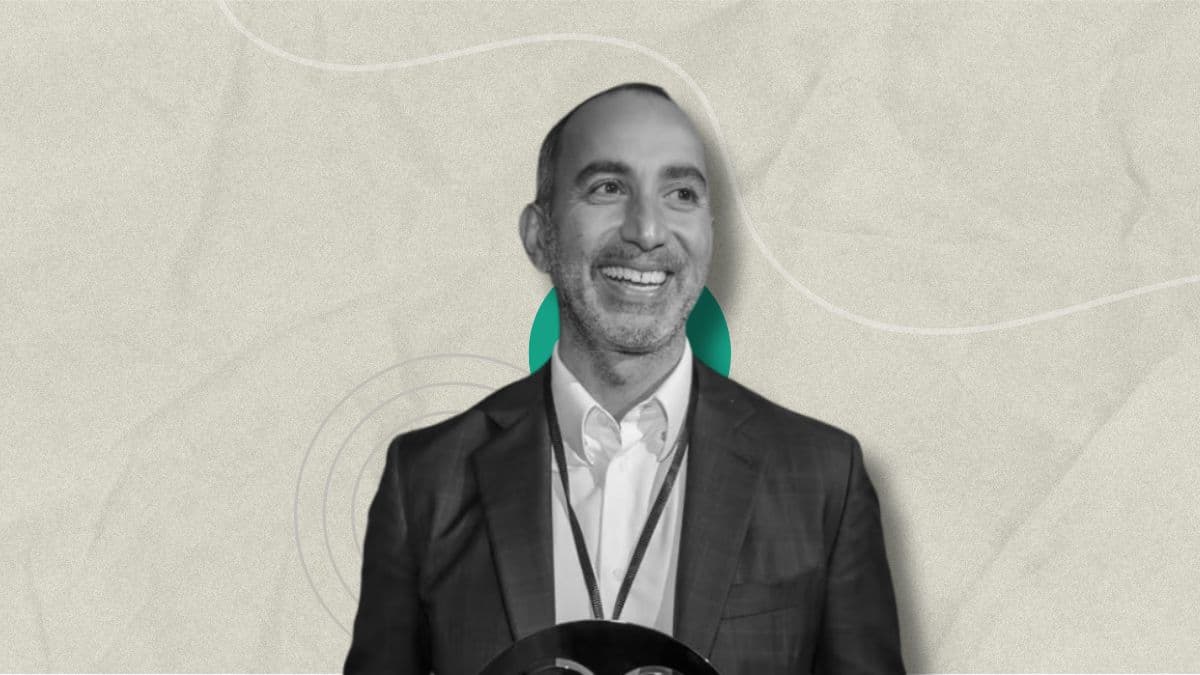
EgyptI am Najeeb Jarrar. I bet Google’s future on AI that speaks Arabic


6 min
Najeeb Jarrar on betting the region’s next growth curve on Arabic AI
There is a pattern in Najeeb Jarrar’s career that only becomes obvious in hindsight. He has spent the past 15 years pushing one idea inside Google: if technology is going to scale in the Middle East and Africa, it has to feel native, not imported.
When asked about the single bet that could genuinely change the growth curve today, he does not hesitate. It is AI in Arabic, but not in the superficial sense.
“My biggest bet right now is on AI being genuinely useful in Arabic, not just technically functional.”
He has seen this movie before. When he joined Google in 2008, internet penetration across MENA was counted in the low millions. Today it exceeds 300 million users. That shift, he argues, happened when the internet stopped being foreign and started speaking to people in their own language, on their own terms. The next leap will follow the same logic. Products such as Gemini will not move the needle in the region if they are merely translated. They have to feel built for Arabic speakers from the ground up.
That is the curve he is trying to bend.
Why localisation is a design decision, not a translation layer
When the conversation turns to the product launches he is proudest of, Jarrar does not pick one of Google’s flagship names, even though he has led regional efforts across Search, Maps, YouTube, Ads, Play and Assistant.
Instead, he points to something less visible but more structural: making Arabic a first-class language inside the company.
His engineering background gave him leverage in internal debates. He was able to argue not from sentiment, but from architecture. “Localisation isn’t a last step, it’s a design decision,” he says.
Pressed on what most teams miss, he is direct. If you wait until the end to localise, you are bolting on a translation layer that users immediately sense is not real. The moment to fight is early, when systems are still being built and trade-offs are still fluid. Miss that window and you are forever compensating.
For him, the proudest work was not a campaign. It was shifting how the company thought about the region in the first place.
The difference between solving a problem and making people feel seen
Asked to give a concrete example of “listening to users” reshaping a plan, Jarrar moves away from product features and into tone.
One insight forced a rethink: people in the region did not just want information, they wanted to feel recognised by the product. The team had been solving the right functional problems, but in the wrong emotional register.
The adjustment was not technical. The product remained the same. What changed was how it spoke.
That insight altered creative briefs and campaign framing. Listening, in his view, is not about survey data alone. It is about behavioural signals and direct conversations with communities. The shift was subtle but consequential. In a region where identity and language carry weight, tone can be the difference between adoption and indifference.
How he decides what not to fund
On the question of managing multi-million-dollar budgets, Jarrar reduces it to a single filter.
Is this solving a real problem for someone in this region, or are we just making ourselves feel busy?
He is sceptical of campaigns that cannot articulate, in one sentence, the specific user behaviour they are trying to change. Awareness metrics do not impress him. “Vanity numbers are comfortable. They tell you something happened. They don’t tell you it mattered.”
His test is simple. If he cannot clearly explain what problem this solves for a user in Riyadh or Cairo, it is noise. Regardless of how good the dashboard looks, it does not get funded.
The discipline is less about cost control and more about respect for the user.
Communicating through crisis without losing trust
When asked about the toughest message he has had to communicate externally, he points to the pandemic.
During Covid-19, misinformation was spreading rapidly. The response was not a conventional marketing campaign but the launch of an Arabic microsite that aggregated health information, safety tips, Google resources and additional content in one accessible place.
It was mentally taxing work, he admits, given the broader pressure everyone was under. But the obligation felt clear. If the company had the tools and reach to surface reliable information, then it owed that effort to the community.
The credibility challenge was real. Moving quickly in a crisis always risks missteps. But in this case, speed and clarity were more important than perfection. The priority was trust.
What actually compounded over 15 years
Asked to reflect on his biggest success, Jarrar does not cite a product milestone. He describes a 15-year journey: building Google’s marketing presence in MENA from a four-person office into a regional organisation.
People often frame such growth as a matter of strategy or timing. He rejects both as primary drivers.
“Strategy can be copied. Timing is partly luck,” he says. “But the people who stayed, who cared about this region, who pushed when it was hard, that’s what compounded over time.”
For him, the multiplier was the team. Not just talent, but commitment to the region itself.
The failure that changed his operating rule
Pressed on his biggest failure, Jarrar is candid. He has backed campaigns he was certain would work, only to see them land flat.
The pattern, in retrospect, was consistent. He had fallen in love with the idea before fully validating the insight behind it.
The rule he follows now is clear: conviction about the strategy, scepticism about his own assumptions. He actively asks his team to bring data that contradicts the plan, not data that confirms it.
It is a small operational shift, but it guards against overconfidence, particularly in environments where senior voices can easily dominate.
What he listens for in a hiring interview
When the conversation turns to hiring, his criteria move beyond credentials.
He listens to how candidates speak about people they have disagreed with. Can they articulate the other person’s position fairly before explaining why they pushed back?

The red flag is not failure. It is the inability to admit being wrong.
For someone who has spent years arguing for the region inside a global company, that instinct makes sense. Conviction matters. So does the capacity to question yourself.