 Ai Everything
 LEAP26
 AI
AI Saudi Arabia
 UAE
UAE Egypt
EgyptI am Osama Shawky. I built for duration, not nights, and created a category


6 min
The discipline of staying, not starting
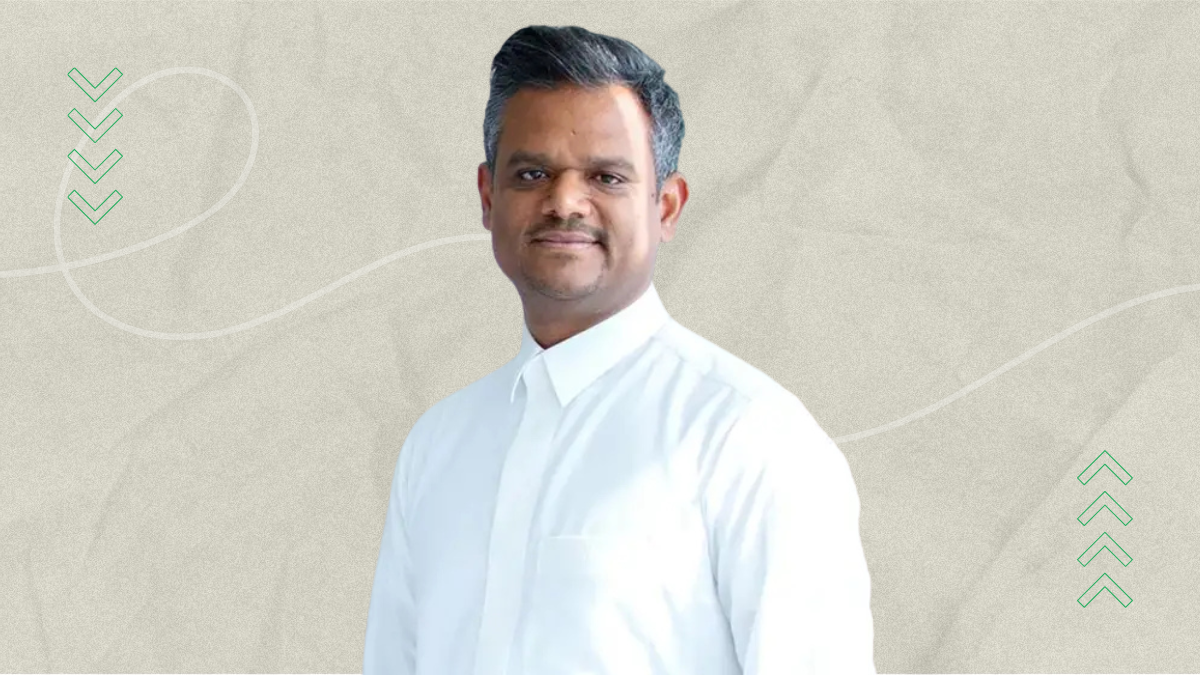
Longevity in entrepreneurship is often romanticised as a sequence of bold beginnings. Osama Shawky sees it differently. The real test, he suggests, is not in launching ventures but in enduring them.
When asked about the defining challenge across more than two decades, he does not point to a single failure or breakthrough. Instead, he returns to consistency. Markets shift, technologies reset expectations, and outcomes rarely arrive on schedule. What matters is the ability to keep moving with conviction when clarity is absent, and to do so without losing focus.
It is a view shaped not by one company, but by cycles.
How he thinks about timing when everything is uncertain
On the question of difficult decisions, Shawky focuses on exits, not as financial events but as moments of judgement.
There is always tension in deciding whether to hold or let go. He has experienced both sides, staying longer than he should and exiting earlier than expected. Those decisions did not just affect outcomes, they recalibrated his thinking. Today, he builds with long-term value in mind, but without attachment. The discipline is knowing when conviction becomes inertia.
Timing, in his view, is less about prediction and more about decisiveness under incomplete information.
Why systems matter more than effort
When asked to reflect on early lessons, Shawky is direct about a belief he outgrew.
He once thought effort was the primary driver of success. Over time, he recognised its limits. Hard work can initiate growth, but it cannot sustain it. What scales is structure.
That shift, from effort to systems, changed how he builds. Execution still matters, but it is framed within repeatable processes. Without that foundation, growth is fragile and temporary.
What large organisations taught him about scale
When the conversation turns to his time in global corporations, Shawky points to a level of discipline that startups often underestimate.
In large environments, very little is left to chance. Systems are designed not just for current operations but for scale from the outset. That mindset stayed with him.
Even in early-stage ventures, he approaches decisions with a forward lens, asking how they will function when the business grows tenfold. It is less about copying corporate structure and more about embedding scalability into the design.
How he separates vision from execution
Pressed on balancing speed with long-term thinking, Shawky draws a clear line between what should change and what should not.
Vision remains stable. It provides direction and anchors decision-making. Execution, however, must stay flexible. Teams move quickly, test assumptions, and adjust based on feedback, but always within a defined trajectory.
The mistake, he implies, is confusing adaptability with a lack of direction.
Why founders scale too early
Asked about common pitfalls, Shawky identifies a pattern he sees repeatedly in founders he advises.
Many interpret early traction as validation. It is not. Without true product-market fit, scaling amplifies weaknesses rather than strengths.
Premature growth introduces inefficiencies that become harder to correct over time. In his framing, discipline at the early stage is less about speed and more about restraint.
The gap that led to estaie
When asked about the origin of estaie, Shawky traces it back to a simple observation that revealed a larger structural issue.
People were staying longer, but the systems around them had not evolved. Hotels were built for short stays, booking platforms optimised for nights, and corporate housing remained manual and fragmented.
What looked like a gap was, in his view, an entirely missing category.
Why duration changes everything
On the question of differentiation, Shawky is precise about what makes the model distinct.
Traditional platforms optimise for nightly transactions. estaie is built around duration. That single shift affects pricing, operations, and supply dynamics.
It is not an incremental improvement on booking. It is a redefinition of how extended stays are structured and delivered.
Where AI fits in a complex pricing problem
When asked to explain the role of AI, Shawky avoids abstraction and focuses on a specific challenge.
Pricing extended stays is fundamentally different from pricing nights. It requires understanding duration, demand patterns, and time-based value.
The platform’s AI sits at the core of this problem, handling a level of complexity that traditional models cannot. The pricing intelligence, currently patent-pending, is designed specifically for long stays, where standard approaches break down.
Why the market stayed underserved for so long
When the conversation turns to market dynamics, Shawky is clear that the opportunity was never invisible, just difficult.
Solving for extended stays requires aligning multiple layers, pricing, consistent supply, and enterprise integration. Most players avoided that complexity.
What changed is demand. Increased mobility across the region has made the gap too large to ignore.
How regional shifts are accelerating demand
Asked about the impact of regional developments, particularly in Saudi Arabia, Shawky frames it as a structural shift rather than a temporary trend.
Large-scale projects, cross-border talent movement, and evolving living patterns are driving demand for flexible accommodation. The infrastructure, however, is still catching up.
That mismatch creates the opportunity estaie is built to address.
What the funding round was really signalling
On the question of fundraising, Shawky positions the recent pre-seed round as more than capital.
The message to investors was that this is not a feature or a niche improvement. It is a category play aimed at solving a structural inefficiency at scale.
The ambition is not to compete within existing frameworks, but to define a new one.
What comes next, and what matters most
Asked about priorities, Shawky resists choosing between growth levers.
Expansion, product development, and partnerships all matter, but only if built on a strong foundation. The focus is on getting the fundamentals right, particularly around technology and supply, while ensuring long-term defensibility.
Speed, again, is secondary to structure.
Defining the category, not just participating in it
Looking ahead, Shawky’s ambition is clear but measured.


He sees estaie becoming the standard platform for extended stays, but the larger goal is to shape how the market operates. Pricing and standardisation are the critical pieces. Once those are solved, the category itself evolves.
It is a familiar theme in his thinking. Build for the long term, design for scale, and move decisively when the moment demands it.