 LEAP26
 AI
AI Saudi Arabia
 UAE
UAE Egypt
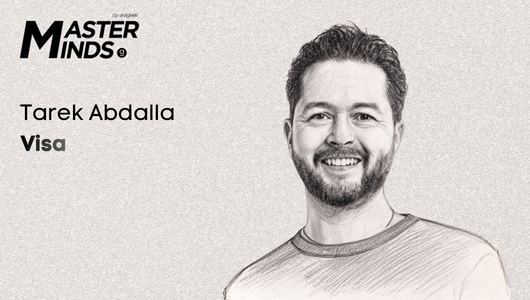
EgyptI am Tarek Abdalla. I see AI and content convergence reshaping marketing in emerging markets

4 min
From Shelves to Screens to Transactions
When asked about his career trajectory, Tarek Abdalla frames it as a continuous pursuit of understanding and influencing consumer behaviour. He began in traditional CPG at Mars, moving across the Middle East and North America. “It was the best school for fundamentals, understanding the consumer, the supply chain, and the P&L,” he says. Google marked his leap into the digital age, where he scaled technology and operations across 16 emerging markets. TikTok shifted the focus from organising information to inspiring creativity, while Visa now sits at the intersection of culture and commerce, where he aims to turn a trusted financial engine into a culturally relevant, digital-first brand.
Redefining “Good Marketing”
Pressed on how his definition of marketing has changed, Abdalla describes a shift from visibility and brand love to measurable impact. “Early in my career, marketing metrics were abstract and detached from the corporate scorecard. Today, good marketing retains all the creative elements but with a clear link to value creation and commercial outcomes.” He cites Visa’s sponsorship approach as an example: beyond logos, the focus now is embedding payment technology into the fan experience and linking brand preference directly to revenue outcomes.
Owning the Engine
Abdalla explains his move from marketing leadership to full P&L responsibility as a natural extension of impact. “Marketing often gets siloed as a cost centre. Taking on P&L responsibility allows you to sit at the table not just as the voice of the customer but as a driver of commercial impact.”
Lessons from the Pandemic
During the pandemic, Abdalla’s team at Google trained millions in digital skills across emerging markets. “It taught me that tech companies aren’t just product providers; they are critical to economic development. Supporting female economic participation, for instance, was about maximizing societal output. The most sustainable business strategy elevates the ecosystem you operate in.”
What Digital-First Means at Visa
On the question of digital transformation, Abdalla frames ‘digital-first’ as more than replacing plastic cards with digital wallets. “It means embedding Visa into the code of commerce. From gaming to cross-border SME transactions, digital-first is about being the layer of trust that makes the digital economy work.” He views it as a challenge to redefine brand meaning in an increasingly virtual landscape.
Common Pitfalls in Marketing Transformation
Abdalla notes a recurring error in companies trying to modernise marketing: “They change the tools but not the talent or incentives. Investing in tech without upskilling the organisation leads to dust-gathering systems. And if vanity metrics dominate the conversation, the function never reaches its potential as a driver of commercial impact.”
Leading Across Diverse Markets
Reflecting on leadership in the Middle East, Africa, Europe, and Asia, he observes, “Talent is universal, but opportunity is not. Many emerging markets are leapfrog markets where consumers adopt fintech faster than in the West. These regions should be seen as bellwethers for global trends, not as markets where we simply adapt Western solutions.”
Building High-Performing Teams
Asked about his leadership philosophy, Abdalla emphasises diversity of thought. “A room full of different perspectives is a superpower in complex organisations. I look for curiosity, drive, and adaptability. Growth comes from role expansion, not just promotions. People rise to challenges more than we expect.”
Tackling Complex Challenges
When approaching untapped markets or strategic overhauls, Abdalla starts with opportunity and human needs. “We determine whether we are changing behaviour or perception, identify barriers, and link these changes to commercial outcomes. For what we know, we move fast. For uncertainties, we pilot and test, using both data and experience.”




The Future of Marketing in Emerging Markets
Looking ahead, he predicts the convergence of content, commerce, and AI. “The checkout button will move closer to the content feed. Social feeds could become storefronts powered by virtual agents making purchases on our behalf. Marketing will need to account for AI agents influencing human decisions, and emerging markets will lead this transformation.”
Advice for Future Leaders
Finally, Abdalla advises aspiring leaders to master their native advantage. “Understanding local nuance is a superpower. Embrace AI for productivity and creativity. Prepare for multiple pivots, your career will be very different from your parents’.”
For Abdalla, the throughline is clear: marketing is not just about campaigns, it is about shaping behaviour, culture, and commerce in a way that is measurable, human, and future-ready.