 Ai Everything
 LEAP26
 AI
AI Saudi Arabia
 UAE
UAE Egypt
EgyptMaersk and Unilever Launch First Electric Van in Saudi Arabia

3 min
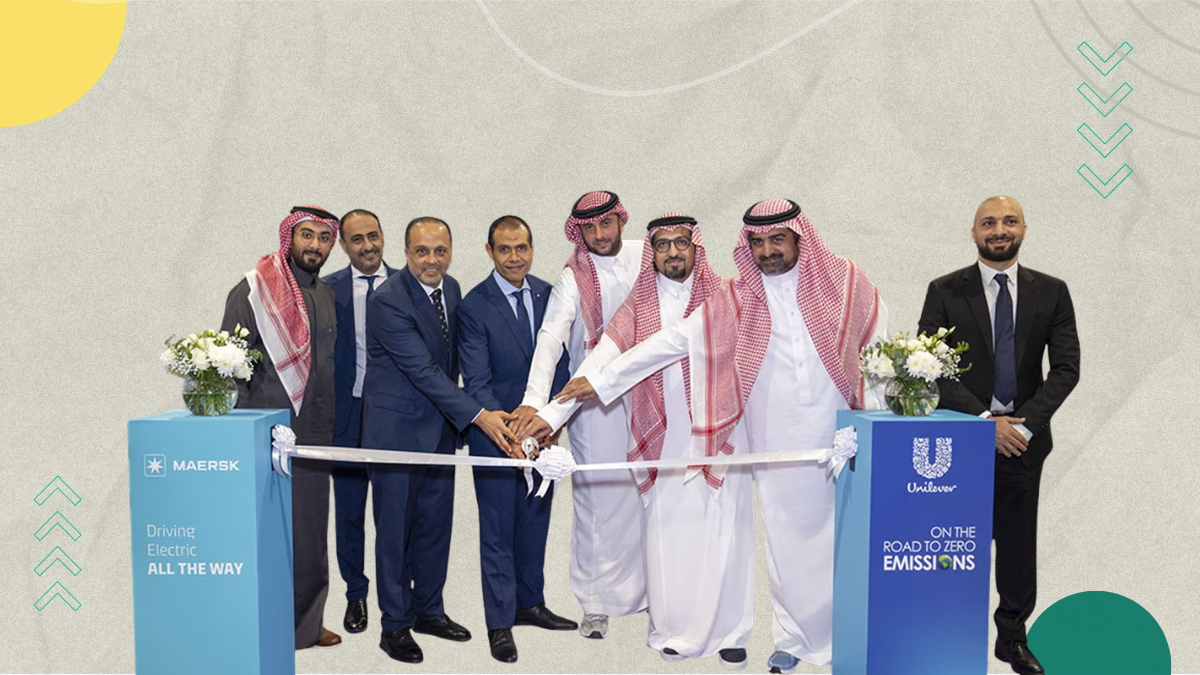
Maersk and Unilever launch their first electric van in Jeddah, Saudi Arabia.
The van supports Saudi Vision 2030 and aims to decarbonise logistics in the region.
The duo previously reduced emissions by 5% with solar and seawater cooling systems in Jeddah.
Maersk and Unilever are exploring renewable energy warehouses and intermodal transport solutions.
Both companies aim for net-zero emissions, with Unilever targeting 2039 and Maersk 2040.
In what feels like another small but mighty step towards a greener supply chain, global shipping heavyweight Maersk has teamed up with consumer goods giant Unilever to roll out their first electric van in Saudi Arabia. The vehicle, which will operate in Jeddah, marks the start of a wider effort to decarbonise logistics in the Kingdom — and, by the looks of it, the partners aren’t stopping there.
The electric van’s duties sound fairly straightforward on paper: serving Unilever’s retail partner, BinDawood Group, within a 50‑kilometre radius and clocking up about 3,500 kilometres each month. Yet, the symbolic charge behind this move is anything but ordinary. It supports Saudi Vision 2030’s broader goal of cutting 278 million tonnes of emissions annually — no small ask for any economy heavily dependent on energy-intensive industries.
I remember chatting with a few founders back at an **Arageek** roundtable not long ago, and this very topic kept cropping up — how cleaner logistics, even something as modest as one electric van, could spark broader change if the right people got behind it. It’s one of those “start small, think big” moments.
Interestingly, this rollout follows the partners’ earlier decision to consolidate Unilever’s warehouses into a single fulfilment hub at Maersk’s Logistics Park in Jeddah. That shift alone has already brought about a 5% drop in emissions, helped by a sprawling 64,000‑square‑metre solar rooftop and a cooling system powered by seawater and natural refrigerants. I reckon that’s a clever use of what’s literally on their doorstep — sunshine and saltwater.
According to Ahmed Kadous, who oversees Unilever’s customer operations across much of the Middle East and beyond, the van is another “building block” in their emission‑reduction strategy with Maersk. Over at Maersk, Managing Director Ahmed El Esseily noted that the expanding electric charging infrastructure across Saudi Arabia is opening doors for emission‑free fleets to gradually replace diesel trucks.
The whole thing might seem like a bit of a faff for a single vehicle, but the plan runs much deeper. Both firms are already looking into renewable energy‑powered warehouses and new intermodal transport solutions. And believe it or not, Maersk already operates similar low‑emission trucking in 14 other countries, from India to Brazil.
Unilever, for its part, aims to halve emissions from its logistics network by 2030 and hit net‑zero across its full value chain by 2039. Maersk has a similar 2040 target. So yes, one van might not change the world overnight — but as every startup founder I know would say, proof of concept comes first. Once it works, scaling becomes the easy bit.
It’s refreshing, honestly, to see global corporations trying to move the needle, even if progress can be painfully slow sometimes. The tricky bit will be keeping that momentum going when the headlines fade. Still, for a region often pegged to oil, such efforts are, well… spot on. And if this collaboration proves anything, it’s that sustainability doesn’t have to be just a buzzword — it can be a business model in motion, albeit a slightly noiseless one.
Oh, and I’m definately cheering this one on.
🚀 Got exciting news to share?
If you're a startup founder, VC, or PR agency with big updates—funding rounds, product launches 📢, or company milestones 🎉 — AraGeek English wants to hear from you!




✉️ Send Us Your Story 👇