 LEAP26
 AI
AI Saudi Arabia
 UAE
UAE Egypt
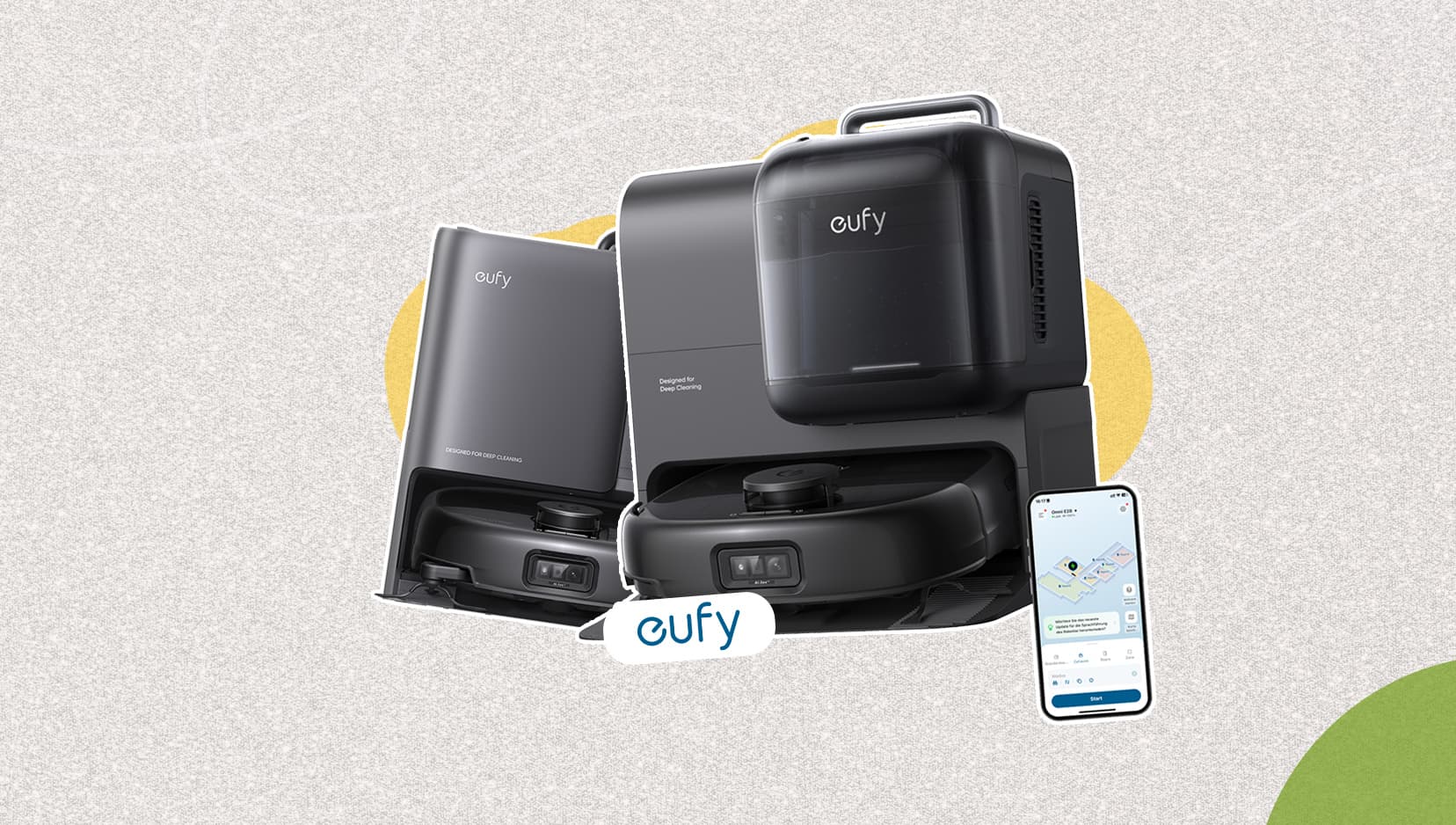
EgyptMEA’s robotic vacuum momentum has a leader, and it’s eufy!

5 min
Robotic vacuums are now a staple in MEA homes, not a luxury.
eufy ranked number one by retail volume from 2023 to 2025.
New E28 and E25 models promise strong suction and “hands-free” mopping.
Products are widely stocked across UAE, Saudi Arabia and Qatar retailers.
The brand’s wider smart home push signals long-term regional ambitions.
In my view, the robot vacuum boom in the Gulf isn’t being led by the loudest marketing—it’s being led by whoever gets used daily and quietly becomes “normal.” And right now, eufy is trying to claim that spot. The company says it ranked #1 in retail sales of robot vacuums across the Middle East and Africa for three years in a row.
Even if you treat that as a marketing headline first, the more interesting question is what it says about the region: people here are no longer buying these devices as a tech experiment—they’re buying them because they’re tired, busy, and they want frictionless routines.
The #1 label matters but not for the reason brands think
If you’ve lived in Dubai, Riyadh, or Doha (or even visited friends there), you know the rhythm: long workdays, constant movement, and a home that’s expected to stay presentable. In that setting, a robot vacuum stops being a luxury toy and starts feeling like a small life upgrade something you set once and then forget. That’s why three years of claimed leadership, if true, would reflect more than distribution; it would reflect a change in consumer confidence. People don’t keep buying the “same category” year after year unless the experience is working in real homes.
And those homes are not identical. The region is a mix of apartments with tight layouts, villas with large footprints, glossy tile, rugs, thick carpets, and the kind of dust that shows up again five minutes after you swear you cleaned. A robot that performs well in that reality earns loyalty quickly.
Trying to copy what a human hand actually does
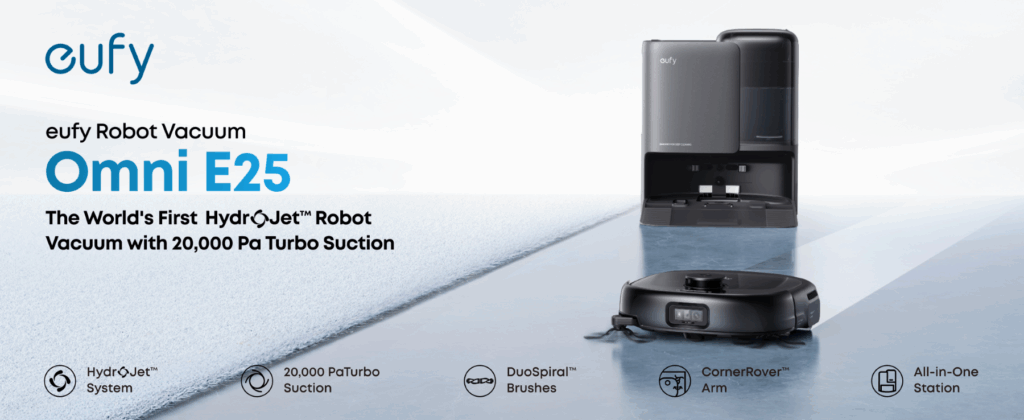
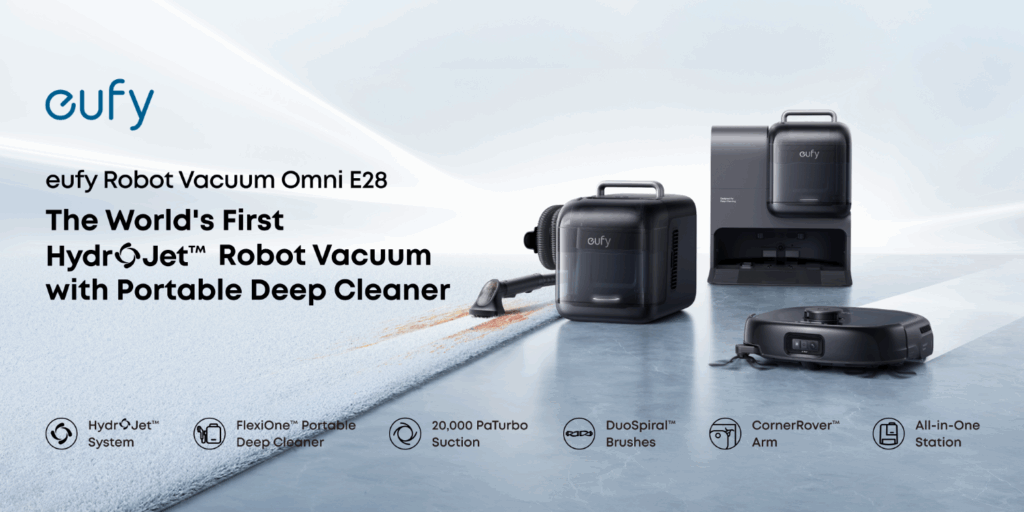
What eufy highlights in models like the E28 and E25 is the blend of strong suction with “serious” mopping. The HydroJet approach downward pressure up to 1.5 kg—matters because most robot mops don’t really mop. They glide. They wipe. If you’ve ever had a coffee drip dry on tile, you already know the difference.
On suction, numbers like 20,000 Pa put the device in a high-performance bracket, especially for carpets and high-traffic areas. But I don’t think the strongest selling point is the number itself—it’s the everyday annoyances the design tries to remove: hair tangling, pet fur, and the corners many robots treat like a “nice-to-have.”
Features such as:
- Anti-tangle brush systems (e.g., DuoSpiral) for long hair and pet fur
- Edge and corner reach (e.g., CornerRover) where dust actually collects
- Self-emptying and self-washing stations to reduce maintenance
…are less flashy than suction stats, but they’re exactly what decides whether a device stays in your routine or gets parked in a storage room.
Where AI actually earns its keep
A lot of brands throw “AI” into the brochure, but obstacle avoidance is one place where it genuinely changes the relationship people have with the product. If a robot repeatedly bumps furniture, eats cables, or gets stuck under the same chair every day, you stop trusting it. You stop scheduling it. Eventually, you stop using it.
That’s why systems like AI.See (or similar camera/sensor-based navigation) matter: they reduce the micro-frustrations. And micro-frustrations are what kill smart home adoption, especially in a region where people are willing to pay for convenience but not willing to babysit it.
Why the Middle East is a tougher proving ground than it looks
This market isn’t one big, uniform audience. It’s a blend of price sensitivity and premium buying, traditional retail and aggressive e-commerce, quick decisions and long comparison cycles. Many buyers here do the “hybrid” dance: they’ll see the device in a store, then spend an hour comparing specs and reviews online before tapping “Buy.”
And the homes themselves push products hard. Bigger spaces test battery and mapping. Carpets test suction and brush design. Daily dust tests consistency. If a robot can run reliably across that variety, it’s not just “good on paper” it’s proven.
What this means for competition
If eufy wants to keep the narrative of leadership, it can’t rely on hardware alone. The market has moved. Buyers now expect:
- stable navigation that improves over time
- software updates that don’t break the experience
- easier maintenance and clearer support paths
- an ecosystem that feels cohesive, not stitched together
The fight isn’t “who built a robot vacuum.” The fight is “who built a system that fades into the background.” Personally, I think that’s the real benchmark for maturity in smart home devices: when the tech stops being a conversation and starts being a quiet habit.
And if you ask me what “leading” really looks like in this category, it’s simple: the brand that makes you forget you ever cleaned the floor manually until you visit a home that doesn’t have one.
In the UAE, the products are available in-store at Jumbo, Sharaf DG, and Virgin Megastore, as well as online via Amazon, Noon, and Anker’s official website store.anker.com.
🚀 Got exciting news to share?
If you're a startup founder, VC, or PR agency with big updates—funding rounds, product launches 📢, or company milestones 🎉 — AraGeek English wants to hear from you!


✉️ Send Us Your Story 👇