 GITEX Dubai
 Ai Everything
 LEAP26
 AI
AI Saudi Arabia
 UAE
UAE Egypt
EgyptMorocco and India Forge New Digital Partnership with Language Tech Focus

4 min
Morocco and India agreed a joint commission to turn digital cooperation into practical action.
Talks in Rabat covered AI, digital public infrastructure, digital skills and language technologies.
The first focus is language access, helping citizens use public services in multiple dialects.
Morocco wants to learn from India’s strong record in large-scale digital systems.
No pilots, funding or timetable exist yet, but the direction is clearly deeper partnership.
Morocco and India are moving to deepen their work together on digital transformation, with fresh talks covering artificial intelligence, digital public infrastructure, digital skills and, importantly, language technologies. The two countries have agreed to set up a joint commission to push the cooperation into something more practical, rather than leaving it as another nice-sounding statement on paper.
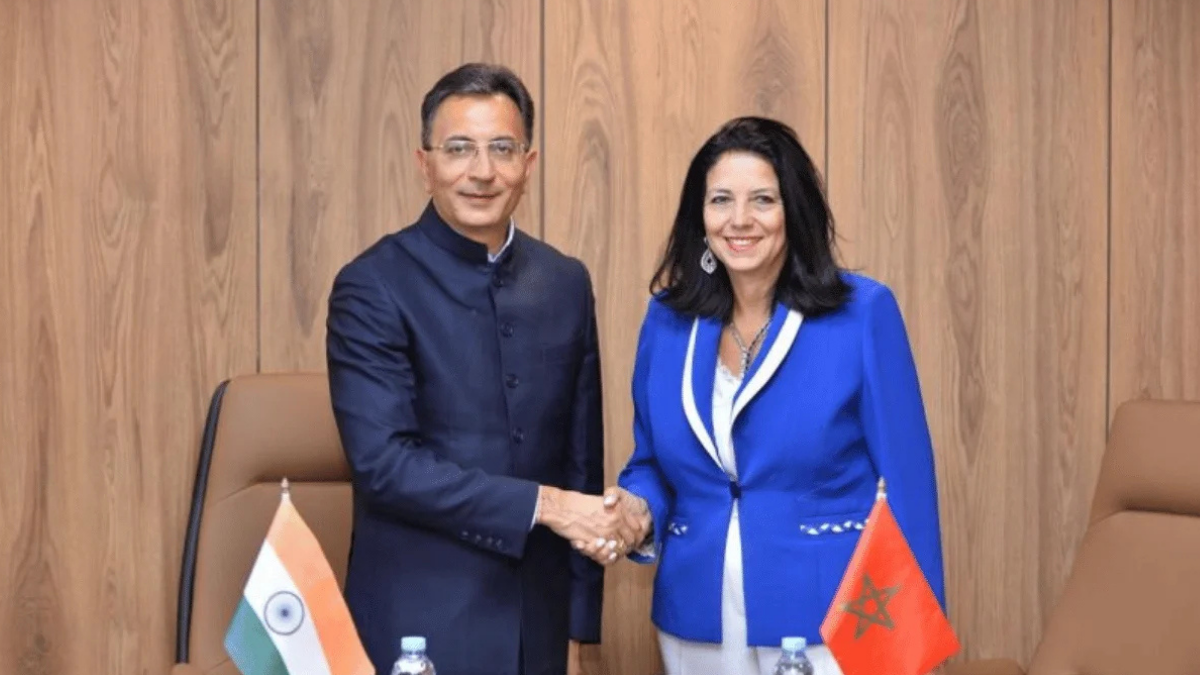
The latest discussions happened in Rabat on 24 August 2026 between Morocco’s Minister Delegate for Digital Transition and Administration Reform, Amal El Fallah Seghrouchni, and India’s Minister of State for Trade and Industry and Electronics and Information Technology, Jitin Prasada. It was not their first exchange either. The pair had already met earlier in February 2026 in New Delhi on the sidelines of the AI Impact Summit, so this new meeting looks very much like the next step in a growing bilateral conversation.
One of the clearest outcomes from Rabat was the plan for the joint commission, which will begin by looking at language technologies. That may sound a bit technical at first glance, but the real-world use is pretty spot on: the idea is to support multiple languages, variants and dialects so citizens can deal with public services more easily. In a region where language can be both a bridge and a barrier, that matters a great deal. I’ve seen more than once, around startup circles and public service platforms in the MENA scene, how a good digital tool can still be a bit of a faff if it doesn’t speak the way people actually do.
That gives this partnership a practical public-service angle, beyond the broader buzz around AI. And believe it or not, this detail may end up being the most important one. Governments can invest in shiny systems all day long, but if people struggle to use them, the value is limited. Language access is often where digital inclusion becomes real, not just a slogan.
The two sides also explored wider cooperation in AI and digital public infrastructure, which is basically the backbone that allows public digital services to run at scale and connect with each other properly. These are the areas many governments are chasing now as they try to modernise services, improve interoperability and build systems that can grow without falling apart under pressure. Morocco appears keen to learn from India’s experience here, while India brings a strong track record in large-scale digital systems, tech services and digital skills development.
There was also discussion around Morocco’s JAZARI Institutes and their work in artificial intelligence. No specific projects, budgets or timelines were attached to that part of the conversation, so well… for now it remains more of a signal than a finished plan. Still, the mention of the institutes hints at a possible research and talent dimension to the wider partnership, which could matter over time if both governments want this relationship to go beyond formal meetings.
Digital skills were another part of the agenda. For Morocco, building up more local AI and digital talent is central to wider transformation across both public services and the private sector. Readers at Arageek will know this is where things often get interesting: partnerships sound grand, but the real payoff usually comes when training, knowledge-sharing and institutional cooperation actually begin. I reckon that is the bit to watch most closely.
On the flip side, there is still plenty that has not been announced. No pilot programmes yet. No funding roadmap. No implementation calendar. That means the joint commission, while important, will now have to prove it can produce something definate rather than simply hosting another round of diplomacy.
Even so, the direction is clear. Morocco and India are trying to link three areas that increasingly come together in modern state-building: AI, digital public infrastructure and digital skills. If the first focus on language technology leads to pilots or technical programmes, this could grow into a much more serious bilateral technology partnership. For now, the move to formalise cooperation is the main story — and frankly, that alone is no small thing.
🚀 Got exciting news to share?
If you're a startup founder, VC, or PR agency with big updates—funding rounds, product launches 📢, or company milestones 🎉 — AraGeek English wants to hear from you!

✉️ Send Us Your Story 👇