 Ai Everything
 LEAP26
 AI
AI Saudi Arabia
 UAE
UAE Egypt
EgyptMWC26 Kicks Off: 5G, AI, and Cybersecurity Dominate Connectivity’s Future

4 min
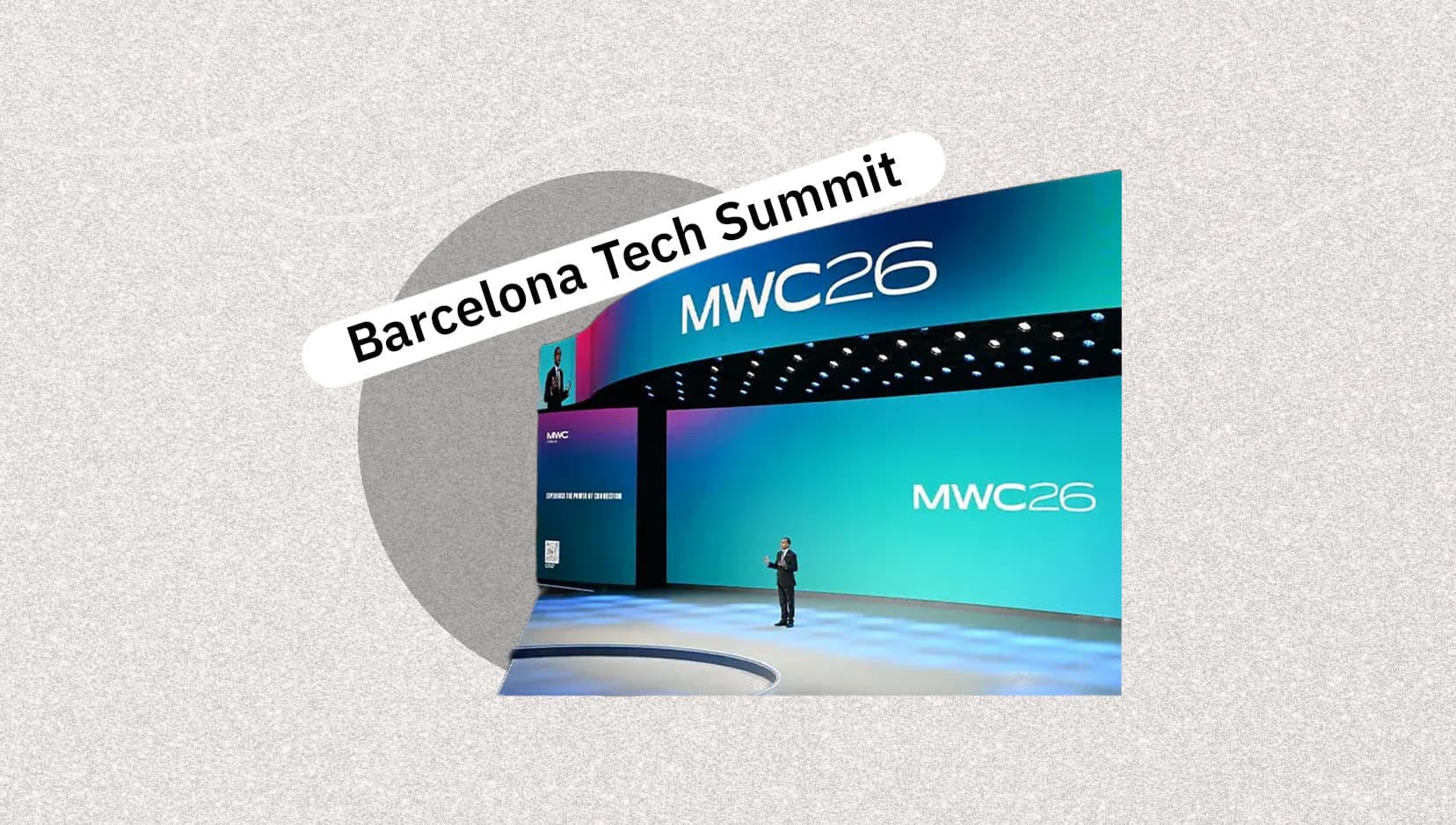
MWC26 opens in Barcelona, signalling a shift beyond “faster phones” to AI and security.
GSMA urges deeper standalone 5G, wider AI access, and safer digital ecosystems.
Mobile generated $7.
6 trillion in 2025, set to reach $11.
3 trillion by 2030.
Despite 96% coverage, over three billion remain offline due to affordability and skills.
Cybercrime could hit $15.
63 trillion by 2029, raising pressure on operators.
Barcelona is buzzing again. MWC26 has officially opened its doors, pulling in policymakers, founders, big tech executives and telecom heavyweights from around the world for what is still considered the most influential gathering in connectivity. Walk through the halls and you can feel it straight away, this is not just about faster phones anymore. The conversation has moved on.
This year’s event lands at what many see as a turning point. Advanced 5G networks are rolling out, artificial intelligence is accelerating into every corner of business, and digital threats are rising just as quickly. On the main stage, GSMA Director General Vivek Badrinath laid out three priorities he believes cannot wait: deeper investment in standalone 5G networks, broader and more inclusive access to AI, and a coordinated global push to make the digital ecosystem safer.
The numbers behind that call are, frankly, hard to ignore. According to the newly released Mobile Economy 2026 report, mobile technologies and services generated $7.6 trillion in economic value in 2025. That equals 6.4% of global GDP. By 2030, this figure is expected to climb to $11.3 trillion, representing 8.4% of global GDP. It’s massive, and if you’re building in fintech, healthtech or e-commerce, you already feel how central mobile infrastructure has become.
Badrinath pointed out that 5.8 billion people were connected through mobile last year. Still, despite 96% of the global population living within mobile broadband coverage, more than three billion people remain offline. The usage gap is almost ten times bigger than the coverage gap. That’s not just a statistic; it’s a reminder that access does not automatically mean adoption. In many emerging markets, including parts of MENA, I’ve seen firsthand how affordability, digital skills and trust are the real sticking points — not just the signal bars on a screen.
The industry itself is shifting shape. The report highlights a move away from a pure connectivity model towards one built on 5G standalone architecture, AI integration and open APIs. By 2030, 57% of global mobile connections are expected to run on 5G. Meanwhile, legacy 2G and 3G networks will shrink to just 1% and 5% respectively. It’s the end of an era, really, though in some markets those older networks still matter more than we sometimes admit.
Operator revenues are forecast to grow from $1.19 trillion in 2025 to $1.36 trillion by 2030, supported by capital expenditure of $1.2 trillion over the same period. That is serious investment. And yet, I reckon the pressure on margins and returns will keep executives awake at night. Building infrastructure is one thing; monetising it in competitive markets is another kettle of fish altogether.
Then there’s the security angle. The projected cost of global cybercrime, including fraud, is expected to jump from $9.22 trillion in 2024 to $15.63 trillion by 2029. More than 90% of operators reportedly view today’s threat landscape as high or very high risk. As networks become more software-defined and AI-driven, the attack surface expands. It’s a bit of a wake-up call for everyone in the ecosystem, from regulators to early-stage founders plugging into telecom APIs.
The mobile ecosystem supported 50 million jobs worldwide in 2025 and contributed over $800 billion in public revenues through taxation. These are not small sums, and they help explain why governments are paying such close attention to spectrum policies, digital taxes and infrastructure strategy. On the flip side, expectations are rising too. Societies want secure networks, affordable access and responsible AI. And rightly so.
For startups across MENA reading Arageek and watching these shifts unfold, the message feels clear. The infrastructure race is far from over, but the real opportunity may lie in building on top of it. Open APIs, AI layers, enterprise 5G use cases — this is where things get interesting. I’m not always a fan of industry hype, but well… this moment does feel definatley different.
MWC26 runs until 5 March, with keynotes streamed live and sessions available on demand. As ever, the headlines will focus on big announcements. But between the lines, there’s a bigger story: connectivity is no longer just about being online. It’s about shaping economies, protecting users, and deciding who truly gets to participate in the digital future. And that, as they say, is where the rubber meets the road.
🚀 Got exciting news to share?
If you're a startup founder, VC, or PR agency with big updates—funding rounds, product launches 📢, or company milestones 🎉 — AraGeek English wants to hear from you!

✉️ Send Us Your Story 👇