 Ai Everything
 LEAP26
 AI
AI Saudi Arabia
 UAE
UAE Egypt
EgyptQatar’s Digital Startups Secure $205M as Innovation Ecosystem Matures

4 min
Qatar’s Digital Incubation Centre has backed 521 startups, raising over $205 million.
These firms generated more than QAR 670 million, signalling real commercial traction.
The Digital Agenda 2030 aims to inject QAR 40 billion and create 26,000 jobs.
Global partnerships and UN recognition bolster ambitions for a “knowledge-based economy”.
Officials stress talent, warning “infrastructure alone doesn’t build unicorns”.
Qatar’s startup engine is beginning to look less like an experiment and more like a serious growth story.
More than 521 startups backed by the country’s Digital Incubation Center (DIC) have collectively raised over QAR 747 million, around $205 million, as Qatar sharpens its focus on building a competitive digital economy. The figures were released by the Ministry of Communications and Information Technology (MCIT) during activities linked to World Telecommunication and Information Society Day, and they offer a snapshot of how quickly the ecosystem is maturing.
For those of us watching the region closely at Arageek, this is the sort of milestone that feels spot on with where the Gulf is heading. I still remember attending a small tech demo day in Doha years ago, the ambition was there, no doubt, but the infrastructure was still finding its feet. Now, things are clearly moving up a gear.
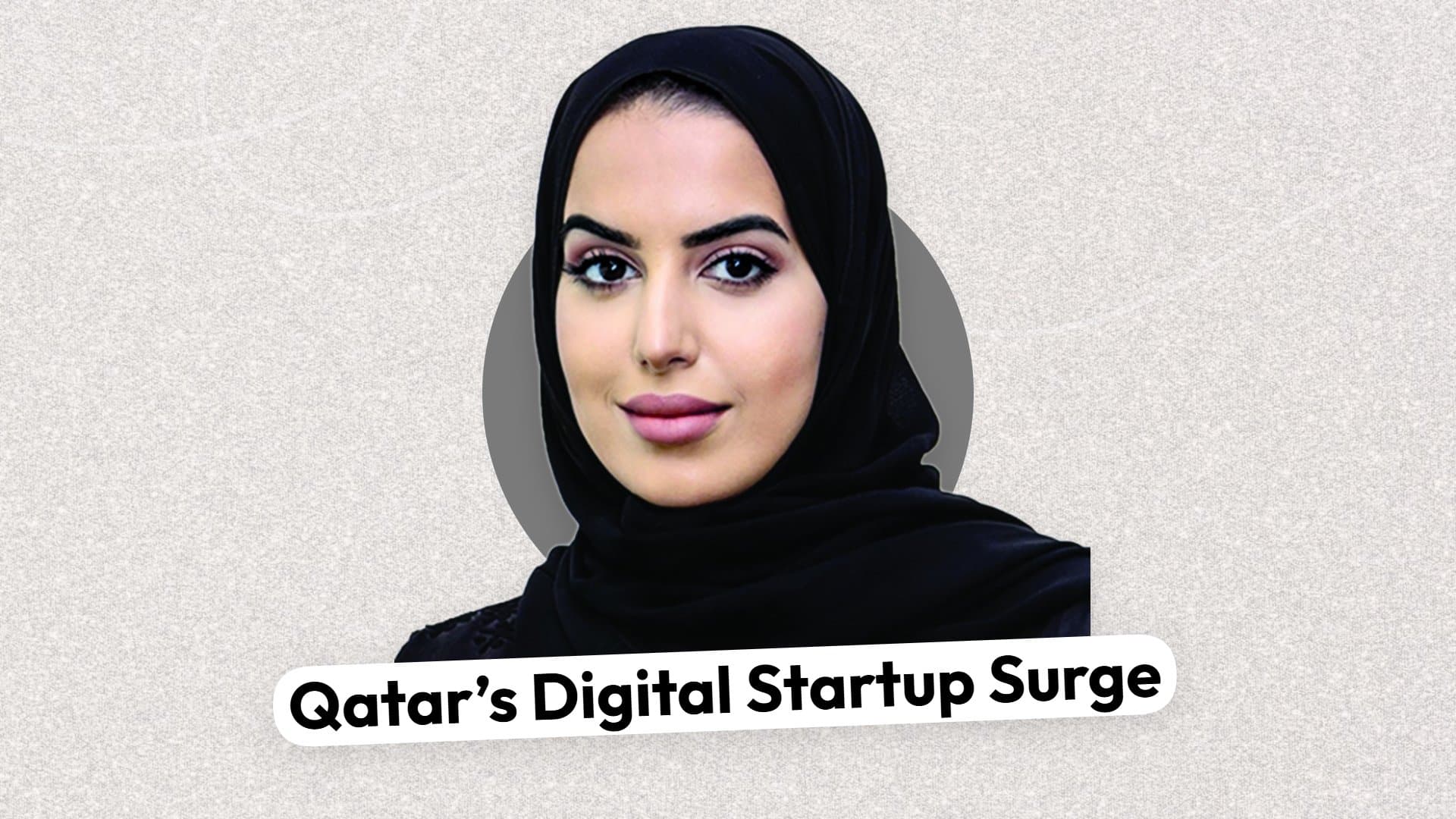
According to Eman Al Kuwari, Director of the Digital Innovation Department at MCIT, digital innovation has become central to Qatar’s shift towards a knowledge-based economy. The DIC alone has supported startups from 78 countries, many of which have scaled beyond incubation and together generated more than QAR 670 million in revenues. That’s not pocket change.
All of this aligns with Qatar’s Digital Agenda 2030, a national strategy aiming to inject QAR 40 billion into the non-oil economy and create over 26,000 jobs. It’s an ambitious target, some might say bold to the point of risky , but then again, diversification in the Gulf has never been a half-hearted exercise.
The roadmap rests on three pillars: modernising key sectors, integrating artificial intelligence, and building a connected innovation ecosystem with global reach. And believe it or not, the global partnerships are already stacking up. Collaborations with Microsoft, Google Cloud, Oracle, and Scale AI are part of the plan to speed things along and avoid reinventing the wheel.
On the policy side, digital transformation offices have been rolled out across several strategic sectors, bringing together government bodies, universities and private players. It can be a bit of a faff coordinating all these entities, but when it works, the payoff is scale, and fast.
International recognition is also part of the narrative. Qatar’s Digital Agenda 2030 has been acknowledged by the United Nations as a leading global practice in digital transformation. Meanwhile, connectivity indicators back up the rhetoric. The country ranked first globally for internet penetration in 2021, reaching 99 per cent, according to Hootsuite’s “Digital 2021” report covering more than 230 markets. It also placed third among Arab countries in both the 2023 Government Electronic and Mobile Services Maturity Index (GEMS) and the ICT Development Index.
That said, infrastructure alone doesn’t build unicorns. Talent does.
Duha Al Buhendi, Director of the Digital Society and Digital Competencies Department at MCIT, has highlighted the push to develop a “more prepared digital society”. Over the past year, the Qatar Digital Academy delivered more than 330 training programmes to over 5,700 employees from more than 90 organisations. It works with 17 global technology providers and focuses on areas like AI, cybersecurity, cloud computing, and digital transformation. Programmes such as Studio 5 and the “SafeSpace” digital safety initiative are also targeting young people and families, promoting responsible digital participation from an early age.
I reckon this talent layer will be the real differentiator. Money can be deployed quickly; skills take longer to cultivate. If Qatar manages to align funding, regulation and skills development in sync, well… that’s when ecosystems tip over into something self-sustaining.
Of course, competition across the GCC is intensifying. Saudi Arabia and the UAE are equally determined to attract AI firms, deep tech founders and venture capital. It’s a regional race, and nobody wants to be left at the starting line.
Still, the performance of DIC-backed startups offers a tangible indicator of progress. Over $205 million raised is one thing. More than QAR 670 million in generated revenues is another. These are signs that founders are not just pitching; they are building, scaling, and, crucially, selling.
Is it all smooth sailing? Probably not. Scaling globally from a relatively small domestic market comes with its own set of hurdles. But if the current momentum continues, Qatar’s digital transformation won’t just be a strategy document gathering dust on a shelf. It could become a blueprint others in the region look to copy, slight typo in a report title aside, the fundamentals appear solide.
And for entrepreneurs across MENA watching this unfold, that should be quietly encouraging.
🚀 Got exciting news to share?
If you're a startup founder, VC, or PR agency with big updates—funding rounds, product launches 📢, or company milestones 🎉 — AraGeek English wants to hear from you!


✉️ Send Us Your Story 👇