 GITEX Dubai
 Ai Everything
 LEAP26
 AI
AI Saudi Arabia
 UAE
UAE Egypt
EgyptQatar’s QSTP Hackathon Spurs AI-Driven Operational Breakthroughs

3 min
QSTP’s “Build for QSTP” Hackathon focused on real operational systems, not showy demos.
University teams built AI-native tools to fix workflows and improve decisions.
Algorithm Architects and Anthos won with practical, tailored solutions that “just work”.
Organisers noted rising sophistication, reflecting how quickly local talent is evolving.
The real test now is implementation, as AI shifts from buzzwords to application.
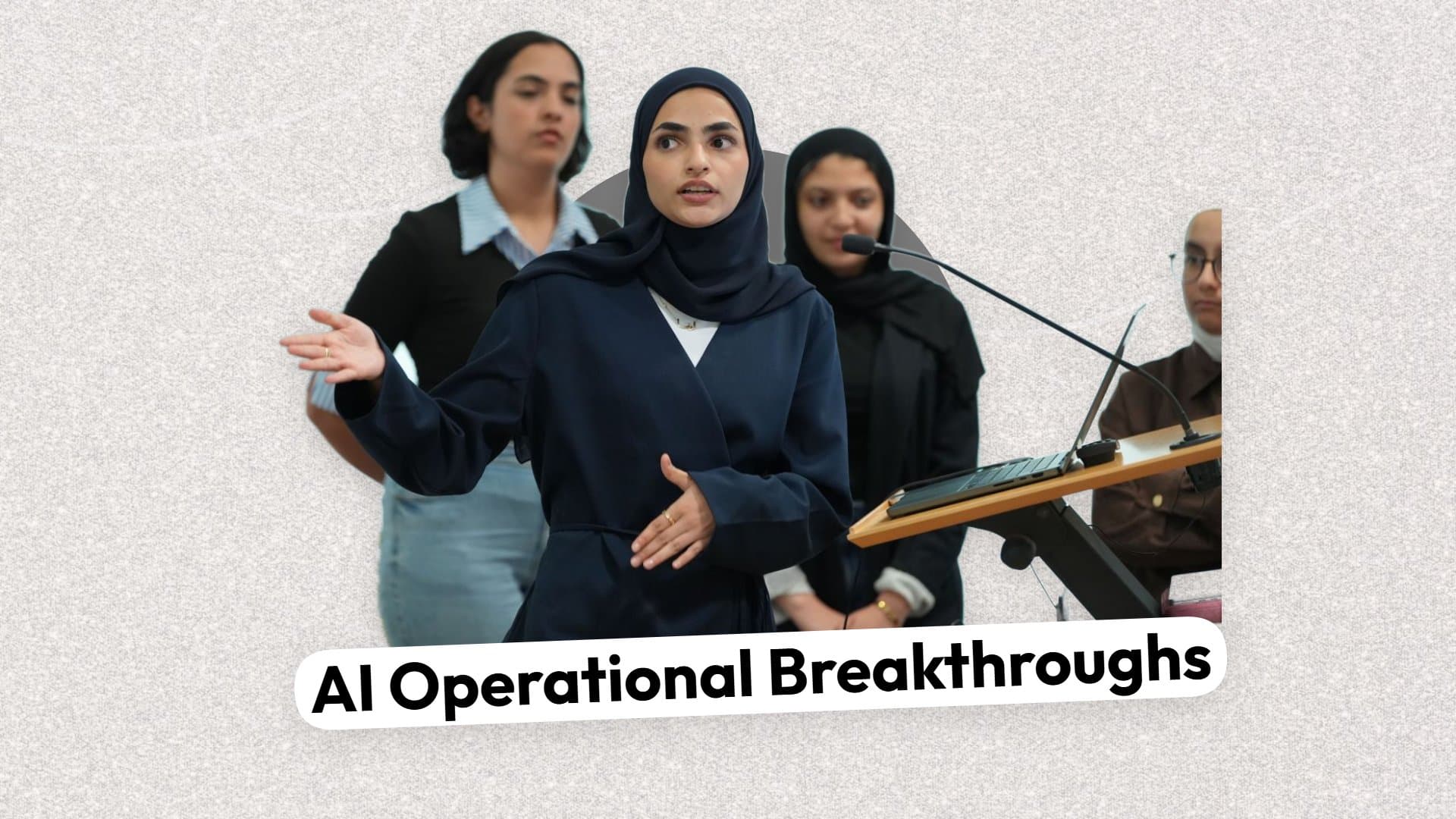
Qatar Science & Technology Park (QSTP) has wrapped up a rather hands-on edition of its “Build for QSTP” Hackathon, and this time the focus was not theory or flashy demos. It was operations. Real ones. The sort that keep organisations ticking behind the scenes.
Instead of asking students to sketch ambitious AI ideas on a whiteboard, QSTP challenged university teams to dive into its internal systems, workflows, tracking tools, day-to-day processes, and actually fix things. In simple terms, build AI-native solutions that make the park run better. I’ve always felt that when students get to work on real operational headaches rather than textbook cases, something shifts… it becomes serious, and you can almost see the confidence growing.
Several university teams took part in the competition, spending an intense period developing practical AI-powered tools designed to improve efficiency and decision-making inside the tech hub. According to organisers, this edition stood out for the quality and competitiveness of the solutions, which were noticeably more sophisticated than in previous years. That says something about how quickly local talent is evolving.
After presentations and evaluations, two teams came out on top: Algorithm Architects from Qatar University and Anthos from the University of Doha for Science & Technology (UDST). Both were recognised for delivering creative but highly practical concepts tailored to QSTP’s operational needs. In competitions like this, it’s easy to get lost in hype, but here the edge came from usefulness. No bells and whistles for the sake of it, just systems that work. Spot on, really.
QSTP itself operates as a free zone, accelerator and incubator under Qatar Foundation Research, Development, and Innovation (QF RDI). Over the years, it has positioned itself as a cornerstone of Qatar’s innovation strategy, supporting technology development while contributing to the country’s broader economic diversification agenda. And believe it or not, initiatives like these hackathons might seem small, but they are often where future founders cut their teeth.
From what we’ve seen at Arageek when covering university-led innovation across MENA, bridging the gap between classroom theory and operational reality can be a bit of a faff, but when it’s done well, it’s definately worth the effort. Students gain direct exposure to how organisations function, while institutions tap into fresh thinking without heavy consultancy bills. Everyone wins, more or less.
That said, hackathons alone are not a silver bullet. The real impact will depend on whether these solutions are further developed and embedded into QSTP’s systems. I reckon the next step is just as important as the competition itself: implementation.
Still, this edition sends a clear message. AI in Qatar is no longer just about experimentation or buzzwords; it’s about application. And when university teams are solving operational challenges instead of hypothetical ones, it feels like the ecosystem is maturing at a proper pace, not overnight success, but steady, grounded progress. You know?
🚀 Got exciting news to share?
If you're a startup founder, VC, or PR agency with big updates—funding rounds, product launches 📢, or company milestones 🎉 — AraGeek English wants to hear from you!




✉️ Send Us Your Story 👇