 LEAP26
 AI
AI Saudi Arabia
 UAE
UAE Egypt
EgyptQuicKart Secures $1.5M to Revolutionise UAE’s Fresh Produce Delivery

4 min
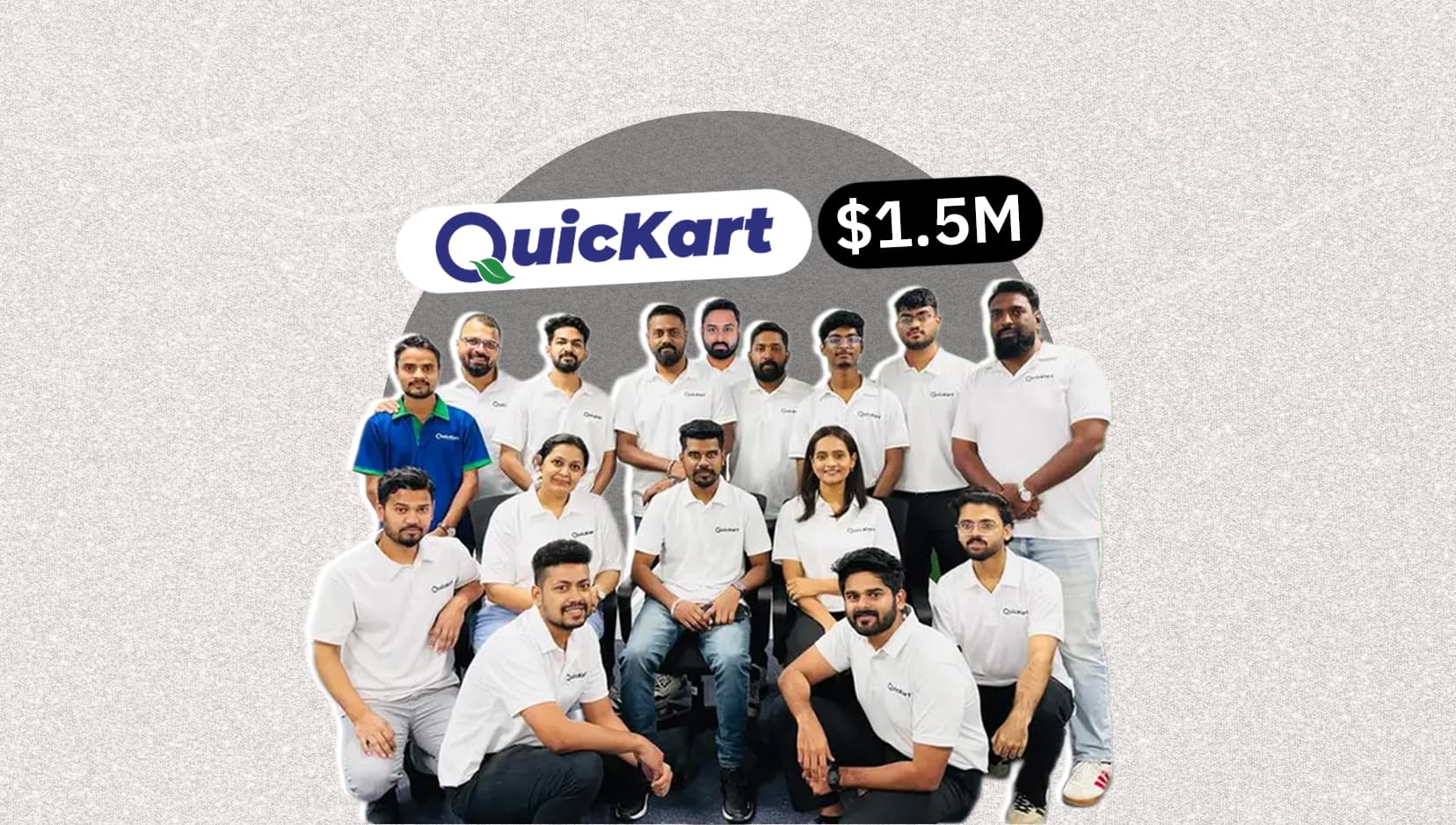
QuicKart raised $1.
5m to scale its UAE farm-to-home model.
It promises milk and vegetables delivered “within hours”, not days.
Funds will boost cold chain, technology, and last‑mile networks across Emirates.
Backers say cutting out intermediaries benefits farmers and customers alike.
The startup aligns with UAE food security goals and rising dairy demand.
Fresh milk delivered within hours of milking. Vegetables that haven’t spent days in a warehouse. It sounds simple, almost obvious. And yet, in many cities, getting truly fresh produce can be a bit of a faff.
That’s the gap QuicKart says it is filling in the UAE. The Dubai-based startup has just raised $1.5 million in seed funding to scale its farm-to-home commerce model, targeting households and businesses across the Emirates. The round was led by Orbit Ventures, with participation from a group of angel investors and family offices, including Ashneer Grover, Manoj Tiwari, Hrishikesh Pradhan, Vinay Sharma, Ashutosh Tripathi of Kinamatics Impex, Mitul Kapadia, Ashim Ohri, Shirley Mirchandani, Harish Banga and Akhilesh Bangre, among others.
The fresh capital will be used to sharpen QuicKart’s supply chain, upgrade its technology platform and expand its last-mile delivery network. The company currently operates across Dubai, Sharjah and Ajman, and is preparing to launch in Abu Dhabi. There are also plans to invest further in cold chain infrastructure — the temperature-controlled storage and transport systems that keep dairy and vegetables fresh from farm to doorstep.
At its core, QuicKart is positioning itself as the UAE’s first dedicated fresh commerce platform focused solely on dairy and farm produce. Instead of relying on layers of distributors, it connects customers directly with local farms. Milk, cheese and vegetables move from harvest to home within hours, not days. That shorter chain, the company argues, means better freshness for consumers and fairer returns for farmers.
I’ve seen over the years how founders in our region struggle with fragmented supply chains, especially in food. One cold storage breakdown or delay at a port, and everything unravels. So when I hear about startups building localised, streamlined systems, I reckon it’s spot on for a market that imports much of its food. It’s not glamorous work, but it’s critical.
QuicKart’s model also taps into a bigger national conversation. The UAE has made food security and sustainable agriculture central to its long-term strategy. By supporting local farms and reducing reliance on lengthy import routes, startups like QuicKart are aligning themselves with those goals. On the flip side, execution will be everything — fresh produce is unforgiving. One slip in timing or temperature, and quality suffers, simple as that.
According to Pravin Rai, Founder of QuicKart, the funding validates the company’s direct sourcing approach. He noted that the investment will help expand its network of partner farms and strengthen infrastructure so more households and businesses can receive produce measured in hours from harvest. He also pointed to the startup’s contribution to food security and sustainable livelihoods for local farmers.
Orbit Ventures’ Partner Minjia Wu highlighted another angle: demand. Per capita dairy consumption in the UAE has reportedly grown significantly, rising by 32% since 2020 in some urban areas. Dairy and fresh food, Wu explained, face inherent challenges around shelf life and harvest cycles, even though consumers expect year-round availability. In that context, QuicKart is being positioned as a key link between storage, transport and distribution — and, at a national level, as a way to reduce import dependency and cushion against global disruptions such as pandemics.
Investor Ashneer Grover described the startup’s proposition as compelling, arguing that cutting out intermediaries benefits both customers and farmers. Manoj Tiwari echoed that sentiment, saying the company’s control over the supply chain creates a defensible edge that traditional platforms may find difficult to replicate. He also pointed to its early traction in both consumer and B2B segments.
That B2B arm is worth noting. Beyond households, QuicKart supplies restaurants, cloud kitchens and players in the HoReCa sector with farm-sourced produce. By acting as a procurement partner for commercial kitchens, the company is trying to embed itself deeper into the food ecosystem, not just serve as another grocery app.
From where I stand, watching the MENA startup scene evolve, logistics-heavy ventures are rarely the loudest — but they often become the most impactful. Building fleets, onboarding farms, investing in cold storage… it’s not flashy work. But it’s the backbone. And if QuicKart gets this right, it could definately carve out a sturdy position in the UAE’s increasingly competitive food commerce space.
🚀 Got exciting news to share?
If you're a startup founder, VC, or PR agency with big updates—funding rounds, product launches 📢, or company milestones 🎉 — AraGeek English wants to hear from you!




✉️ Send Us Your Story 👇