 Ai Everything
 LEAP26
 AI
AI Saudi Arabia
 UAE
UAE Egypt
EgyptTruDoc Raises $15M to Transform GCC Healthcare with Virtual-First Model

4 min
TruDoc raised $15 million pre-Series B to expand virtual-first care.
Backed by Al Nahyan and Al-Ketbi families, plus Pulsar Capital.
It aims to shift healthcare beyond ‘hospital walls’ into homes.
Executives call it ‘healthcare as infrastructure’ for chronic disease pressures.
Investors see virtual-first models as core to the Gulf’s future.
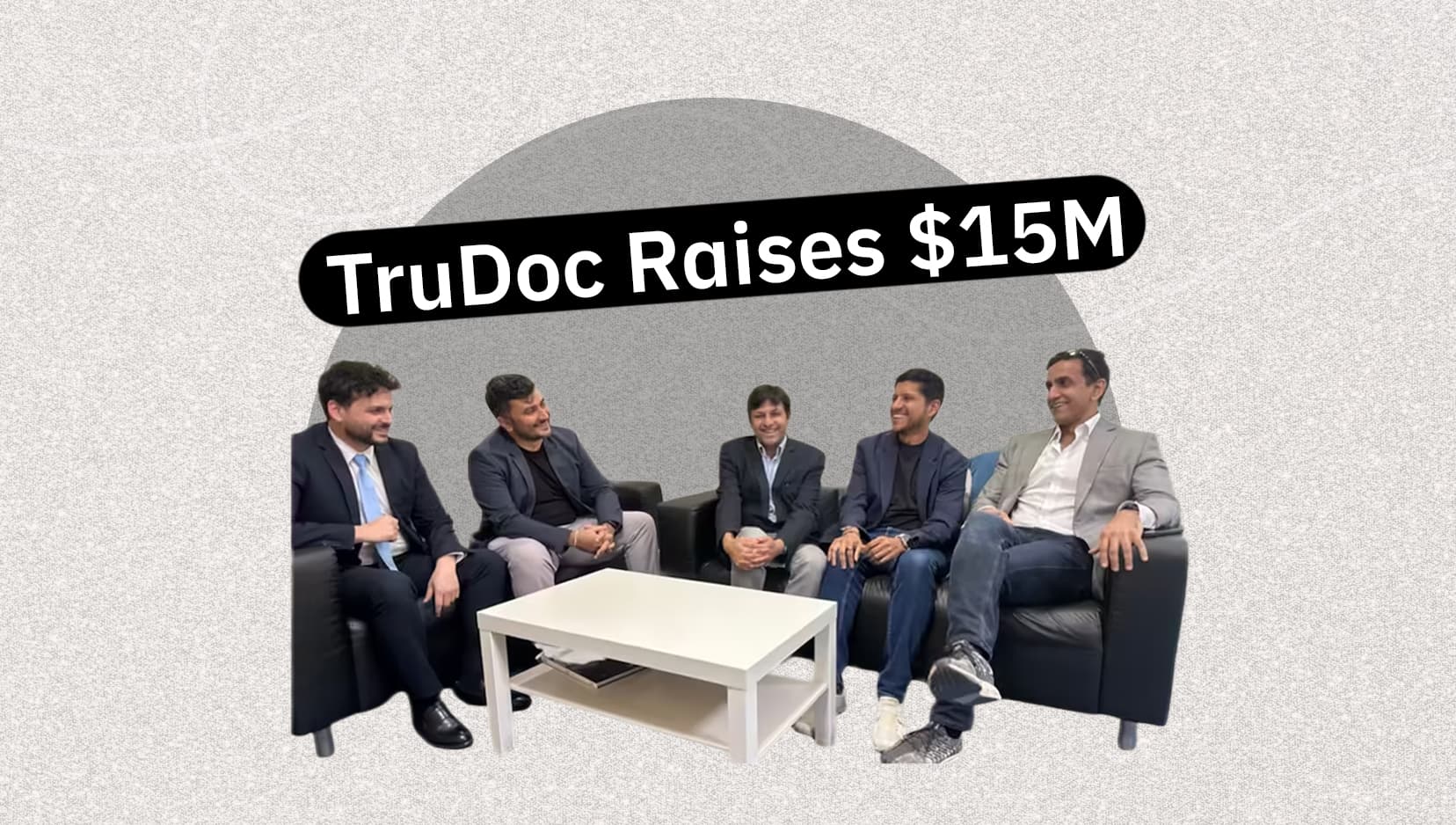
Healthcare in the Gulf is quietly going through a reset, and TruDoc seems eager to be part of that shift. The GCC-based virtual-first, full-stack healthtech platform has secured $15 million in a pre-Series B round, with backing from members of the Al Nahyan and Al-Ketbi families, alongside continued support from Pulsar Capital.
The fresh capital is set to fuel TruDoc’s expansion of its virtual-first care model and scale up its at-home critical care services across the region. In simple terms, the company wants to move more healthcare beyond hospital walls and into people’s homes, without lowering medical standards. That’s a bold ambition, but not a small one.
Dr Ahmed Mansour, CEO of the Private Department of H.E. Sheikh Mohamed Bin Khaled Al Nahyan, pointed out that health systems globally are under pressure to do more with the same, or even fewer, resources. Serving growing populations, managing chronic diseases, and improving outcomes without endlessly building new facilities is, frankly, a tall order. He described TruDoc’s approach as one that expands access and efficiency while safeguarding clinical integrity, adding that the model aligns with the UAE’s long-term healthcare vision.
That alignment matters. Healthcare reform isn’t just about shiny apps or remote calls; it’s about infrastructure, policy, and long-term priorities. And believe it or not, some of the most serious innovation happens away from the spotlight.
Vish Narain, Executive Chairman at TruDoc, offered a more philosophical take. For centuries, he noted, healthcare has revolved around physical buildings, with patients travelling to facilities designed for episodic care. But that structure doesn’t reflect how people actually live or manage chronic conditions today. TruDoc, he said, is building “healthcare as infrastructure”, continuous and accountable, operating beyond four walls and at population scale.
It’s a phrase that sticks. Healthcare as infrastructure. I reckon that framing is spot on for a region where chronic diseases like diabetes are widespread and hospital capacity can quickly become stretched. On the flip side, scaling such a model across multiple GCC markets is no walk in the park. Regulations differ, patient expectations vary, and integrating with insurers can be a bit of a faff.
Asad Khan, TruDoc’s CEO, addressed the elephant in the room: the debate about whether high-quality care can truly be delivered outside hospitals. According to him, the question is no longer “if” but “how fast” systems can adapt. He said the company has already demonstrated that hospital-grade, high-acuity care can be delivered safely and effectively in patients’ homes, at scale. The new funding, he added, will help expand that model across the GCC while keeping a tight focus on clinical excellence and patient trust.
Founded in 2011, TruDoc provides telemedicine consultations, chronic disease management, diagnostics, home pharmacy delivery, and in-home clinical care. Its hospital-at-home programme allows patients to receive treatment comparable to inpatient hospital care without physically being admitted. For families juggling work, elderly relatives, and endless appointments, that shift can be game-changing.
I still remember chatting with an early-stage founder at a MENA startup event who said the future of care here would be “homes, not hallways.” At the time, it sounded slightly idealistic. Well… I mean, look at the momentum now. Investors with serious clout are clearly betting that this is not just a pandemic-era blip but a lasting transformation.
Whether TruDoc can scale sustainably and maintain quality across borders will be the real test. But one thing is clear: the region’s healthtech scene is maturing, and capital is flowing towards models that promise efficiency without sacrificing care. That feels like a positive sign for entrepreneurs building in this space, even if the road ahead is anything but simple.
For startups across MENA watching closely, this round is more than just a headline number. It’s definately a signal that deep-pocketed backers see virtual-first healthcare not as a side project, but as core infrastructure for the future.
🚀 Got exciting news to share?
If you're a startup founder, VC, or PR agency with big updates—funding rounds, product launches 📢, or company milestones 🎉 — AraGeek English wants to hear from you!
✉️ Send Us Your Story 👇