 Ai Everything
 LEAP26
 AI
AI Saudi Arabia
 UAE
UAE Egypt
Egypta16z Backs Saudi Fintech Stitch with $25M, Eyeing Gulf Transformation

4 min
Stitch raised $25 million Series A led by a16z.
The startup builds a “cloud-native operating system” for banks.
It targets legacy backends, arguing AI cannot fix broken plumbing.
Transaction volume topped $5 billion as customers and revenue surged.
Fresh funds will expand across MENA and other emerging markets.
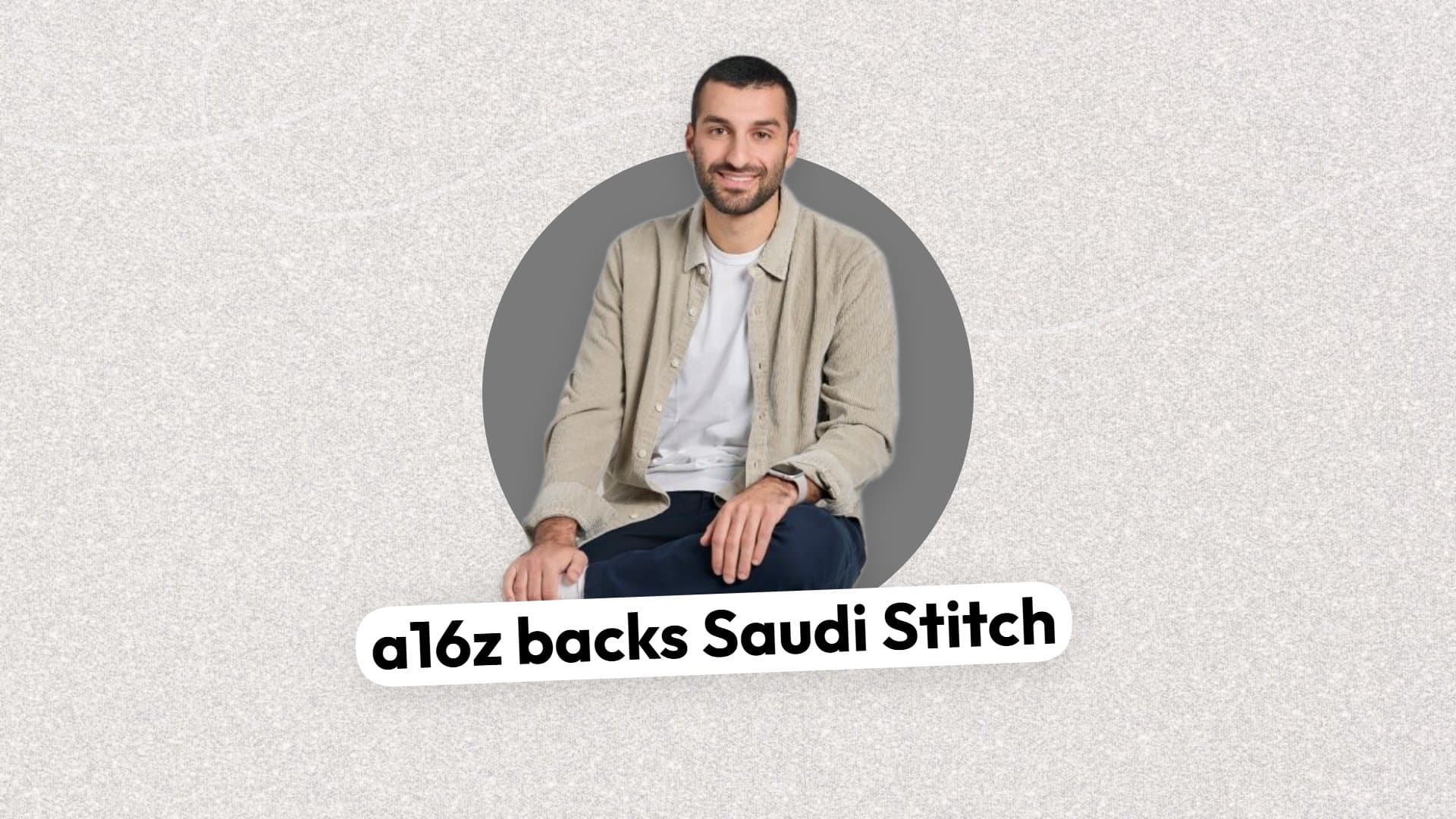
Saudi Arabia’s fintech infrastructure startup Stitch has secured $25 million in a Series A round led by Andreessen Horowitz, better known as a16z, in what marks the Silicon Valley firm’s first publicly disclosed investment in the Gulf. For many founders across the region, this kind of global vote of confidence feels like a watershed moment, and, frankly, it’s about time.
The round also drew continued backing from Arbor Ventures, COTU Ventures, Raed Ventures, and Saudi Venture Capital (SVC). It brings Stitch’s total funding to $35 million, just one year after it raised a $10 million seed round from largely the same lineup of investors.
Founded in 2022 by Mohammed Owaida, Stitch is building what it calls a cloud-native operating system for financial institutions. Its platform covers lending, payments, card issuing, and ledger infrastructure. In simple terms, the company wants to replace, or at least sit neatly on top of, the patchwork of legacy systems that many banks still rely on.
If you’ve ever worked with a traditional bank’s backend, you’ll know it can be a bit of a faff. Decades-old systems stitched together, data locked in silos, new products taking months to launch. Stitch argues that despite trillions spent globally on digital transformation, much of the core infrastructure underneath is still fragmented and outdated.
Owaida has been blunt about that. He said financial institutions are operating on infrastructure that should have been replaced years ago, and that layering artificial intelligence on top of broken systems won’t fix the root problem. It’s a sharp point. Everyone wants AI, but few want to rewire the plumbing first.
Stitch’s approach allows banks and fintechs to modernise gradually rather than replacing everything in one dramatic (and risky) overhaul. That phased strategy could resonate strongly in markets where institutions must balance innovation with regulatory and operational stability.
The company says it processed more than $5 billion in transaction volume over the past six months. During 2025, its customer base reportedly grew tenfold, while revenue increased twentyfold over the same period. Those are eye-catching numbers, even in a market that has grown used to big claims.
Its clients include Raya Financing, LuLu Exchange, Noqodi, and Foodics, a mix of financial services and enterprise players. Stitch is currently active across the Gulf, as well as in African and Southeast Asian markets such as Egypt and Kenya, positioning it firmly in high-growth, emerging economies where modern financial infrastructure can leapfrog older systems.
The a16z backing is particularly notable. Alex Rampell, general partner at the firm, pointed to “technical debt” inside financial institutions as one of the major barriers to properly adopting AI. He said what Stitch is building could provide the unified foundation needed to make broader technology transformation possible. It signals, too, that global venture capital is increasingly paying attention to the Gulf’s enterprise and fintech infrastructure layers, not just flashy consumer apps.
At Arageek, we often speak with founders wrestling with these legacy constraints. I remember one regional startup telling me their biggest competitor wasn’t another fintech, but an old in-house banking system that refused to cooperate, well… I mean, that says it all. Infrastructure may not be glamorous, but it’s definately where long-term value is built.
On the flip side, the space is getting crowded. Cloud-native core banking and financial operating systems are becoming a hot battleground, and execution will matter far more than slogans. Still, I reckon Stitch’s timing is spot on. As regulators push for open banking, as AI moves from pilot to production, and as financial institutions hunt for more agile systems, the appetite for foundational upgrades is only likely to grow.
The fresh capital will be used to expand product development and support further growth across MENA and beyond. If the company delivers on its promise, this could be one of those quiet infrastructure stories that ends up shaping the region’s fintech landscape for years to come — not flashy, perhaps, but chuffed to bits with impact where it really counts.
🚀 Got exciting news to share?
If you're a startup founder, VC, or PR agency with big updates—funding rounds, product launches 📢, or company milestones 🎉 — AraGeek English wants to hear from you!



✉️ Send Us Your Story 👇