 Ai Everything
 LEAP26
 AI
AI Saudi Arabia
 UAE
UAE Egypt
EgyptAutonomous Racing Heats Up in Abu Dhabi: AI Challenges F1’s Finest

3 min
The Abu Dhabi Autonomous Racing League showcased driverless cars competing at high speeds.
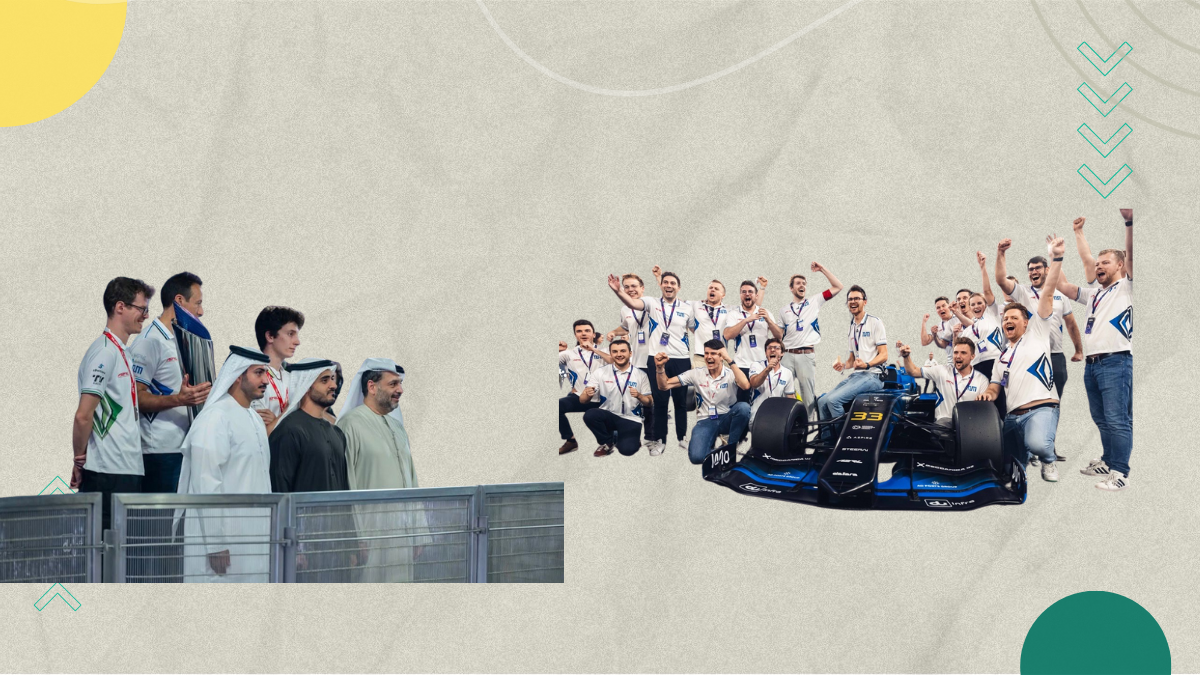
Team TUM defended their title, impressing spectators with their advanced autonomous technology.
Formula 1 driver Daniil Kvyat narrowly stayed ahead of an AI-powered car, highlighting human instinct.
The league also hosted a STEM competition, engaging over 140 students with scale-model races.
Events like the Abu Dhabi Autonomous Systems Week emphasise MENA’s growing global tech presence.
It’s not every day you see a pack of fully driverless cars tearing around a circuit in Abu Dhabi as if they’ve got something to prove, but that’s exactly what unfolded in the second season of the Abu Dhabi Autonomous Racing League. I’ve seen plenty of tech demos over the years while covering entrepreneurship for Arageek, yet watching six autonomous vehicles fight for position at high speed felt like a glimpse into a future that’s arriving faster than any of us expected. And believe it or not, Team TUM managed to hold on to their title once again, showing they’re still the ones to beat.
What caught plenty of attention on the sidelines was the human-versus-AI moment featuring Formula 1 driver Daniil Kvyat. He managed to stay just ahead of an AI‑powered car – not by much, but enough to remind us that human instincts still carry weight. I reckon that advantage won’t last forever, though… these systems are learning at a pace that’s a bit mind‑boggling.
Stefan Tempano, CEO of Aspire – the Advanced Technology Research Council’s applied research arm and the organisation behind the league – praised TUM for what he called a well‑deserved win. He highlighted how the final showed precisely why this league exists: to push autonomous tech in real‑world conditions. And he wasn’t exaggerating. In only 18 months, these teams have clocked lap times faster than professional drivers and executed overtakes that would usually take years of refinement. Tempano also pointed out that the blend of SIM Sprints virtual racing and heavy on‑track testing opened doors to breakthroughs that will spill over into sectors far beyond motorsport. His shout‑out to the eleven teams for innovating “under pressure” felt spot on.
On the flip side, the league wasn’t just about the pros. Running alongside the main event was a STEM competition involving more than 140 students from across the UAE. They raced 1:18 scale autonomous DeepRacer cars designed to mimic the league format. I’ve always loved seeing young people get hands-on with tech – it reminds me of the early days of startup events in the region where everyone wore too many hats and nothing worked unless you gave it a shove. The UAE University team took the university category, while the International School of Choueifat – Ras Al Khaimah won among secondary schools. Some of these students might well be leading the next AI mobility startups before we know it.
This year’s final also served as the closing chapter of Abu Dhabi Autonomous Systems Week, a six‑day programme packed with researchers, experts, exhibitions and summits. It featured the Abu Dhabi Autonomous Systems Summit, DriftX, and even the Asia‑Pacific RoboCup robotics competition. A bit of a faff to navigate so many events in one week, but the energy was chuffed to bits.
Watching all of this unfold, I couldn’t help thinking how the MENA region keeps nudging its way into the global tech narrative, sometimes quietly, sometimes boldly. And as someone who’s spent years around founders trying to turn ideas into reality, it’s pretty inspiring to see a platform where innovation isn’t just talked about – it’s raced at full throttle. Even if I did get a little sunburnt in the process, definately worth it.
🚀 Got exciting news to share?
If you're a startup founder, VC, or PR agency with big updates—funding rounds, product launches 📢, or company milestones 🎉 — AraGeek English wants to hear from you!


✉️ Send Us Your Story 👇