 LEAP26
 AI
AI Saudi Arabia
 UAE
UAE Egypt
EgyptI am Awis Kilani. I turned unused telecom data into growth

5 min
When AI stops being about speed and starts being about judgement
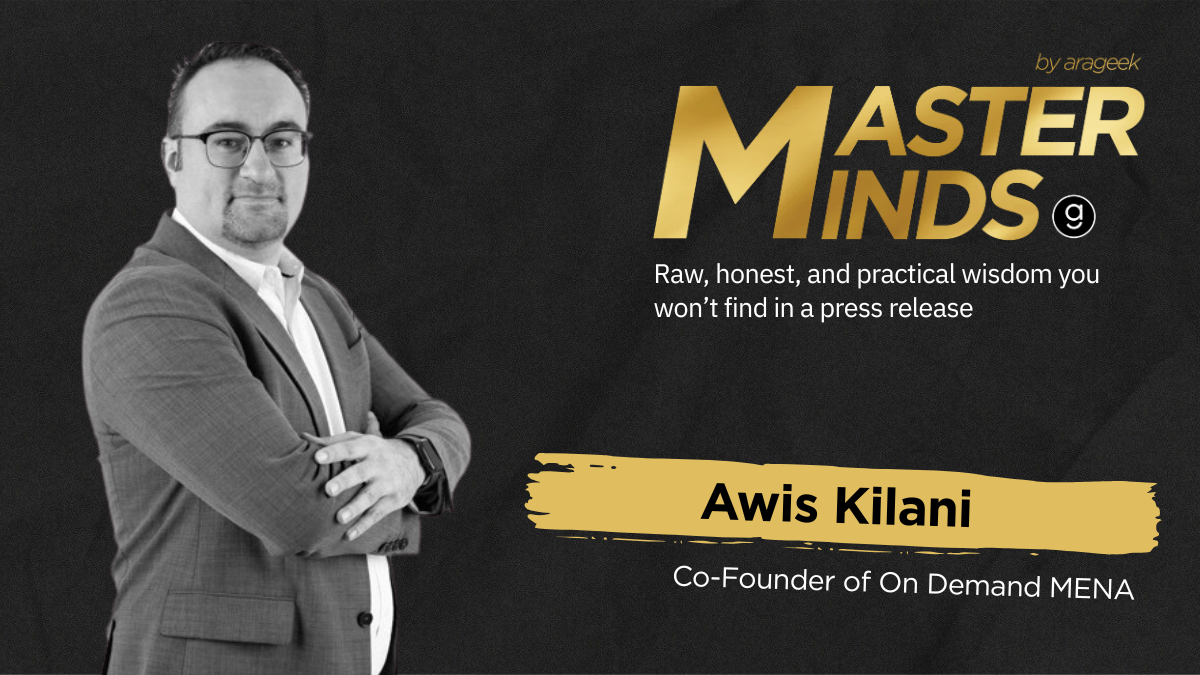
When asked how he defines the role of AI in modern marketing, Awis Kilani moves quickly beyond automation. For him, AI’s value sits in decision intelligence. It is about understanding intent, timing, and context at scale, then acting with better judgement. Faster execution is easy to measure, but smarter decisions are harder to build, and that is where he believes AI earns its place.
The gap between data that exists and data that works
On the question of why he co-founded On Demand MENA, Kilani points to a disconnect he saw repeatedly across the region. Telecom and mobility data was available, but businesses like restaurants, cafés, entertainment venues, and tourism operators could not activate it in real time. OnDemand was created to close that gap, turning static data into immediate, measurable engagement. In parallel, it was designed to help tourists arriving in Saudi Arabia discover destinations and services when relevance matters most.
Why telecom intelligence remains overlooked
Pressed on why telecom intelligence is still underutilised in MENA, he describes it as a product of regulation, legacy systems, and cautious thinking colliding. When handled responsibly, this data offers a more accurate picture of real behaviour than social media signals, which often lag behind intent. Movement, timing, and presence can be understood in real time, yet many marketers still rely on slower and noisier indicators.
How traveller behaviour in Saudi Arabia has changed
When the conversation turns to travel, Kilani describes a clear shift in expectations. Travellers now demand instant relevance, make faster decisions, and depend heavily on mobile-first experiences. Contextual offers, particularly at arrival points, perform best. He also highlights a practical layer to this work, helping travellers in urgent situations reach the right services quickly, not just selling experiences but supporting moments that matter.
Personalisation that starts with timing, not copy
Asked how he approaches AI-driven personalisation with measurable ROI, Kilani is precise. He focuses on personalising moments, not messages. The real question is when and where to engage, rather than endlessly refining what to say. Using privacy-first data and AI, the aim is to connect users and merchants at the right time, creating engagement that is useful for people and profitable for businesses.
Why vanity metrics fail decision-makers
On measurement, he draws a firm line. Every campaign is tied to outcomes such as footfall, bookings, redemptions, or revenue. If a metric does not influence a real decision, it is ignored. Dashboards are only valuable when they change behaviour. OnDemand’s tools are built to drive real-world traffic and connect people directly with destinations, not to inflate surface-level numbers.
Balancing trust and cash flow
When asked how he balances brand-building with short-term growth as co-founder and CMO, Kilani treats them as interdependent. Brand builds trust. Performance builds cash flow. The discipline lies in aligning strong storytelling with data-backed distribution and clear conversion paths. Each success compounds, shaped by more than five years working across government, semi-government, and private sector organisations.
The strategic mistakes that cost the most
Pressed on common marketing mistakes across startups, government, and enterprises, he returns to strategy. Or the absence of it. Marketing spans go-to-market planning, brand, public relations, events, and performance. When these elements are mismanaged or disconnected, budgets are wasted, time is lost, and cash flow suffers.
What board-level perspective changes
Asked how board-level experience influences his decisions, Kilani points to long-term thinking. Scalability, governance, and sustainability matter more than short-term wins. He also stresses that leadership is something to be developed in others. Many capable people, in his view, simply need guidance drawn from experience to step forward.
The principles behind sustainable growth
When the discussion shifts to growth at scale, his answer is disciplined. Clarity of focus, continuous learning, listening to feedback, strong data foundations, and collaboration between product, marketing, and revenue teams. Growth is treated as a system, not a series of isolated wins.
The skills marketers must build next
Asked what marketers need over the next five years, Kilani returns to learning. Data literacy, working effectively with AI, critical thinking, and translating insight into action are essential. Creativity remains vital, but only when informed by evidence rather than instinct alone.
Why AI adoption so often falls short
On the challenges of AI-driven marketing, he highlights uncertainty about where to start. Poor data quality, lack of internal alignment, unrealistic expectations, and weak change management undermine progress. AI does not understand a business on its own. It must be trained with clear structures, accurate data, and defined objectives to deliver value.
How Saudi Arabia is enabling advanced growth models
When asked about the broader environment, Kilani points to Saudi Arabia as a catalyst. Strong infrastructure, progressive regulation, and Vision 2030 have created conditions where data-driven, real-time innovation is actively encouraged. For companies aligned with this direction, the long-term outlook is stable and compelling.
How leadership evolves over time
Reflecting on fourteen years of leadership, Kilani describes a shift shaped by moving from international corporations into startups and working across functions. Building diverse teams reinforced one lesson above all, success is collective. Engagement, empowerment, and alignment become critical in fast-moving, high-growth environments.


What will define the future of marketing
When asked to look ahead, he distils the future of marketing into three outcomes: results, relevance, and reach. AI and data will sharpen targeting and measurement. Creativity will continue to build human connection. Together, they will redefine marketing as a more intelligent, outcome-driven discipline.