 LEAP26
 AI
AI Saudi Arabia
 UAE
UAE Egypt
EgyptFintech Partnership Revamps UAE Rentals with Innovative Monthly Payment Solution

4 min
Mawarid Finance and Rentify launch a “rent now, pay later” solution in the UAE.
Tenants pay monthly instalments, while landlords receive the full year upfront.
The fully digital process aims to ease liquidity strains and “structural friction”.
Backers say it combines Shariah-compliant finance with tech-driven property management.
Success hinges on pricing clarity, landlord trust, and a smooth user experience.
Paying a full year’s rent upfront has long been the norm in the UAE. For many tenants, that single cheque can feel like a mountain to climb. It is often the one thing that stands between a family and the home they really want. Now, a new partnership is trying to shift that equation.
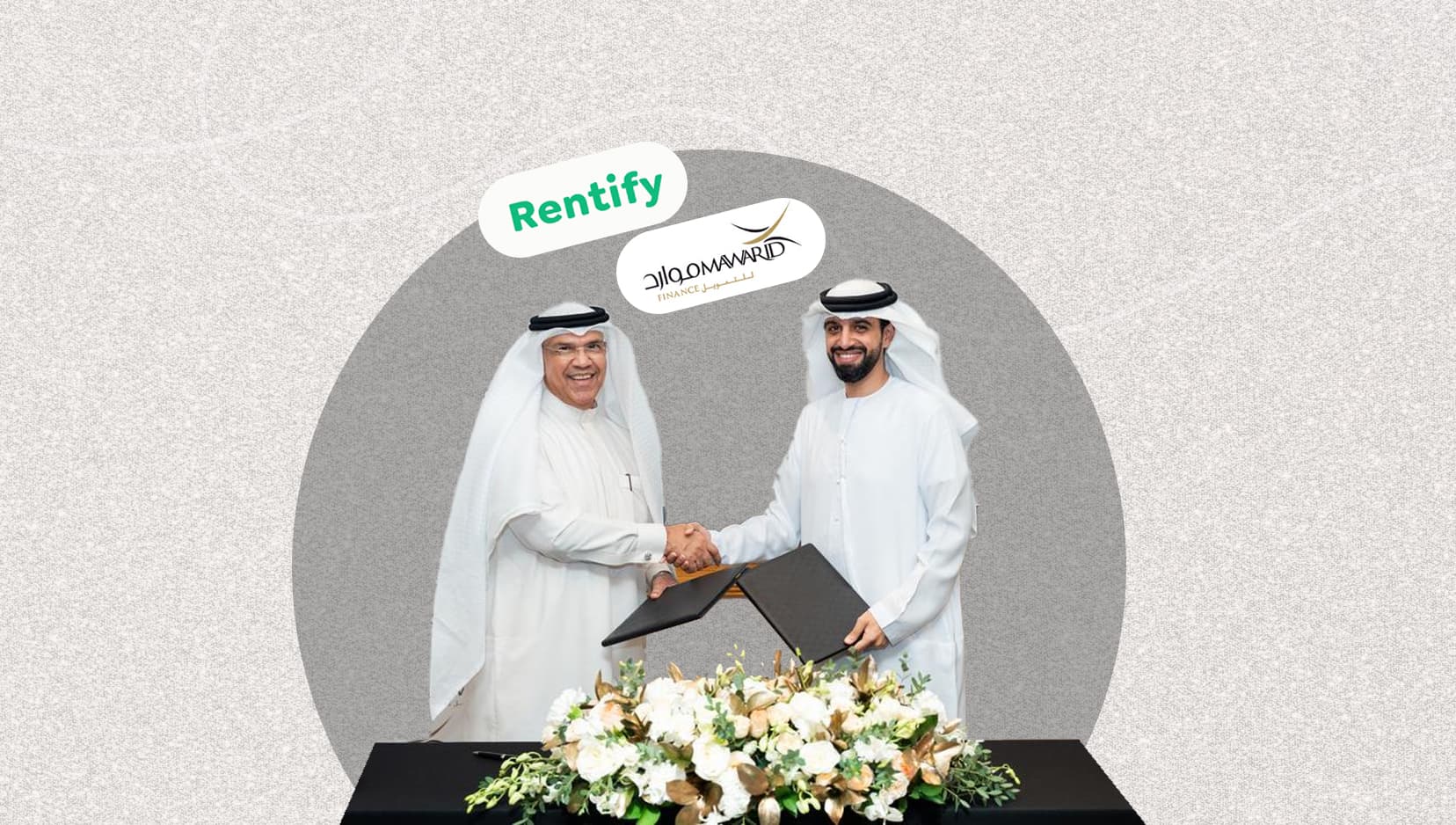
Mawarid Finance, a Shariah-compliant financial institution licensed by the UAE Central Bank, has teamed up with fintech and proptech player Rentify to introduce what they describe as a first-of-its-kind rental payments solution. The idea is simple on paper: tenants can convert their annual rent into manageable monthly instalments, while landlords still receive the full yearly amount upfront.
In a market where four post-dated cheques are common, and a single cheque is not unusual, this move could ease what many call the biggest structural friction in the rental system. I’ve seen founders across the MENA region wrestle with similar pain points; sometimes the problem isn’t lack of demand, it’s the way payments are structured. And believe it or not, that’s often where fintech can be spot on.
The product is already live and operates through a fully digital process, from application and approval to payment. The intention is to remove liquidity constraints for tenants without adding uncertainty for landlords. In other words, tenants gain flexibility, landlords get certainty. No small feat in a property market as dynamic as Dubai’s.
Rashid AlQubaisi, CEO of Mawarid Finance, said the collaboration reflects the institution’s commitment to accessible and Shariah-compliant financial solutions. He described the model as a flexible “rent now, pay later” approach that gives customers more control and financial confidence.
From Rentify’s side, the ambition appears broader. Rashed Hareb, Co-Founder and CEO, noted that rent remains one of the largest financial commitments for families in the UAE, yet the system has barely changed over decades. He said the partnership marks a defining moment for the company, aiming not just to add flexibility but to redesign how rent works by combining digital innovation with institutional financial strength.
Rajneel Kumar, Co-Founder and COO of Rentify, pointed to two years of studying friction points across the rental journey, from liquidity challenges to operational inefficiencies. He said the collaboration allows those challenges to be addressed at scale, benefiting both tenants and landlords through flexible payments and guaranteed income streams.
That said, flexible rent models are not entirely new globally. Variations of “buy now, pay later” have seeped into everything from retail to travel. I reckon the real test here will be pricing transparency and customer awareness, because when finance products become complicated, things can get messy quite fast. Still, in a digital-first economy like the UAE’s, this shift feels timely.
Rentify positions itself as a tech-first platform using AI-powered automation, real-time insights, and verified tenant–landlord interactions to streamline property management. Its offerings include automated rent collection and flexible payment options, and it has been expanding across Dubai, Abu Dhabi and Sharjah, backed by strategic funding. Mawarid Finance, meanwhile, brings a broader portfolio that spans home, auto and personal finance, as well as credit cards and corporate solutions, all under a Shariah-compliant framework.
On the flip side, adoption will depend on how comfortable landlords feel with the structure and how smoothly the digital journey works. If it turns into a bit of a faff, the enthusiasm could fade. But if execution is strong, the model could definately loosen one of the tightest knots in the UAE rental market.
For a region pushing hard on fintech and smarter regulation, this partnership signals something bigger. It shows how traditional financial institutions and agile startups can meet in the middle, not just to build another app, but to tackle a real-world constraint. And for tenants tired of that hefty upfront cheque, that shift might feel long overdue… you know?
🚀 Got exciting news to share?
If you're a startup founder, VC, or PR agency with big updates—funding rounds, product launches 📢, or company milestones 🎉 — AraGeek English wants to hear from you!

✉️ Send Us Your Story 👇