 Ai Everything
 LEAP26
 AI
AI Saudi Arabia
 UAE
UAE Egypt
EgyptFuze and Miden Partner to Push Blockchain into Mainstream MENA Banking

4 min
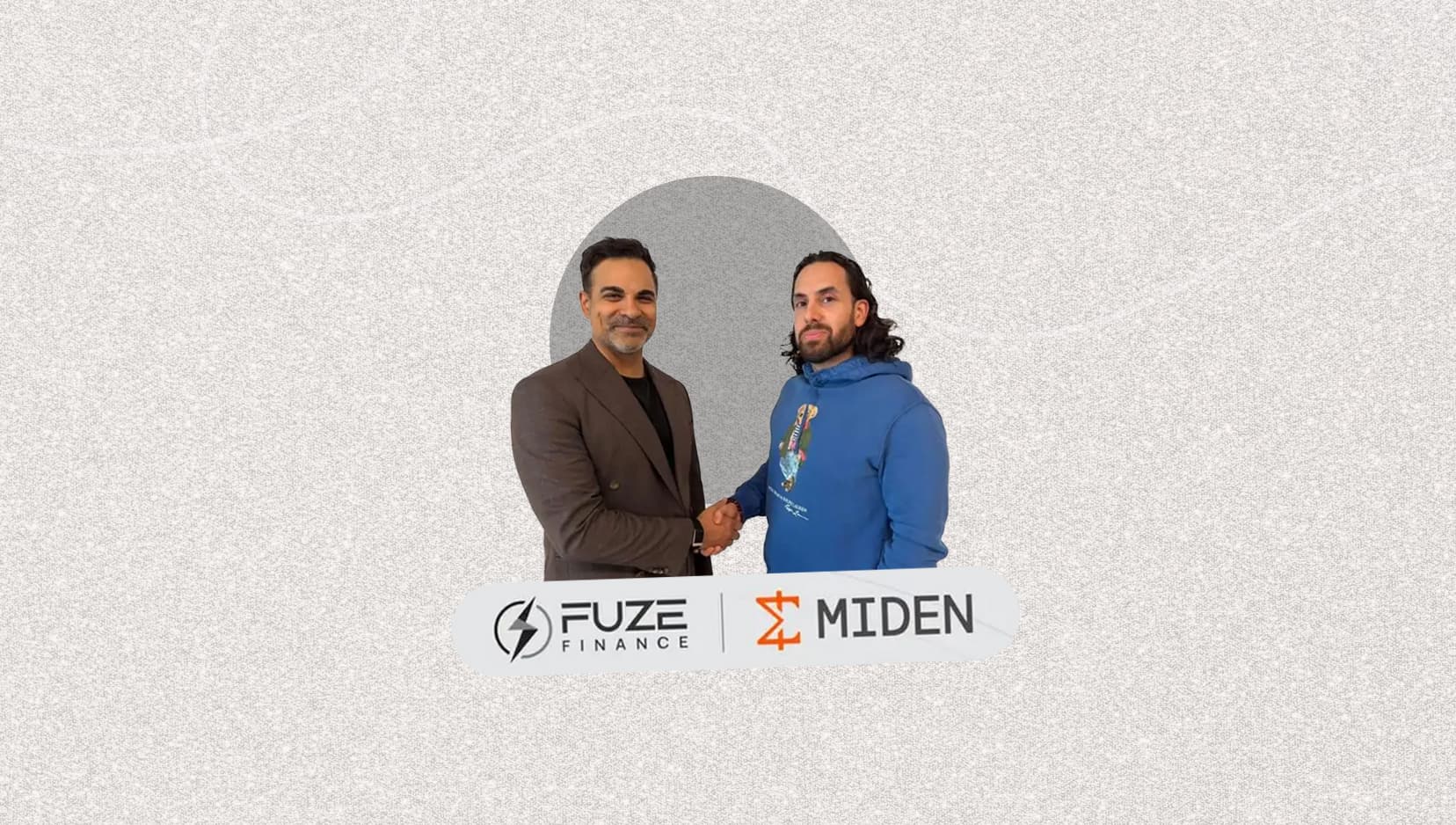
Fuze and Miden signed an MoU to boost regulated crypto in MENA.
They aim to solve blockchain’s ‘awkward pause’ over public transparency.
The plan blends privacy with oversight, enabling KYC and AML compliance.
Miden brings zero-knowledge tech; Fuze offers regulated Digital-Assets-as-a-Service distribution.
Pilot projects will test payments and wealth services in emerging markets.
Fuze and Miden have signed a memorandum of understanding that could nudge digital assets a step closer to mainstream banking across the Middle East and Africa. On paper, it’s a partnership between a fast-growing regional infrastructure provider and a privacy-focused blockchain startup backed by heavyweights including a16z crypto. In practice, it’s an attempt to solve one of the biggest headaches in institutional crypto adoption: how to use blockchain without exposing everything to the world.
If you’ve ever tried explaining public blockchains to a traditional banker, you’ll know the awkward pause that follows. Most blockchains today run on public ledgers, where transactions can be viewed and traced by pretty much anyone. That transparency is powerful, yes, but for banks and regulated financial institutions, it can be a bit of a faff. Client confidentiality and competitive data are not things you simply post on an open ledger.
The agreement between Abu Dhabi-based Fuze and Miden aims to tackle exactly this tension. The two companies say they will work together to build privacy-preserving infrastructure that allows businesses to move digital value on blockchains without revealing sensitive customer data or commercial relationships. At the same time, regulators would still be able to oversee and audit activity, including compliance requirements such as KYC (Know Your Customer) and AML (Anti-Money Laundering).
That balance, between privacy and oversight, is where many blockchain projects stumble. As Azeem Khan, co-founder of Miden, put it, for digital assets to move beyond experimentation, they need infrastructure that institutions and regulators can deploy in the real world. He noted that working with Fuze creates an opportunity to combine privacy and control with regulatory clarity, particularly in markets that are already embracing digital assets.
Miden’s technology is built around zero-knowledge cryptography, a method that allows transactions to be verified without revealing the underlying data. It also uses what it describes as “edge execution” and quantum-secure cryptography to support both public and private transactions. The company was incubated at Polygon Labs before spinning out independently in 2025, and it raised $25 million in seed funding co-led by a16z crypto, 1kx and Hack VC, alongside several other investors and notable angel backers from the crypto space.
Fuze, for its part, positions itself as MENA’s first regulated digital assets infrastructure provider. Founded by fintech and traditional finance veterans, including CEO Mohammed Ali Yusuf, who has held roles at Checkout.com and Visa, the company offers a Digital-Assets-as-a-Service platform. In simple terms, it enables banks and fintechs to plug regulated crypto products into their existing systems in a B2B2C model. It also runs an OTC desk for institutions and high-net-worth individuals executing large digital asset trades.
Mohammed Ali Yusuf said the real challenge is not the technology itself, but balancing privacy, interoperability and regulatory compliance. According to him, Miden’s privacy-first approach complements Fuze’s distribution network of banks, fintechs and enterprises across high-growth markets, forming what he described as a solid foundation for adoption.
And believe it or not, the Middle East is increasingly becoming a test bed for this kind of regulated crypto infrastructure. From Abu Dhabi to Dubai and beyond, regulators have been crafting frameworks that try to keep innovation alive while maintaining oversight. I’ve seen founders across the region chuffed to bits when they realise they can build something ambitious without immediately hitting a regulatory wall. That energy is real, and at Arageek we often hear from entrepreneurs who see compliance not as a burden, but as a competitive edge.
That said, partnerships like this are still early-stage commitments. An MoU signals intent rather than a finished product. The two companies have indicated they plan to explore pilot projects and deployments across key emerging markets, focusing on use cases in payments, remittances and wealth services.
I reckon the real test will come when traditional banks actually roll out services built on this infrastructure to everyday customers. Moving from theory to regulated financial activity is no small leap, well… I mean, anyone who has tried integrating new tech into a bank’s core system knows it’s anything but simple. Still, if Fuze and Miden can make privacy and compliance work hand in hand, that would be a significant step towards making digital assets feel less like a speculative playground and more like normal financial plumbing.
For startups in the region watching closely, this is definately one to keep on the radar.
🚀 Got exciting news to share?
If you're a startup founder, VC, or PR agency with big updates—funding rounds, product launches 📢, or company milestones 🎉 — AraGeek English wants to hear from you!




✉️ Send Us Your Story 👇