 LEAP26
 AI
AI Saudi Arabia
 UAE
UAE Egypt
EgyptI am Ertug Ayik. I Think MENA Will Shape the Future of Work Faster

5 min
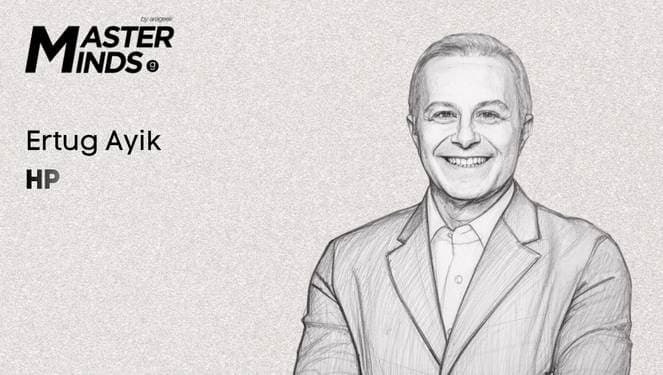
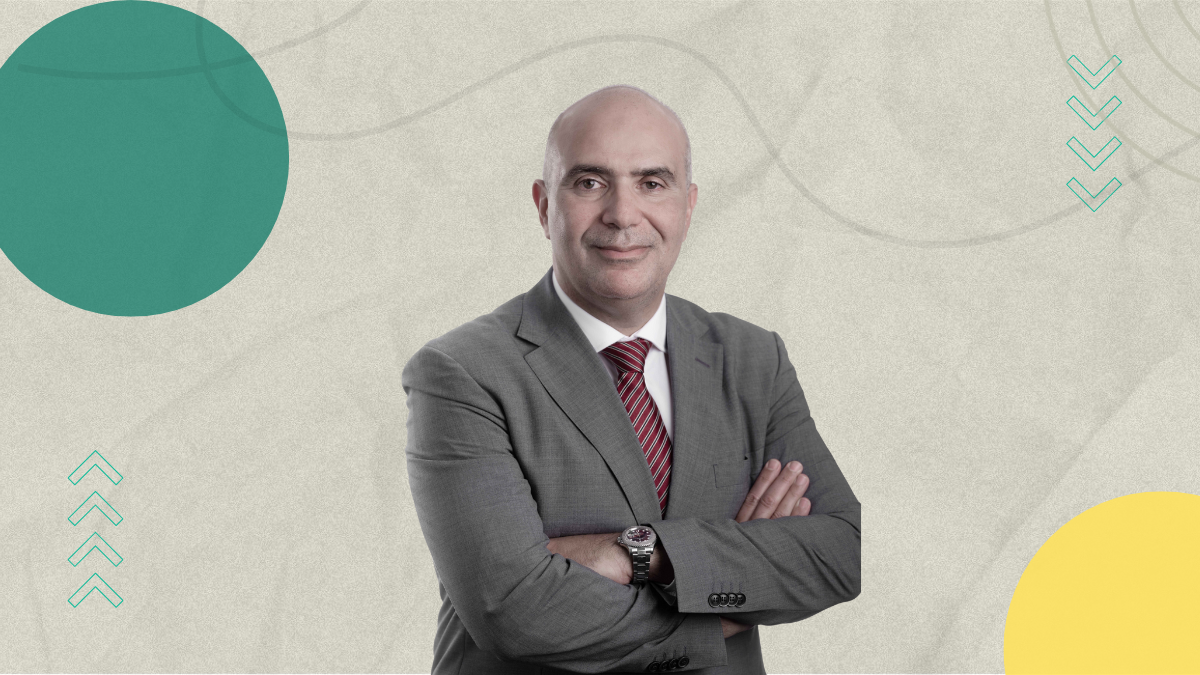
Enterprise technology has spent years promising seamless productivity while often delivering the opposite. More tools, more dashboards, more disconnected workflows. For Ertug Ayik, Vice President and Managing Director for the Middle East and Africa at HP, that disconnect sits at the centre of the company’s latest thinking around workplace technology.
When asked about the reasoning behind HP IQ, HP’s new intelligence layer designed to connect devices, workflows, and workplace experiences, his framing is straightforward: the issue is not necessarily that organisations lack technology, but that the technology they already have rarely works as a coherent whole.
Employees move constantly between meetings, devices, applications, and physical spaces, yet those transitions still create friction. HP’s view is that workplace technology should become more adaptive, more connected, and less visible in the way it supports work.
That thinking shapes HP IQ, which Ayik positions less as a standalone product and more as a connected layer designed to reduce fragmentation between the systems people already depend on.
What HP’s Research Says About Modern Work Frustration
On the question of how employees actually feel about work, HP’s own data paints a stark picture.
Its latest Work Relationship Index suggests only 20 per cent of knowledge workers globally describe themselves as having a healthy relationship with work, while 62 per cent say workplace expectations have increased over the past year.
Ayik’s reading of that data is notable because he does not frame it as a productivity problem. He frames it as an experience problem.
People are not struggling because they are unwilling to work harder. They are struggling because work has become more fragmented, disconnected, and difficult to navigate.
That distinction matters because it changes how technology should be designed. Instead of adding capability for its own sake, the goal becomes reducing unnecessary friction.
HP’s strategic response reflects that interpretation. AI PCs, collaboration systems, device ecosystems, and workforce management platforms are all being positioned around a single premise: making work feel simpler rather than heavier.
Why AI Is Moving Closer to the User
When the conversation turns to AI infrastructure, Ayik rejects the increasingly simplistic debate between cloud AI and on-device intelligence.
His argument is practical rather than ideological. Some workloads belong in the cloud because they require scale. Others benefit from local execution because speed, privacy, responsiveness, and personalisation matter more.
That suggests a more hybrid AI future than many narratives imply.
For HP, the important shift is behavioural. People increasingly expect technology to respond naturally, quickly, and with minimal disruption. That expectation makes local intelligence more important, not because cloud computing becomes irrelevant, but because users are becoming less tolerant of friction.
The implication is clear: AI is becoming more personal.
Hybrid Work Succeeds or Fails on Invisible Friction
When discussing hybrid work, Ayik repeatedly returns to complexity.
The challenge is no longer convincing organisations that remote or distributed work is viable. That argument has largely been settled. The harder question is whether the tools people use actually make hybrid work feel effortless.
Switching between home offices, conference rooms, devices, and collaboration environments creates hundreds of small interruptions throughout a working week. Most are individually minor. Collectively, they become productivity drag.
HP IQ’s pitch is that connected device ecosystems can remove some of those interruptions. Features such as proximity-based sharing and simplified meeting access are designed around reducing those micro-frictions.
But Ayik is equally clear that convenience alone is insufficient. Hybrid work also demands security, oversight, and enterprise manageability. The challenge is balancing employee fluidity with organisational control.
Why MENA Matters in the Next Phase of Workplace AI
Asked to reflect on regional momentum, Ayik speaks with confidence about the Middle East and North Africa.
His assessment is not simply that investment levels are rising. It is that organisations across the region appear willing to rethink legacy assumptions faster than some more mature markets.
That matters.
Technology adoption is rarely constrained by product availability alone. Institutional willingness to redesign workflows often matters far more.
Ayik suggests that in MENA, that willingness already exists across both public and private sectors, particularly around AI, workplace transformation, and connected operating models.
HP’s regional strategy has consistently emphasized local execution and market-specific engagement. Rather than applying a one-size-fits-all model, the company focuses on local partnerships, skills development, in-country presence, and deployment approaches tailored to individual markets.
The larger opportunity, in his telling, is cultural rather than technical. Ambition creates adoption velocity.
AI Hesitation Is as Much About Mindset as Technology
When asked what he would say to hesitant business leaders, Ayik’s answer is less about software implementation than leadership mindset.
His advice is to approach AI with curiosity, shifting the conversation away from abstract disruption narratives and toward practical experimentation.
Ayik’s case for AI is not framed around replacing human judgement. In fact, he explicitly reinforces the opposite. Creativity, empathy, leadership, and decision-making remain human responsibilities.
AI’s role, in his framing, is narrower but meaningful: reducing repetitive workload, improving information access, and making collaboration less cumbersome.
The recommendation to leaders is measured. Start with practical applications. Support employees through adoption. Build confidence gradually.
That is a notably restrained message in a market often dominated by exaggerated claims.
HP’s Larger Bet Is on More Connected Workplace Technology
When the conversation closes on what comes next, Ayik returns to a consistent theme.
The future of workplace technology is better integrated technology.
Employees do not want to manage disconnected systems all day. They want work to move smoothly between environments while technology recedes into the background.
That thinking underpins HP’s broader approach to the future of work.
The real competition in workplace technology may no longer be about adding features. It may be about removing friction so effectively that the infrastructure becomes almost invisible.
If that proves true, the winners will not be the companies building the loudest AI experiences.
They will be the ones building the quietest.