 Ai Everything
 LEAP26
 AI
AI Saudi Arabia
 UAE
UAE Egypt
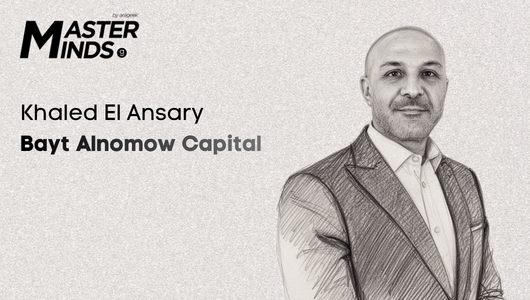
EgyptI am Khaled El Ansary. I chose advisory over execution, and trust became my edge

7 min
From execution to judgement-led advisory
When asked to introduce himself, Khaled El Ansary does not lead with titles or current roles. He frames his career as a long progression from execution-heavy positions into a form of advisory work grounded in judgement, restraint, and long-term thinking. After more than 25 years across asset management, brokerage, private banking, wealth management, venture capital, and fixed income, his focus today is less about transactions and more about building durable financial relationships.
He describes an early career defined by doing, trading, structuring, raising capital, managing portfolios, and exiting investments. Over time, those experiences pushed him towards advisory roles where context matters more than speed. Having launched, raised, invested, managed, and exited both Private Equity and Venture Capital funds, he now advises funds, family offices, and fast-growing businesses that need clarity more than capital. The throughline, he says, is disciplined growth rather than financial engineering.
Learning what real advisory looks like
Pressed on the moments that shaped his approach, El Ansary goes back to a formative summer in private banking in Egypt. Working with ultra high net worth clients exposed him early to the difference between selling products and advising people. What stayed with him was not the complexity of the instruments, but how a senior advisor framed decisions, addressed concerns, and earned confidence.
That experience clarified his direction. He wanted to be the person who could combine technical depth with the ability to explain risk and trade-offs clearly, and who could align investments with client objectives rather than push inventory. It was the beginning of a career anchored in trust rather than transaction volume.
What the Egyptian market taught him under pressure
When the conversation turns to Odin Investments, El Ansary is direct about how difficult that period was. Operating in a post-Covid Egyptian market meant navigating volatility, liquidity constraints, and fragile investor sentiment. Yet it was also where some of his most important lessons were reinforced.
Despite the environment, the team executed two IPOs and led restructuring transactions for listed companies. What mattered most, he says, was not valuation models or documentation, but timing, readiness, and credibility. Equity raising worked when strategy, governance, and communication were aligned, and when issuers delivered on what they promised. The experience sharpened his belief that markets punish inconsistency far more than ambition.
Shifting from transactions to ecosystems in the GCC
Asked about moving from Egypt to the GCC, El Ansary describes a change not just in scale but in mindset. Egyptian markets demand agility and creativity under constraint. GCC markets, by contrast, operate with stronger balance sheets, deeper liquidity, and institutions that think in decades rather than quarters.
Advisory work in the Gulf requires an understanding of national agendas such as Saudi Vision 2030, diversification priorities, and the role of sovereign and quasi-sovereign capital. Decisions are rarely isolated. They sit within broader economic, regulatory, and social frameworks. For El Ansary, this shift marked a move away from deal-by-deal thinking towards ecosystem and relationship building, where alignment matters more than speed.
What strategic relationship management really means
On the question of his current role, El Ansary is clear that strategic relationship management is not a slogan. Working with government-related entities, large corporates, and prominent family groups requires consistency and depth. Saudi clients, in his view, are highly sophisticated and expect advisors to bring insight, not templates.
Trust is earned by understanding governance, business models, and long-term objectives, and by being transparent about risks and compromises. It also means showing up consistently, especially when conditions are difficult. Advisors who prioritise short-term fees rarely last. Those who align themselves with client strategy tend to.
How trust is built at capital markets and M&A level
When asked what truly builds trust at senior levels, El Ansary dismisses titles and presentations. Trust comes from behaviour over time. Clients want advisors who understand their capital structure, shareholder dynamics, and regulatory environment, and who are willing to advise against transactions when they do not make sense.
Reliability and confidentiality matter as much as technical skill. From early structuring discussions to board approvals, regulatory processes, and post-transaction follow-up, clients watch how advisors operate under pressure. Preparedness, honesty, and consistency are what convert conversations into mandates.
The structural challenges facing government entities and families
Pressed on recurring challenges in the region, El Ansary draws a clear distinction. Government-related entities often struggle to balance policy objectives with commercial discipline. Achieving national goals while maintaining investor confidence requires careful structuring and disciplined communication.
Family groups face a different set of issues. Governance, succession, and shareholder alignment frequently matter more than pricing. Many family businesses are operationally strong but underprepared for the transparency and institutional rigour required by capital markets. Advisory work often starts well before an IPO or bond issue, with governance upgrades and reporting discipline.
Aligning client ambition with market reality
When the conversation turns to execution, El Ansary explains his framework simply. Start with the client’s objective, time horizon, and risk tolerance, then overlay market conditions. Liquidity, valuation trends, rates, and regulation define what is achievable.
Good advice does not force markets to comply with wish lists. Sometimes the right answer is to adjust timing, stage a transaction, or reshape the investment story. The advisor’s role is to recalibrate expectations so outcomes work for both issuers and investors.
The forces shaping investment decisions today
Asked about current drivers, El Ansary points first to national transformation agendas. Vision 2030 and similar programmes are directing capital towards technology, healthcare, logistics, tourism, renewables, and infrastructure. Opportunity is abundant, but execution standards are rising.
Liquidity in the GCC remains strong, led by sovereign funds and large family offices with clear governance and return expectations. At the same time, global macro uncertainty is pushing investors to balance local growth with geographic and asset diversification. Advisors must design structures that are resilient rather than optimistic.
Why relationships work differently in the Middle East
On the question of regional nuance, El Ansary emphasises the personal nature of trust in the Middle East. Relationships are built through continuity, discretion, and respect. Face-to-face engagement still matters, as does understanding family history and business context.
At the same time, clients expect international standards in analysis and execution. The differentiator is not choosing between global professionalism and local understanding, but combining both without compromise.
Creativity as structuring, not invention
Asked about innovation, El Ansary reframes it as intelligent structuring rather than novelty. Often the best solutions come from adapting familiar tools. A phased IPO combined with pre-IPO placements and governance upgrades can serve a family business better than a rushed listing. Hybrid and sukuk structures can meet Shariah requirements while maintaining pricing flexibility.
The common thread is listening carefully to constraints, then proposing solutions clients had not initially considered.
How the advisory role has evolved
When reflecting on how advisory has changed, El Ansary notes a clear shift. Execution alone is no longer sufficient. Clients expect strategic partners who understand regulation, ESG, technology, and reform agendas.
Risk management and scenario planning have moved to the centre of advisory work. Explaining downside, contingencies, and long-term implications is now as important as presenting upside. The advisor has moved from selling transactions to co-designing strategies.
What it takes to build a career in the region
Asked to advise younger professionals, El Ansary is pragmatic. Strong technical foundations are non-negotiable, as are strategic thinking and communication skills. Relationship building requires empathy and cultural awareness, not networking theatre.
Adaptability matters in a region evolving as quickly as the Middle East. Those who combine international standards with respect for local values tend to build lasting careers.
Looking ahead at debt crowdfunding in Saudi Arabia
When the discussion turns to debt-based crowdfunding, El Ansary sees a structural shift underway. What began as an experiment is becoming a core component of SME and sukuk financing. Growth projections through 2030 suggest strong momentum, supported by clearer regulation and institutional participation.

SMEs remain underbanked despite rapid credit growth. Crowdfunding platforms address this gap by offering faster, cash flow-based financing aligned with Vision 2030. For investors, these platforms provide access to Shariah-compliant debt with attractive risk-adjusted returns, supported by improving governance and oversight.
In his view, debt crowdfunding will not replace banks, but complement them. The platforms that succeed will be those that integrate institutional discipline with digital efficiency, and that understand both investor expectations and SME realities.