 Ai Everything
 LEAP26
 AI
AI Saudi Arabia
 UAE
UAE Egypt
EgyptMastercard and iscore Drive New Credit Scoring Model for Egypt’s Fintech Revolution

3 min
Mastercard and iscore are exploring a new credit scoring model for Egypt’s digital lending market.
The plan uses “smarter data and analytics” to improve risk assessment and expand access to credit.
The focus is on people with “thin credit files” often overlooked by traditional banks.
Backed by Mastercard’s network and iscore’s infrastructure, the model aims for national scale.
Success will hinge on data quality and whether lenders actually adopt the system.
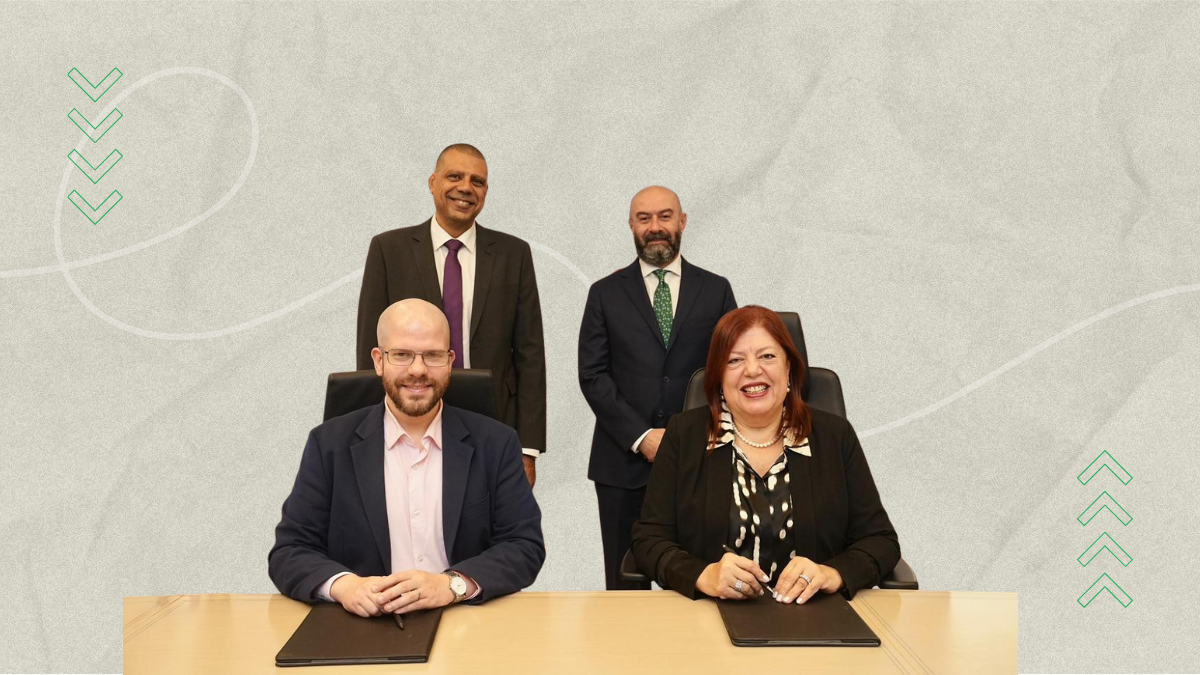
Mastercard and Egypt’s credit bureau iscore have teamed up to explore a new credit scoring model aimed at pushing the country’s digital lending scene a notch higher. The idea is simple enough on paper: use smarter data and analytics to help lenders judge risk better, while opening the door for more people to access formal credit. In practice, as anyone who’s built or scaled a fintech in this region knows, it’s anything but straightforward — a bit of a faff, actually.
The partnership leans on Mastercard’s global network and data capabilities alongside iscore’s deep roots in Egypt’s credit infrastructure. Together, they are studying how a new model could give lenders faster and more rounded insights, especially for people who’ve traditionally been overlooked by banks. I’ve seen founders across MENA struggle when thin credit files block otherwise promising customers, so moves like this tend to catch the eye at Arageek, well… I mean, they hit close to home.
Executives on both sides frame the collaboration as a step towards broader financial inclusion. Selin Bahadirli, Executive Vice President for Services in Eastern Europe, the Middle East and Africa at Mastercard, has pointed to the project as a milestone in strengthening Egypt’s digital financial ecosystem and connecting more citizens to the formal economy. Mohamed Korayem, CEO and Managing Director of iscore, echoed that view, highlighting the role of behavioural analytics in reshaping how creditworthiness is assessed and helping lenders manage risk more effectively.
There’s also a local angle from Mastercard itself. Mohamed Assem, the company’s Country Manager for Egypt, Iraq and Lebanon, said the work reflects a wider belief that financial innovation should serve individuals, small businesses and institutions alike. That’s a familiar refrain, but in a market like Egypt — with its scale and complexity — getting it right could be spot on for startups building lending, BNPL or embedded finance products on top.
What makes this effort stand out is its timing. It builds on the recent rollout of Mastercard Credit Intelligence and aims to operate at a national scale, which is no small thing. By bridging data gaps, the proposed model could create a more holistic picture of borrowers, rather than relying on narrow or outdated signals. On the flip side, I reckon execution will be everything; data quality and adoption by lenders will determine whether this becomes transformative or just another pilot.
Still, if you’ve spent any time talking to early-stage founders in Cairo, you’ll hear the same refrain: access to credit remains a bottleneck. Initiatives like this, if done right, could definately ease that pressure and bring more people and MSMEs into the formal system. And believe it or not, that’s the kind of progress that quietly powers ecosystems forward — no flashy headline required.
🚀 Got exciting news to share?
If you're a startup founder, VC, or PR agency with big updates—funding rounds, product launches 📢, or company milestones 🎉 — AraGeek English wants to hear from you!



✉️ Send Us Your Story 👇