 GITEX Dubai
 Ai Everything
 LEAP26
 AI
AI Saudi Arabia
 UAE
UAE Egypt
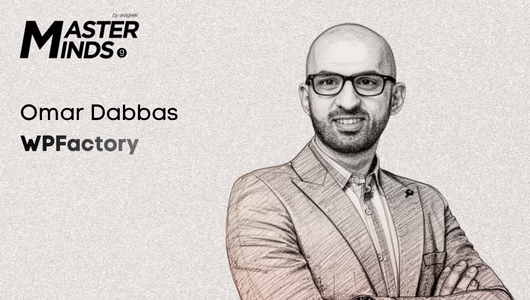
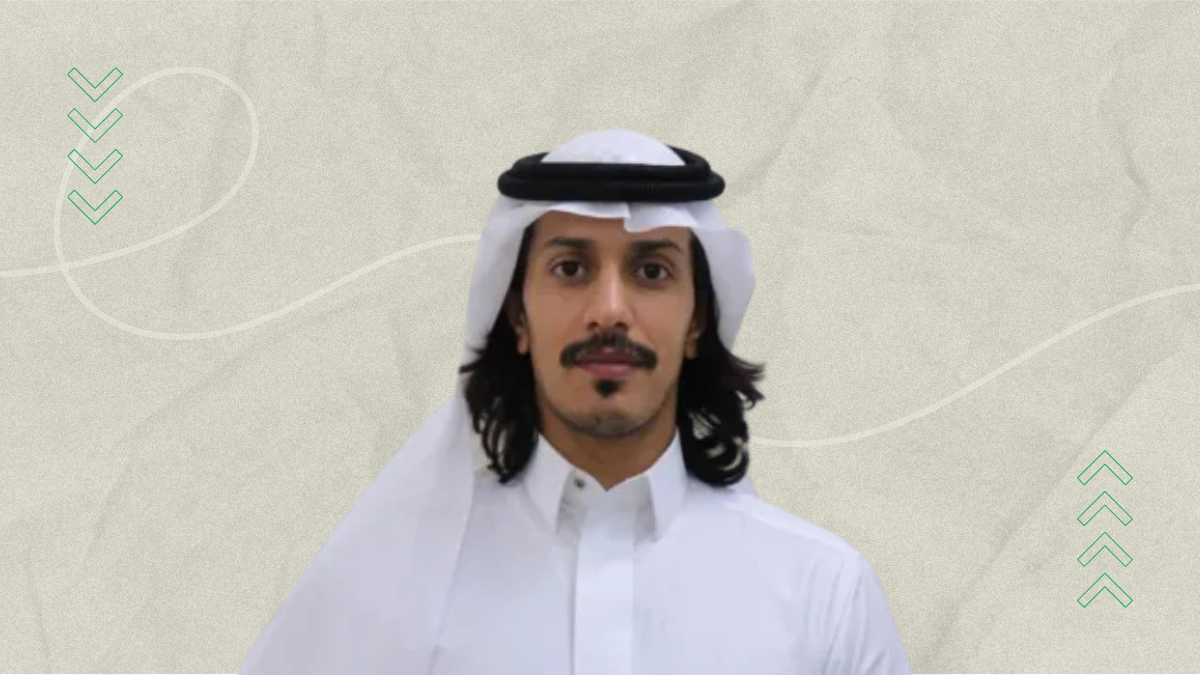
EgyptI am Omar Dabbas. I stopped chasing traffic and started designing journeys.

6 min
Omar Dabbas does not describe his career as a straight line. It reads more like a series of technical problems that kept getting bigger, and more consequential, until they turned into products, teams, and eventually a company.
From networks to products
When asked to introduce himself, Dabbas starts with constraint rather than ambition. He graduated in computer science in 2009 and went straight into network administration, collecting Cisco certifications and working hands-on with infrastructure. Market demand, however, dictated the next move. With limited opportunities in that space, he shifted into technical support and Microsoft systems administration, then into e-learning. Each step was less about reinvention and more about staying close to real systems and real users, a pattern that later defined his work in digital product management.
Learning search the hard way
On the question of how SEO entered the picture, Dabbas points to a practical need rather than curiosity. In 2015, he published his first course on Udemy and quickly realised that quality alone did not guarantee visibility. With no budget for paid promotion, he had to understand how search engines worked or accept obscurity. His technical background made the complexity appealing. Search was difficult, opaque, and system-driven, exactly the kind of problem he was used to unpacking. That necessity pushed him deeper into SEO and into building websites as a means of experimentation.
When scale changes the rules
Pressed on the move from small websites to platforms serving millions, Dabbas frames it as a shift in responsibility. Errors that were invisible on small projects became serious liabilities when thousands of users were active at the same moment. Messaging, releases, and even minor changes required discipline. More importantly, his mindset shifted from being a user of technology to a builder who had to understand how others actually used it. That change pulled him decisively into product management.
Websites as assets, not side projects
When the conversation turns to his early websites, Dabbas clarifies that they were neither client work nor hobbies. Becoming a Udemy instructor exposed him to affiliate programmes, which aligned naturally with his interest in SEO-driven content. He built sites around hosting and website tools, then discovered that these properties were tradeable assets. Domains, plugins, and applications had real market value. That insight led him into WordPress plugins, a space he has stayed in ever since.
Why SEO, product, and UX converge
Asked to reflect on the overlap between SEO, product management, and user experience, Dabbas rejects the idea that they are separate disciplines. SEO reveals how customers think and what problems they are actively trying to solve. Product management takes responsibility for guiding those users toward an outcome, whether that is a purchase or completion. User experience, in his view, is the reality check. Without understanding how people actually behave, optimisation becomes guesswork. For him, the three form a single feedback loop rather than a stack of skills.
Building WPFactory with focus
As CEO of WPFactory, Dabbas describes a company shaped by pruning as much as by growth. When asked about his vision, he points to two priorities. The first is building WordPress-compatible plugins that help site and store owners use AI tools to automate real tasks. The second is expansion through acquisition, a path already tested with two deals last year. Growth, however, has not been indiscriminate. WPFactory deliberately shut down its earlier marketplace model and reduced its plugin catalogue significantly, discontinuing dozens of products to focus on those with the potential to compete seriously.
Competing in a first-mover ecosystem
On the challenges of WordPress and e-commerce products, Dabbas is blunt about structural disadvantages. The ecosystem rewards early entrants, and discovery systems favour popularity and age over quality. New products often compete with dozens of established plugins before a user ever sees them. That reality is What led Omar & his partnerِ Abdul Hameid to start building WPSearch.AI, an independent plugin search and rating engine designed to give newer products a fair chance at visibility.
Converting free users to paying customers
Asked about freemium conversion, Dabbas avoids silver bullets. Competition forces many features into free tiers, shrinking the obvious upgrade triggers. What consistently works, he says, is a smooth experience that makes users feel understood, combined with responsive technical support that builds trust at the right moment. He also notes a quieter segment of buyers who purchase immediately when a plugin solves their problem, without even checking for a free version. Designing for both behaviours matters.
Organic growth without a budget myth
When the discussion moves to organic growth, Dabbas resists tidy formulas. Markets are harsher than theory. His guidance is grounded instead in empathy and focus. Start with a specific problem, offer the best solution possible, often free at first, and observe how real users try to solve that problem elsewhere. What do they search for, who do they ask, and where do competitors fall short. Content and product development, he argues, compound over time and rarely turn out to be wasted effort.
B2B versus B2C realities
On the question of growth strategy differences, Dabbas highlights decision-making speed. B2B journeys are slower and trust-heavy, demanding educational content and long-term proof of value. SEO and conversion optimisation support that extended evaluation. B2C users move faster and more emotionally, so clarity, ease, and frictionless conversion matter more than depth.
Making remote teams work
Asked about managing distributed teams, Dabbas identifies hiring as the core challenge. WPFactory looks for people who can manage themselves and take responsibility without constant oversight. Overlapping hours provide a baseline for coordination, but most communication remains asynchronous. Team members are expected to share complete context upfront, reducing delays and preserving execution quality.

Search after answers replace links
When the conversation turns to the future of search, Dabbas sees a narrowing of opportunity. As engines move toward direct answers, ranking alone becomes insufficient. Being the trusted source behind those answers matters more. Thin content will fade, while experience-based material that demonstrates real understanding will persist. His advice to specialists is clear: build expertise, credibility, and assets that automated systems cannot easily reproduce.